Loss of Myonuclei and Transcriptional Activity During Diaphragm Atrophy in Critically Ill Patients
Wout J. Claassen, Marloes van den Berg, Zhong Hua Shi, Rianne. J. Baelde, Sylvia Bogaards, Luuk Bonis, Heleen Hakkeling, Arezou Bamyani, Gerben J. Schaaf, Albertus Beishuizen, Chris Dickhoff, Reinier A. Boon, Leo Heunks, Tyler J. Kirby, Coen A. C. Ottenheijm

TL;DR
This study finds that critically ill patients experience a loss of myonuclei and reduced transcriptional activity in their diaphragm muscles, contributing to muscle weakness unrelated to the duration of mechanical ventilation.
Contribution
The study identifies intrinsic apoptotic pathway activation as a novel mechanism for myonuclear loss in diaphragm atrophy among ICU patients.
Findings
Myonuclear number and domain size are significantly reduced in critically ill patients with diaphragm atrophy.
Apoptotic myonuclei and activated caspase-3 are increased in ICU patients with atrophy.
Transcriptional activity and muscle stem cell numbers decrease in patients with diaphragm atrophy.
Abstract
Diaphragm weakness frequently develops in critically ill patients and is explained by a combination of atrophy and myofiber dysfunction. Myofibers are large syncytial cells maintained by a population of myonuclei, which provide gene transcripts to a finite fiber volume, termed the myonuclear domain. Myonuclear number is a determinant of transcriptional capacity and therefore critical for diaphragm and peripheral muscle regeneration after critical illness. Changes in myonuclear number in myofibers undergoing atrophy have not been investigated in mechanically ventilated ICU patients, but they are of potential clinical importance. Our objective was to investigate if and how myonuclear number changes in the diaphragm of mechanically ventilated ICU patients and whether changes are associated with myofiber atrophy and clinical parameters. We used a combination of transcriptomics,…
Genes, proteins, chemicals, diseases, species, mutations and cell lines named across the full text — each resolved to its canonical identifier and authoritative record.
Click any figure to enlarge with its caption.
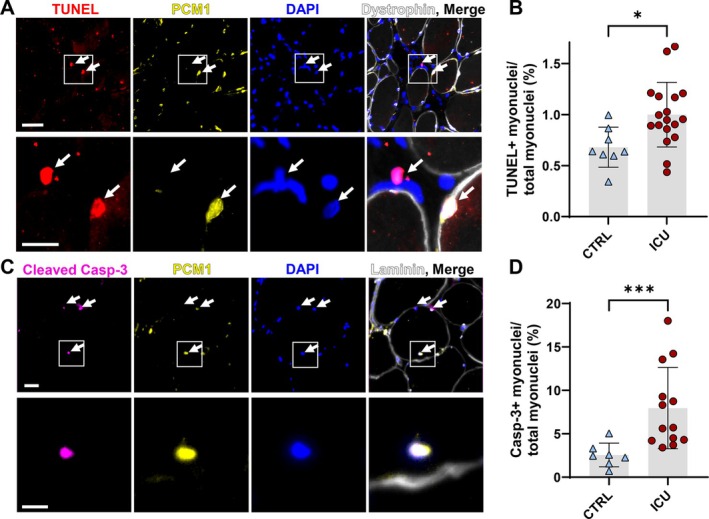 Figure 1
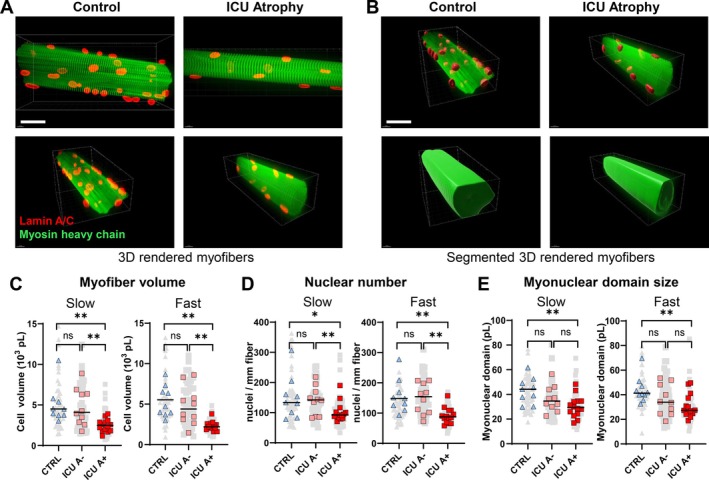 Figure 2
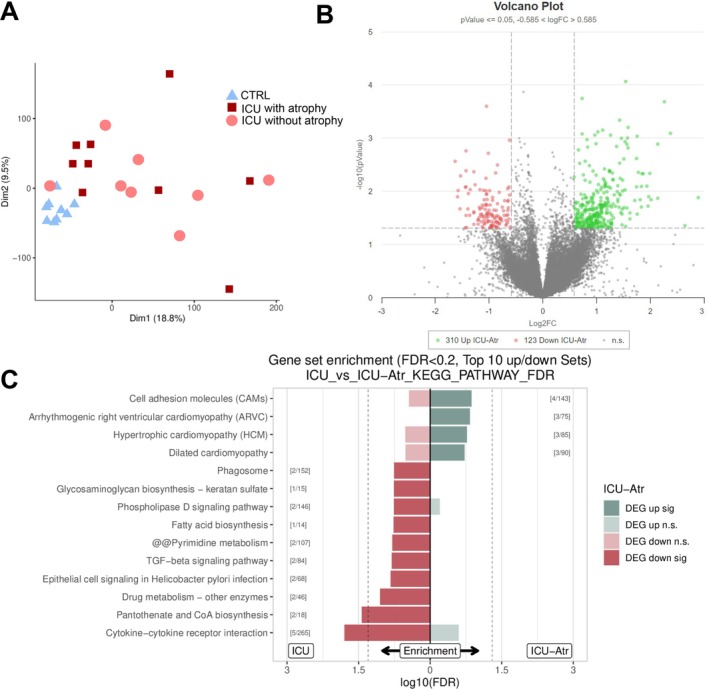 Figure 3
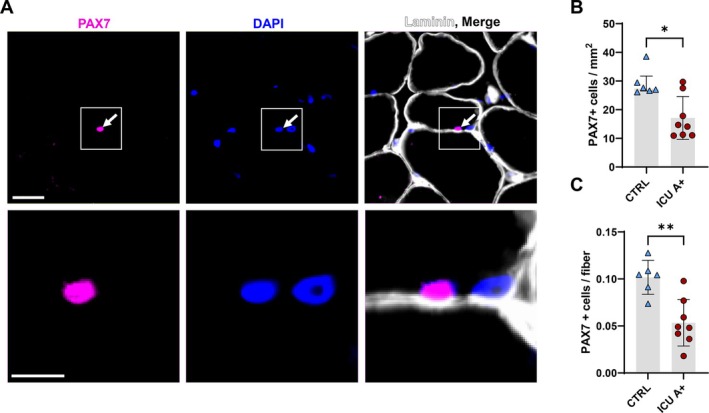 Figure 4
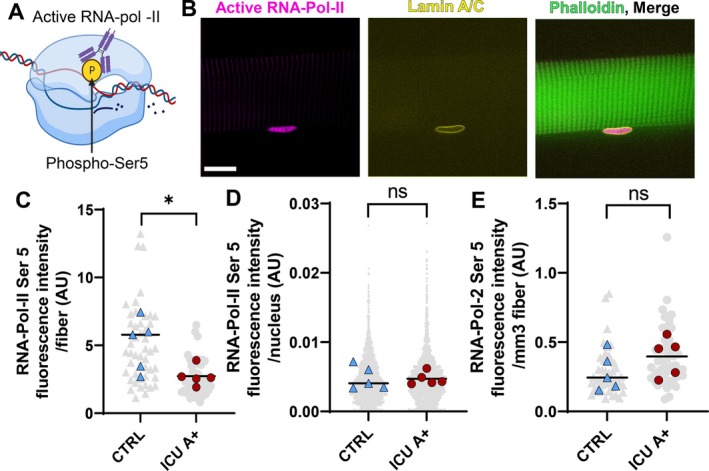 Figure 5
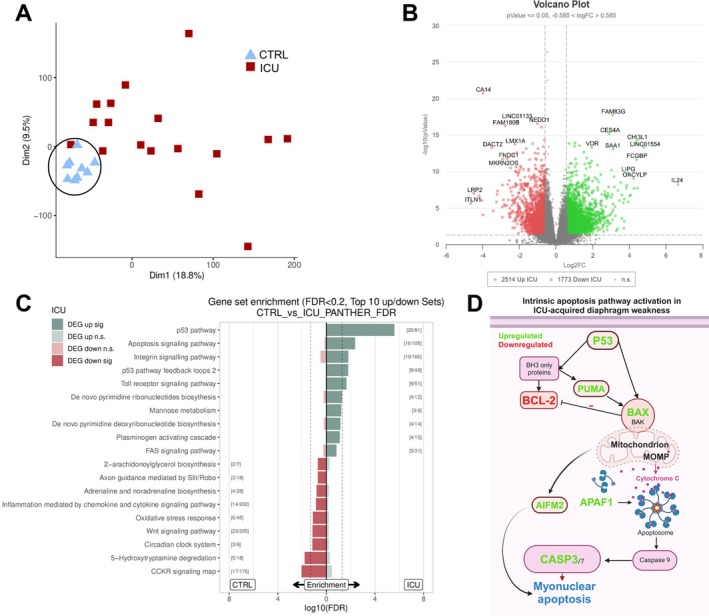 Figure 6
Peer Reviews
No public reviews on file for this paper yet. If you reviewed it on a platform where reviews are public (OpenReview, ICLR, NeurIPS, ICML), you can paste yours below so the community can read it here.
Videos
No videos yet. Explain this paper in a talk, walkthrough, or lecture? Add one.
Taxonomy
TopicsMuscle Physiology and Disorders · Clinical Nutrition and Gastroenterology · Nutrition and Health in Aging