Impact of axillary disease extent defined by baseline 18F-FDG PET/CT on the accuracy of axillary surgical staging after neoadjuvant systemic therapy in clinically node-positive breast cancer
Cornelis M. de Mooij, Janine M. Simons, Florien J.G. van Amstel, Cristina Mitea, Paul J. van Diest, Patty J. Nelemans, Felix M. Mottaghy, Carmen C. van der Pol, Ernest J.T. Luiten, Linetta B. Koppert, Marjolein L. Smidt, Thiemo J.A. van Nijnatten, E.G. Boerma, E.G. Boerma

TL;DR
This study shows that the extent of axillary disease seen on a PET/CT scan before treatment affects how accurately surgeons can stage breast cancer after therapy.
Contribution
The study introduces a new way to assess the accuracy of surgical staging procedures based on baseline PET/CT findings in node-positive breast cancer patients.
Findings
Staging procedures were more accurate when baseline axillary disease was limited (1-3 hypermetabolic nodes).
When staging detected residual disease, the risk of remaining positive nodes was much higher with advanced baseline disease.
SLNB or MARI detection of residual disease indicated a high risk of remaining disease regardless of baseline disease extent.
Abstract
In clinically node-positive patients, sentinel lymph node biopsy (SLNB), marking axillary lymph node with radioactive iodine seed (MARI), and combined SLNB/MARI (RISAS-procedure) can replace axillary lymph node dissection (ALND) after neoadjuvant systemic therapy. Surgical staging outcome can be combined with baseline axillary disease on 18F-FDG PET/CT. This study assessed whether baseline axillary disease on 18F-FDG PET/CT affects the accuracy of staging-procedures. Second, when staging-procedures detected residual disease, it was assessed whether baseline axillary disease on 18F-FDG PET/CT affected the probability of remaining positive nodes at completion ALND (cALND). Included were patients with baseline 18F-FDG PET/CT within the RISAStrial (NCT02800317). Patients underwent the RISAS-procedure followed by cALND. False negative rates were stratified by limited or advanced baseline…
Genes, proteins, chemicals, diseases, species, mutations and cell lines named across the full text — each resolved to its canonical identifier and authoritative record.
Click any figure to enlarge with its caption.
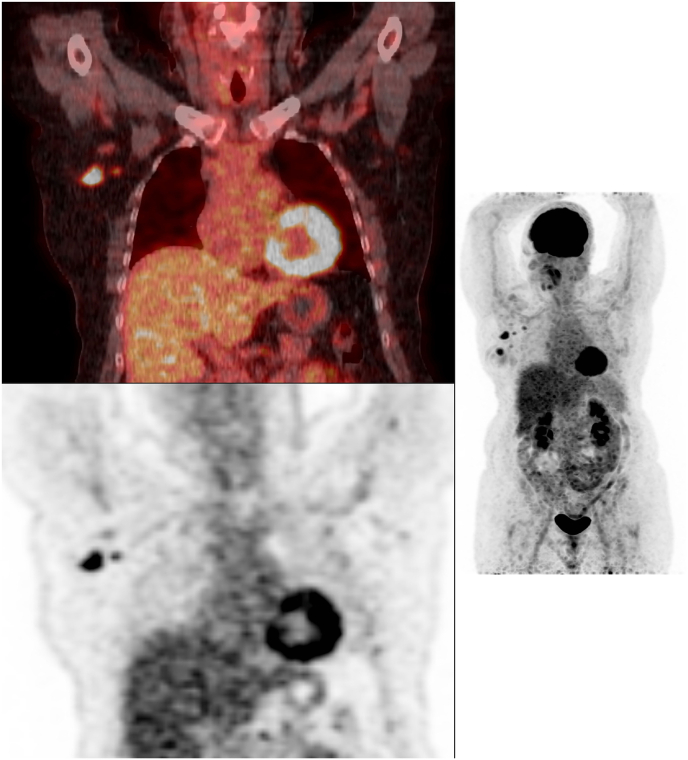 Figure 1
Peer Reviews
No public reviews on file for this paper yet. If you reviewed it on a platform where reviews are public (OpenReview, ICLR, NeurIPS, ICML), you can paste yours below so the community can read it here.
Videos
No videos yet. Explain this paper in a talk, walkthrough, or lecture? Add one.
Taxonomy
TopicsBreast Cancer Treatment Studies · Medical Imaging Techniques and Applications · Breast Lesions and Carcinomas