Defining a serum cortisol cutoff level post-CRH stimulation for diagnosing ACTH deficiency: A retrospective study validated by a nationwide registry
Tetsushi Izuchi, Shintaro Iwama, Ayana Yamagami, Tomoko Kobayashi, Koji Suzuki, Takanori Murase, Masahiko Ando, Shingo Murasawa, Kosuke Mukai, Hiroshi Takagi, Hidenori Fukuoka, Tomoko Handa, Takeshi Onoue, Takashi Miyata, Mariko Sugiyama, Daisuke Hagiwara, Hidetaka Suga

TL;DR
This study identifies a new serum cortisol cutoff after a CRH stimulation test to diagnose ACTH deficiency, validated using a nationwide registry.
Contribution
The study proposes and validates a new cortisol cutoff (12.6 µg/dL) at 30 minutes post-CRH for diagnosing ACTH deficiency.
Findings
Cortisol levels were significantly higher in non-hydrocortisone patients at all time points.
A 30-minute cutoff of 12.6 µg/dL showed high sensitivity and specificity in the discovery cohort.
The cutoff was confirmed as optimal in an independent validation cohort with 83.7% accuracy.
Abstract
The corticotropin-releasing hormone (CRH) stimulation test is used to diagnose adrenocorticotropic hormone (ACTH) deficiency; however, the serum cortisol cutoff value indicating impaired response on this test (18 µg/dL [approximately 500 nmol/L]) was established from the insulin tolerance test. We aimed to define a serum cortisol cutoff after CRH stimulation to diagnose ACTH deficiency. Patients who underwent CRH stimulation at Nagoya University Hospital from 2016 to 2022 were divided retrospectively into two groups based on the need for hydrocortisone replacement at final follow-up (discovery cohort). Plasma ACTH and serum cortisol levels were measured at baseline and 30, 60, 90, and 120 minutes post-CRH administration using a current monoclonal antibody-based cortisol assay. The optimal cortisol cutoffs at each time point were determined by receiver operating characteristic (ROC)…
Genes, proteins, chemicals, diseases, species, mutations and cell lines named across the full text — each resolved to its canonical identifier and authoritative record.
Click any figure to enlarge with its caption.
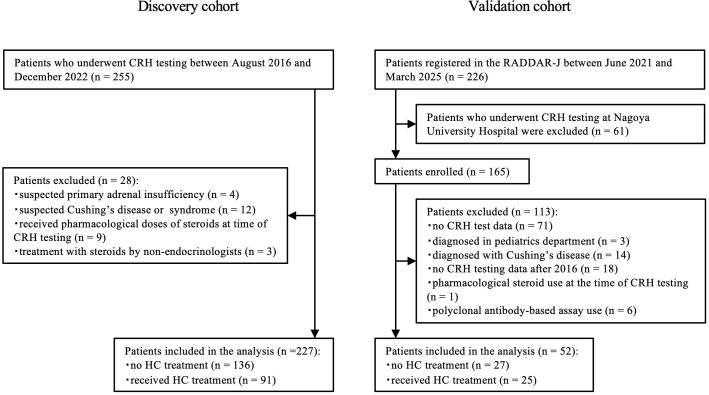 Figure 1
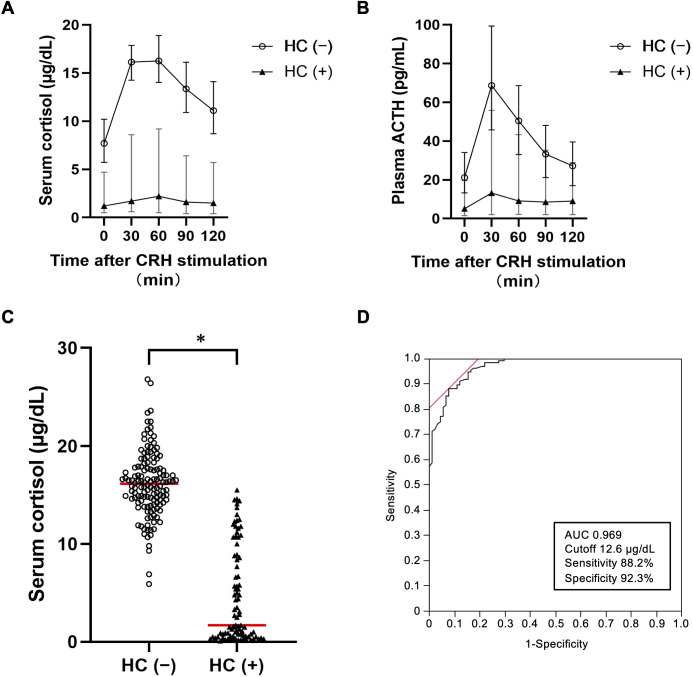 Figure 2
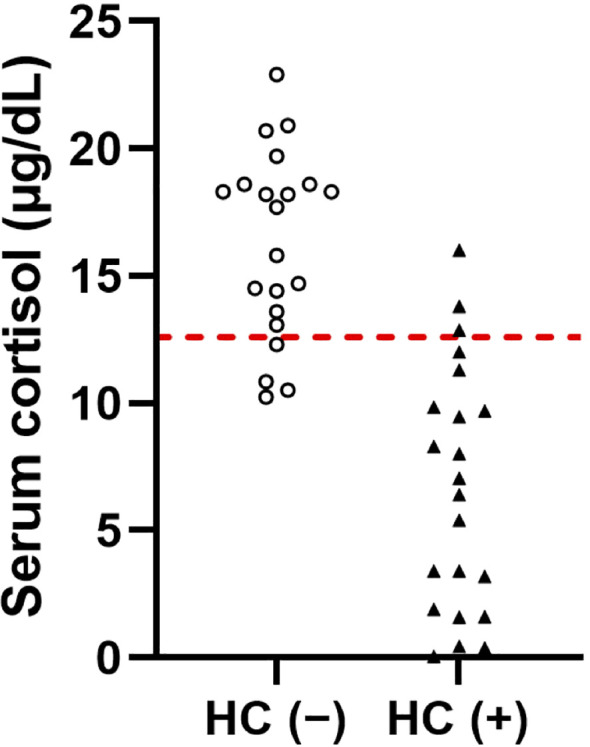 Figure 3
Peer Reviews
No public reviews on file for this paper yet. If you reviewed it on a platform where reviews are public (OpenReview, ICLR, NeurIPS, ICML), you can paste yours below so the community can read it here.
Videos
No videos yet. Explain this paper in a talk, walkthrough, or lecture? Add one.
Taxonomy
TopicsAdrenal Hormones and Disorders · Stress Responses and Cortisol · Pituitary Gland Disorders and Treatments