Limited performance questions retrospective use of quantitative flow ratio in coronary artery bypass grafting
Hannes Abfalterer, Dominik Janker, Lorenz Rüf, Yannik Reiter, Sarah Maier, Nikolaos Bonaros, Michael Grimm, Axel Bauer, Elfriede Ruttmann-Ulmer

TL;DR
This study found that using quantitative flow ratio (QFR) to assess coronary arteries before bypass surgery had limited success in predicting graft patency when applied retrospectively.
Contribution
The study evaluates the feasibility and diagnostic performance of retrospective QFR analysis in predicting arterial graft patency after coronary artery bypass grafting.
Findings
QFR ≤ 0.80 was independently associated with higher arterial graft patency rates.
Retrospective QFR analysis had poor feasibility and diagnostic performance.
Visually estimated stenosis from preoperative angiography was not a significant predictor of graft patency.
Abstract
Hemodynamic assessment of coronary artery stenosis has impact on arterial graft patency. Quantitative flow ratio (QFR) obtains hemodynamic information of coronary artery stenosis. Patients with history of isolated coronary artery bypass grafting (with ≥1 arterial graft) and at least one postoperative coronary re-assessment were retrospectively investigated. The preoperative angiography was used for retrospective QFR analysis of the native coronary target vessel, to which the arterial bypass graft was anastomosed. Analysis was performed by certified investigators, who were blinded towards postoperative arterial graft patency status. Coronary targets with QFR values of ≤0.80 were defined as hemodynamically relevant, whereas values of >0.80 were defined as hemodynamically irrelevant. Out of 5,692 patients, 596 patients had a postoperative coronary assessment and were therefore eligible…
Genes, proteins, chemicals, diseases, species, mutations and cell lines named across the full text — each resolved to its canonical identifier and authoritative record.
Click any figure to enlarge with its caption.
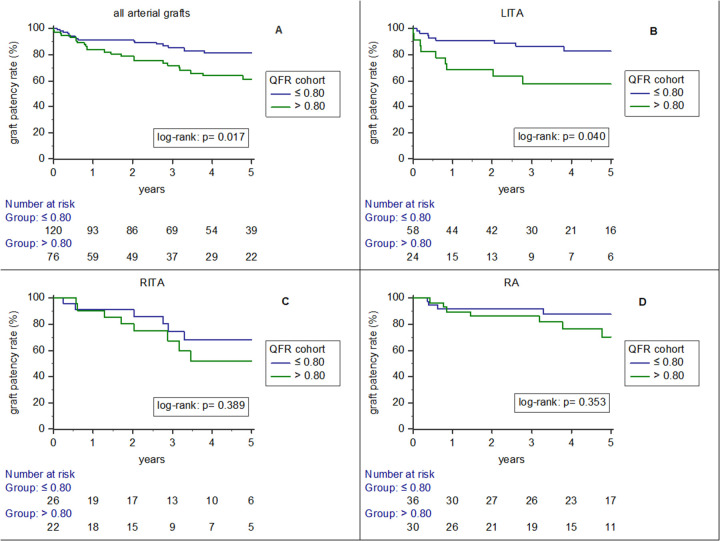 Figure 1
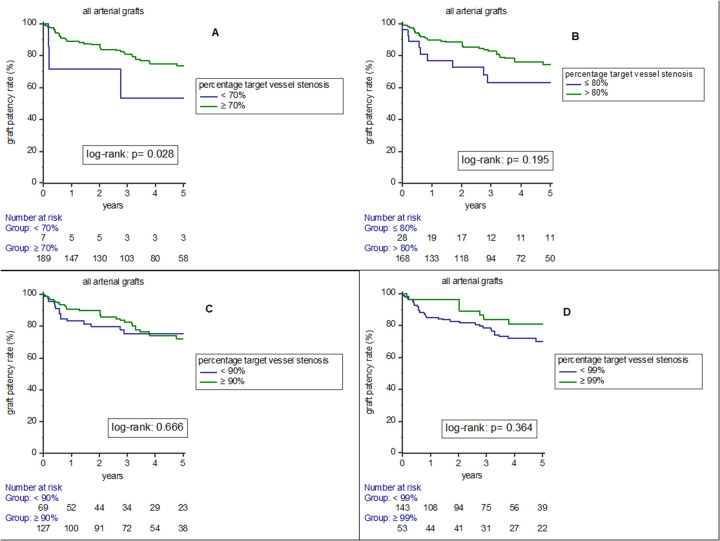 Figure 2
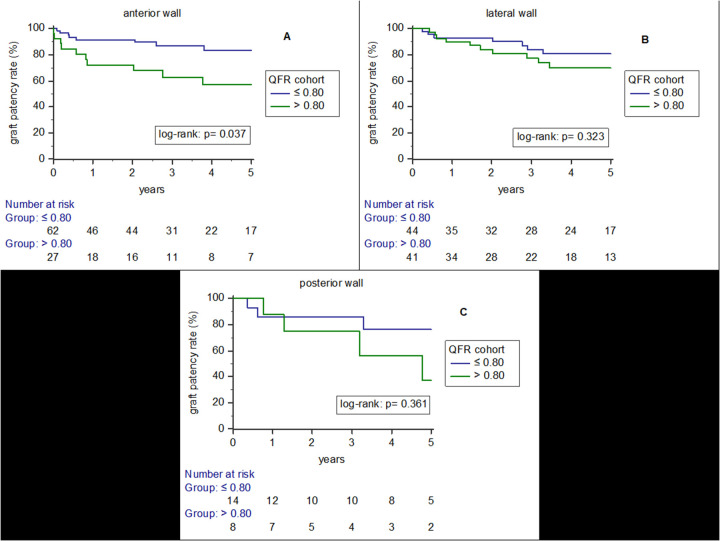 Figure 3
 Figure 4
Peer Reviews
No public reviews on file for this paper yet. If you reviewed it on a platform where reviews are public (OpenReview, ICLR, NeurIPS, ICML), you can paste yours below so the community can read it here.
Videos
No videos yet. Explain this paper in a talk, walkthrough, or lecture? Add one.
Taxonomy
TopicsCardiac and Coronary Surgery Techniques · Coronary Interventions and Diagnostics · Cardiac Imaging and Diagnostics