Sex-specific effects of fecal microbiota transplantation on TBI-exacerbated Alzheimer’s disease pathology in mice
Sirena Soriano, Austin Marshall, Morgan Holcomb, Hannah Flinn, Marissa Burke, Göknur Kara, Paula Scalzo, Sonia Villapol

TL;DR
Fecal microbiota transplantation had limited success in reducing Alzheimer's-related brain changes in mice after traumatic brain injury, with effects differing between males and females.
Contribution
The study reveals sex-specific responses to FMT in mitigating TBI-exacerbated Alzheimer's pathology in mice.
Findings
TBI increased amyloid burden more in female mice compared to males.
FMT reduced Aβ deposition in sham-treated mice but failed to reverse TBI-induced amyloid escalation.
FMT modulated glial responses differently by sex and region but did not alter lesion volume.
Abstract
Traumatic brain injury (TBI) accelerates Alzheimer’s disease (AD) pathology and neuroinflammation, potentially via gut-brain axis disruptions. Whether restoring gut microbial homeostasis mitigates TBI-exacerbated AD features remains unclear, particularly with respect to sex differences. The goal of our study was to test whether fecal microbiota transplantation (FMT) modifies amyloid pathology, neuroinflammation, gut microbial composition, metabolites, and motor outcomes in male and female 5xFAD mice subjected to TBI. Male and female 5xFAD mice received sham treatments or controlled cortical impact, followed 24 h later by vehicle (VH) or sex-matched FMT from C57BL/6 donors. Assessments at baseline, 1-, and 3-days post-injury (dpi) included Thioflavin-S and 6E10 immunostaining for Aβ, Iba-1 and GFAP for glial activation, lesion volume, rotarod performance, 16S rRNA sequencing for…
Genes, proteins, chemicals, diseases, species, mutations and cell lines named across the full text — each resolved to its canonical identifier and authoritative record.
Click any figure to enlarge with its caption.
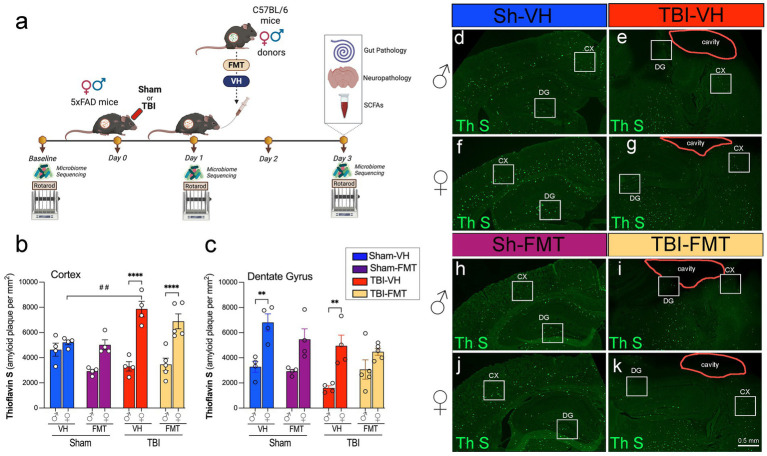 Figure 1
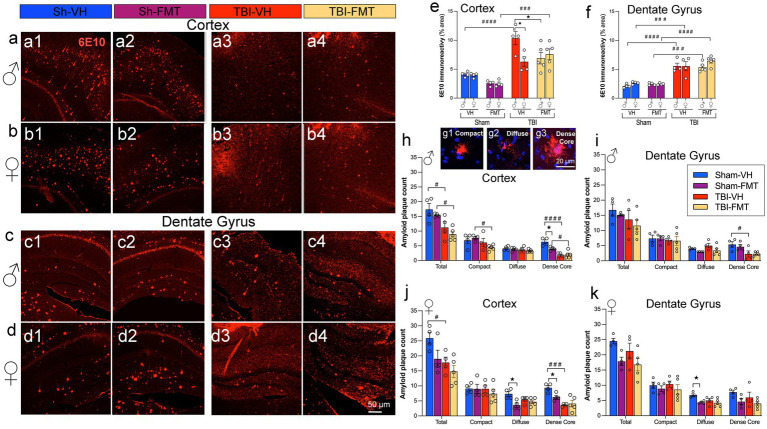 Figure 2
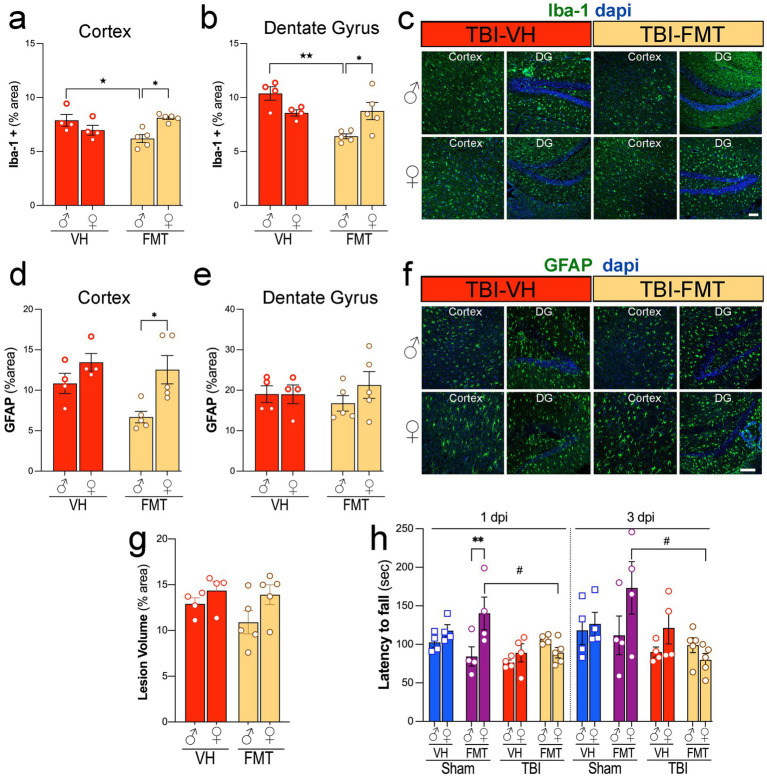 Figure 3
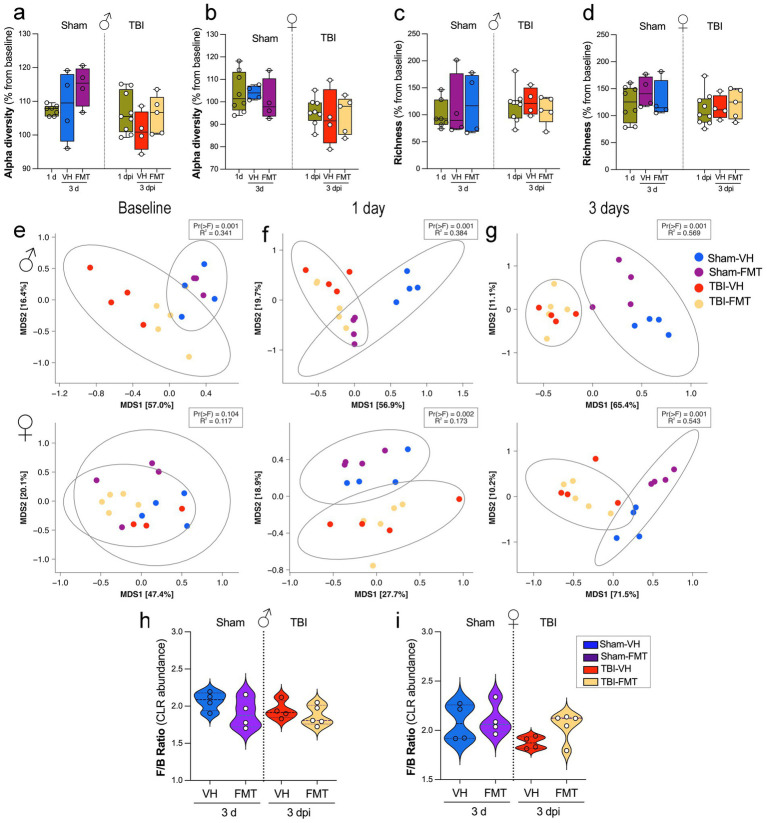 Figure 4
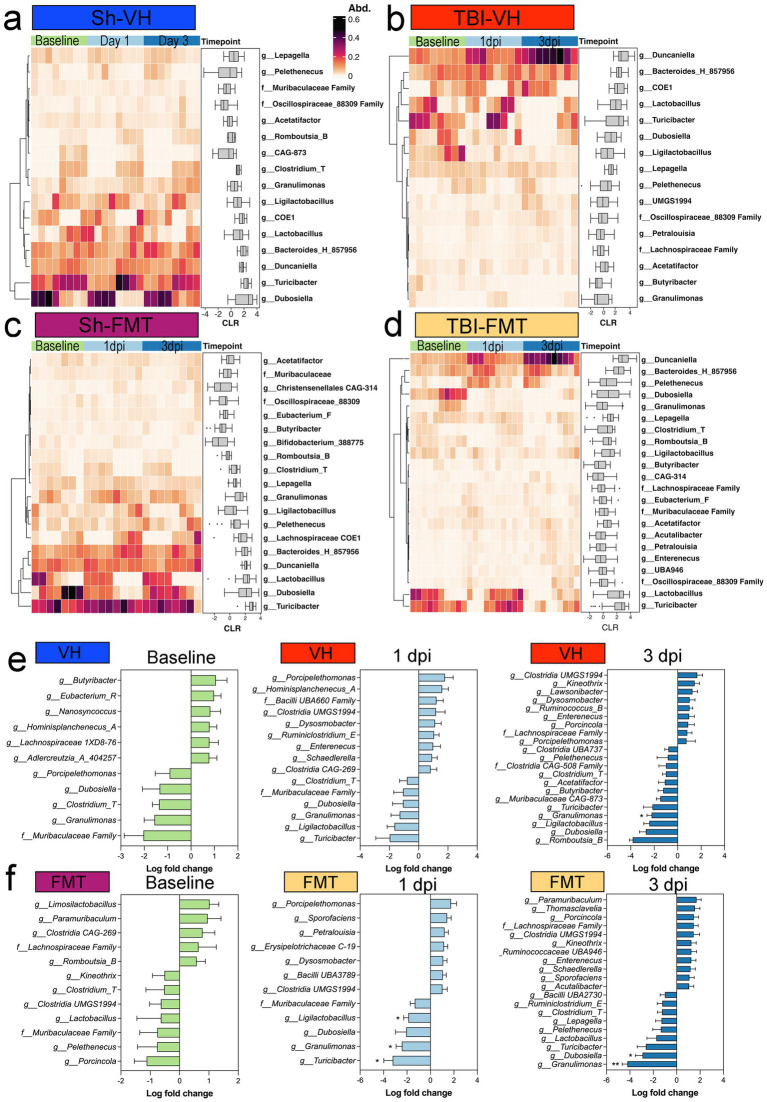 Figure 5
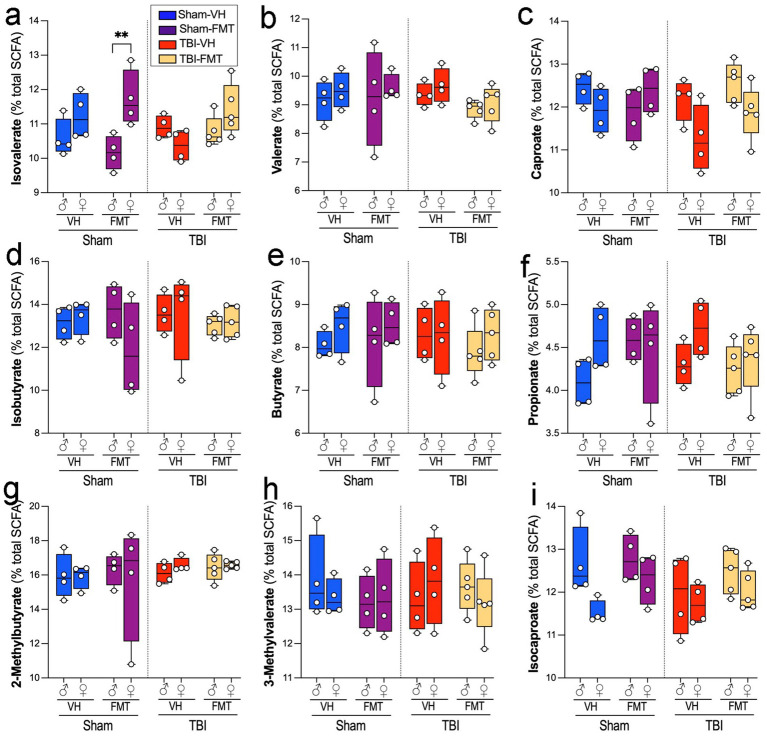 Figure 6
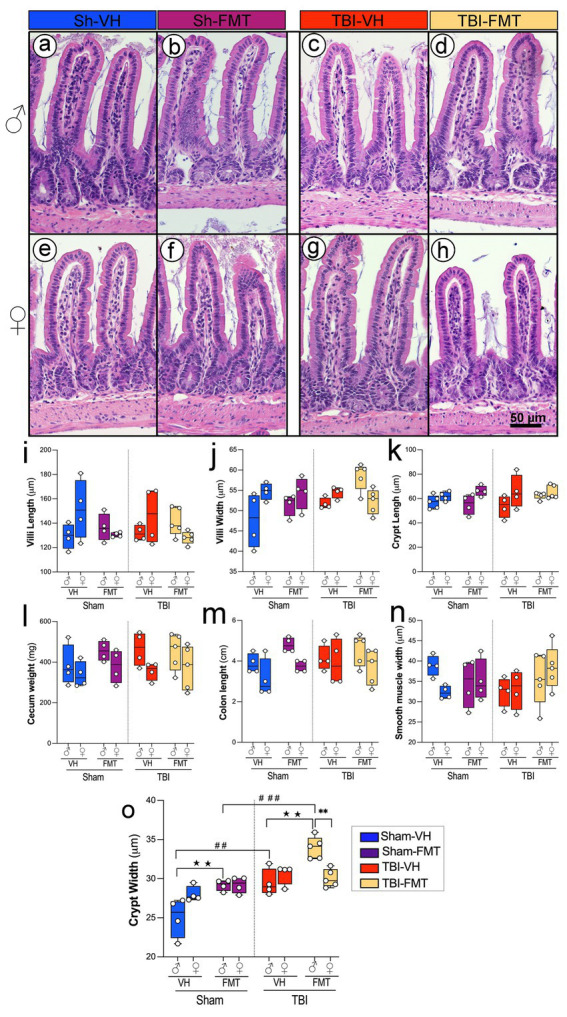 Figure 7
Peer Reviews
No public reviews on file for this paper yet. If you reviewed it on a platform where reviews are public (OpenReview, ICLR, NeurIPS, ICML), you can paste yours below so the community can read it here.
Videos
No videos yet. Explain this paper in a talk, walkthrough, or lecture? Add one.
Taxonomy
TopicsGut microbiota and health · Barrier Structure and Function Studies · Alzheimer's disease research and treatments