Insulin resistance in obese children and adolescents: from mechanisms to screening and exercise intervention
Youxiang Cao, Rui Xu, Jie Zhang

TL;DR
This paper reviews how obesity in children and adolescents leads to insulin resistance and explores ways to detect and manage it through exercise.
Contribution
The paper provides a comprehensive review of mechanisms, screening methods, and exercise interventions for insulin resistance in obese youth.
Findings
Insulin resistance is a key factor in metabolic diseases among obese children and adolescents.
Exercise is effective in preventing insulin resistance, though optimal intensity remains debated.
Early detection and intervention are crucial to prevent future chronic diseases.
Abstract
The early onset of obesity has become a serious public health problem and is accompanied by the low age range of various metabolic diseases. Obesity is strongly associated with the development of Insulin resistance (IR). IR is considered the pathological basis of several metabolic diseases and is associated with a high likelihood of future chronic disease in adulthood. But the onset of IR is highly insidious, and the early development of a predictive model of morbidity is essential to the prevention. Exercise can effectively prevent IR, but the optimal intensity and dose of exercise are controversial. Thus, this narrative review shows the mechanisms, screening, and exercise interventions of IR in obese children and adolescents.
Genes, proteins, chemicals, diseases, species, mutations and cell lines named across the full text — each resolved to its canonical identifier and authoritative record.
Click any figure to enlarge with its caption.
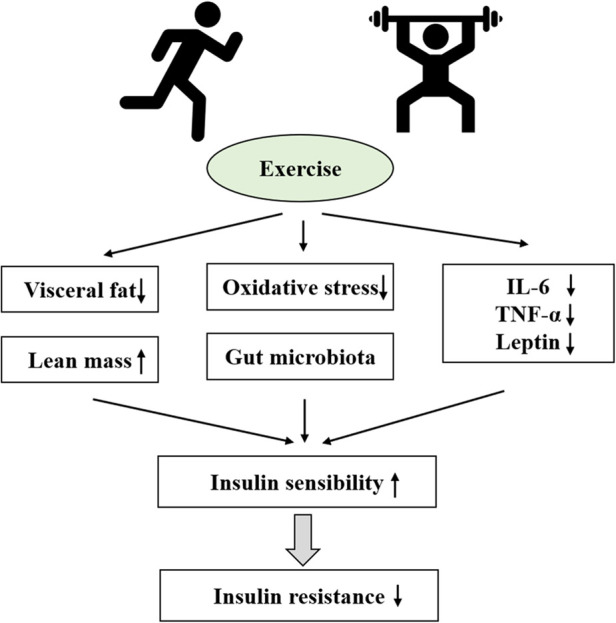 Figure 1
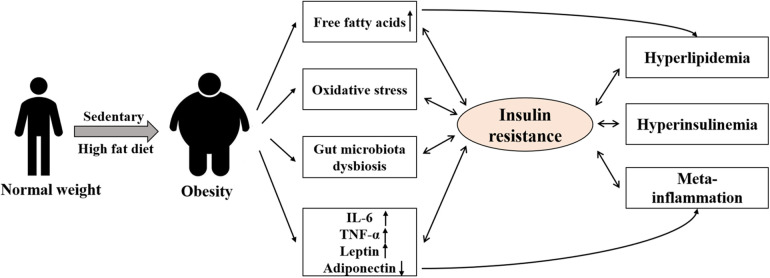 Figure 2
Peer Reviews
No public reviews on file for this paper yet. If you reviewed it on a platform where reviews are public (OpenReview, ICLR, NeurIPS, ICML), you can paste yours below so the community can read it here.
Videos
No videos yet. Explain this paper in a talk, walkthrough, or lecture? Add one.
Taxonomy
TopicsAdipokines, Inflammation, and Metabolic Diseases · Diabetes, Cardiovascular Risks, and Lipoproteins · Regulation of Appetite and Obesity