Gut microbiota in dysmenorrhea: causal evidence from Mendelian randomization and microbial-targeted intervention validation
Yajie Qin, Rui Ma, Lili Zhang, Xiaotian Yang, Huifang Zhou, Yanping Wang

TL;DR
This study shows that dysmenorrhea changes gut bacteria, and certain microbes like Blautia and Bifidobacterium may help reduce pain when modulated.
Contribution
The study provides causal evidence that dysmenorrhea alters gut microbiota and identifies Blautia and Bifidobacterium as potential therapeutic targets.
Findings
Genetic liability to dysmenorrhea reduces Lachnospiraceae and increases Erysipelotrichaceae in gut microbiota.
Wenjing Zhitong Decoction increases Bifidobacterium and is linked to pain alleviation.
Blautia is associated with reduced pain in dysmenorrhea.
Abstract
Dysmenorrhea is a prevalent gynecological disorder with multifactorial pathophysiology, including prostaglandin overproduction, inflammation, and pain sensitization. Emerging evidence suggests that gut microbiota may contribute to pain modulation, although causal relationships remain unclear. Bidirectional two-sample Mendelian randomization (MR) was performed to investigate causal associations between dysmenorrhea and gut microbiota. Complementary in vivo validation was conducted in a primary dysmenorrhea (PDM) rat model treated with ibuprofen or the traditional Chinese medicine Wenjing Zhitong Decoction (WJZTD). The gut microbiota composition was analyzed using 16S rRNA sequencing, and correlations with pain-related parameters were assessed. Forward MR analyses revealed that genetic liability to dysmenorrhea influenced the abundance of specific gut taxa, notably reducing…
Genes, proteins, chemicals, diseases, species, mutations and cell lines named across the full text — each resolved to its canonical identifier and authoritative record.
Click any figure to enlarge with its caption.
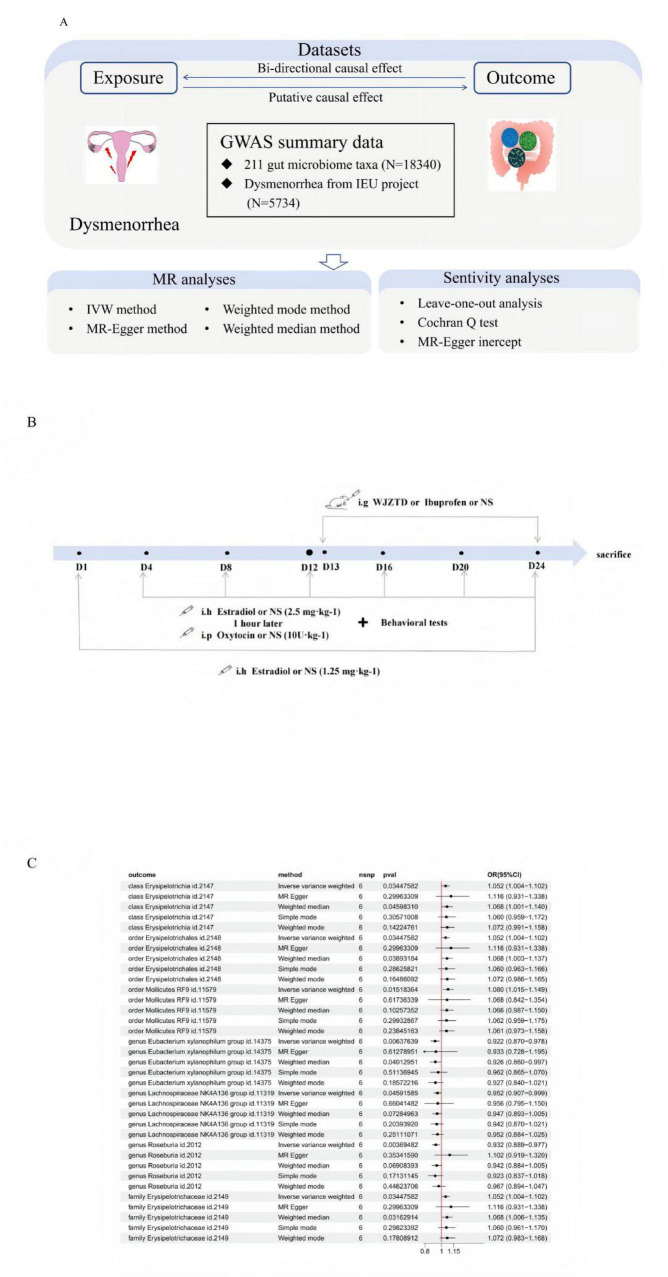 Figure 1
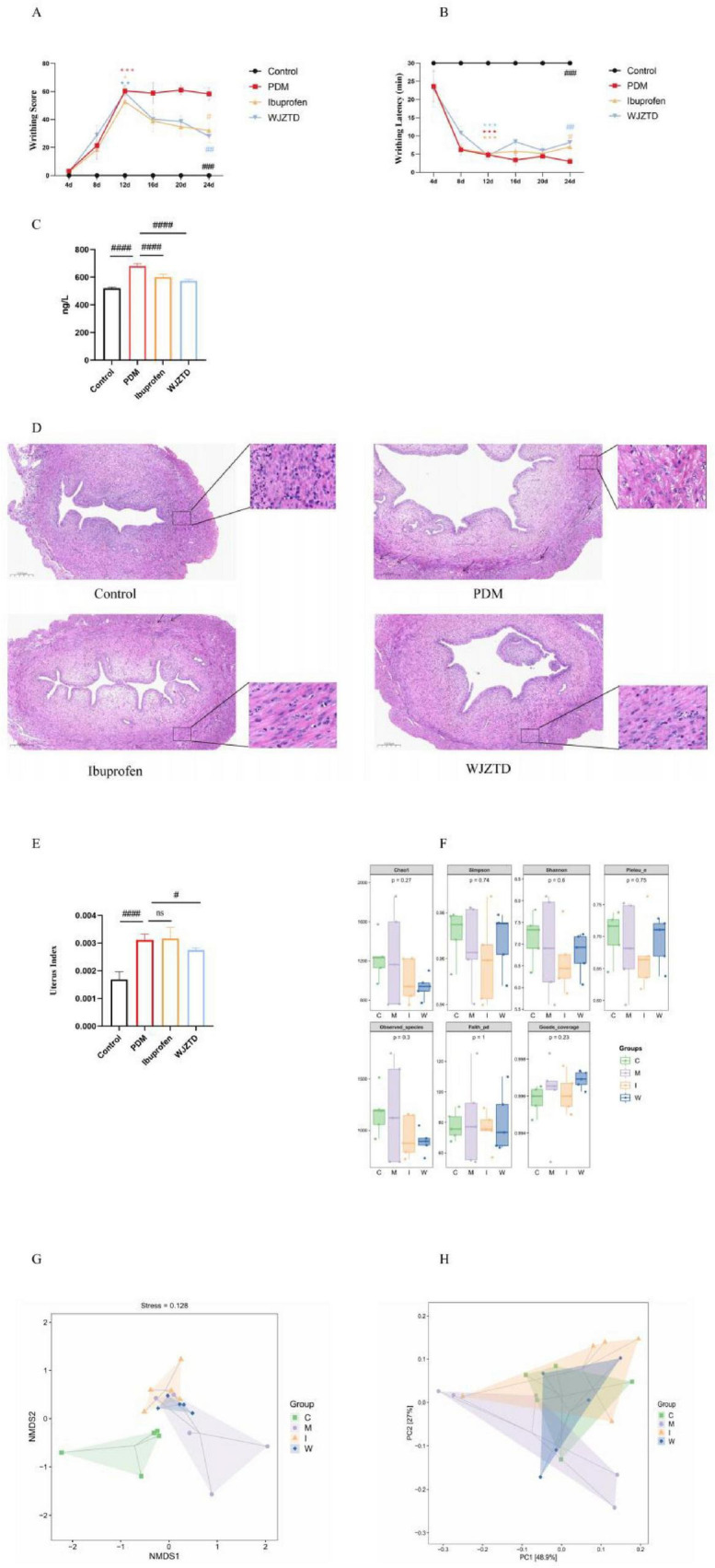 Figure 2
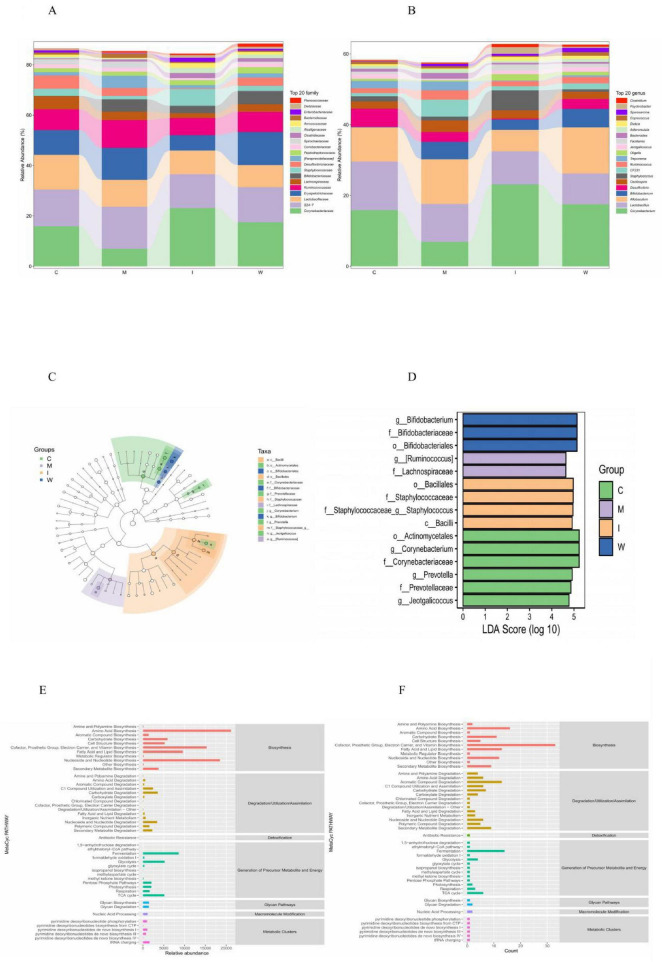 Figure 3
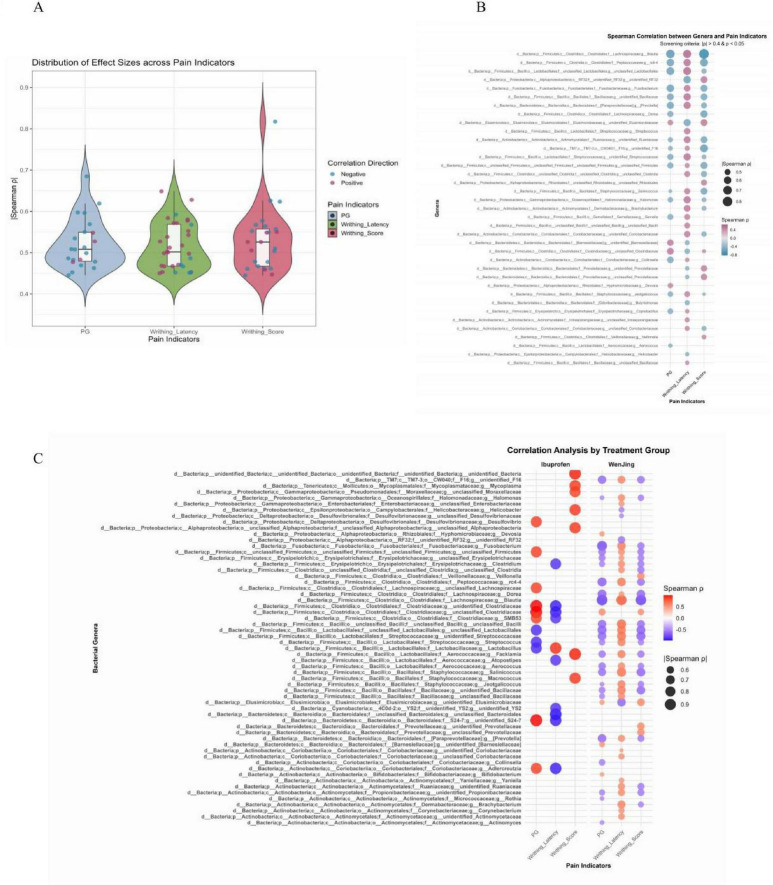 Figure 4
Peer Reviews
No public reviews on file for this paper yet. If you reviewed it on a platform where reviews are public (OpenReview, ICLR, NeurIPS, ICML), you can paste yours below so the community can read it here.
Videos
No videos yet. Explain this paper in a talk, walkthrough, or lecture? Add one.
Taxonomy
TopicsMenstrual Health and Disorders · Gut microbiota and health · Reproductive tract infections research