Immunoglobulin NGS enhance residual disease detection and prognosis in pediatric Ph+ acute lymphoblastic leukemia
Lixian Chang, Jiao Chang, Beibei Zhao, Yun Gu, Yao Zou, Yumei Chen, Ye Guo, Xiaojuan Chen, Wenyu Yang, Yongjuan Duan, Tianyuan Hu, Xiaoming Liu, Min Ruan, Zefeng Lu, Shixin Lu, Xiaoxia Wang, Li Dong, Jinghua Wu, Yujiao Jia, Xiao Liu, Xiaofan Zhu, Li Zhang

TL;DR
This study shows that immunoglobulin next-generation sequencing improves detection of residual disease and predicts outcomes in children with a specific type of leukemia.
Contribution
The study demonstrates that Ig-NGS provides more accurate and earlier prognosis and monitoring of clonal evolution in pediatric Ph+ B-ALL compared to conventional methods.
Findings
Ig-NGS detected lower malignant clonal cells at diagnosis correlated with better relapse-free survival.
Ig-NGS MRD negativity at the end of induction was linked to improved two-year survival.
Specific IGH gene usage and clonal evolution patterns were associated with prognosis.
Abstract
In pediatric Philadelphia chromosome-positive acute lymphoblastic leukemia (Ph+ B-ALL), the clinical value of highly sensitive minimal residual disease (MRD) detection by immunoglobulin next-generation sequencing (Ig-NGS), and its role for tracking clonal evolution, remains inadequately characterized. In this study, we evaluated MRD in a cohort of pediatric Ph+ B-ALL patients using Ig-NGS in parallel with conventional methods, including flow cytometry (FCM) and BCR-ABL reverse transcription polymerase chain reaction (RT-PCR). Malignant clonal burden at diagnosis, MRD kinetics, and immunoglobulin heavy chain (IGH) clonal evolution were analyzed for their prognostic relevance. We observed that a lower percentage of malignant clonal cells detected by Ig-NGS at diagnosis was associated with improved relapse-free survival (RFS) (p < 0.01). Ig-NGS-derived pre-treatment malignant clone burden…
Genes, proteins, chemicals, diseases, species, mutations and cell lines named across the full text — each resolved to its canonical identifier and authoritative record.
Click any figure to enlarge with its caption.
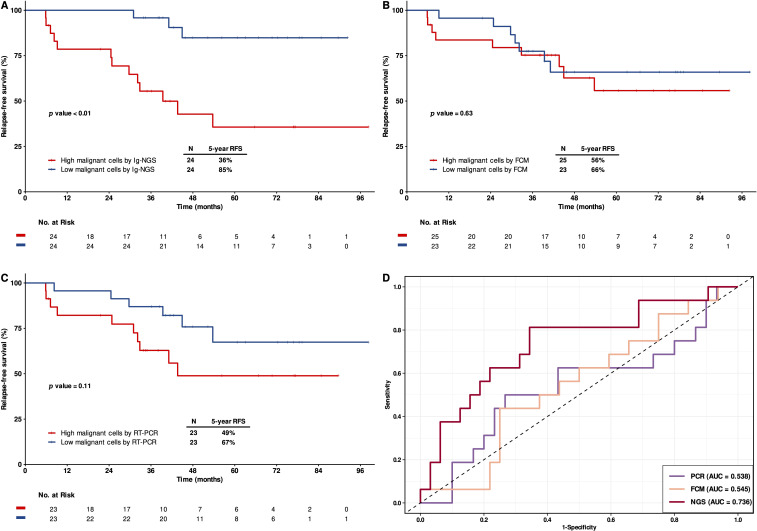 Figure 1
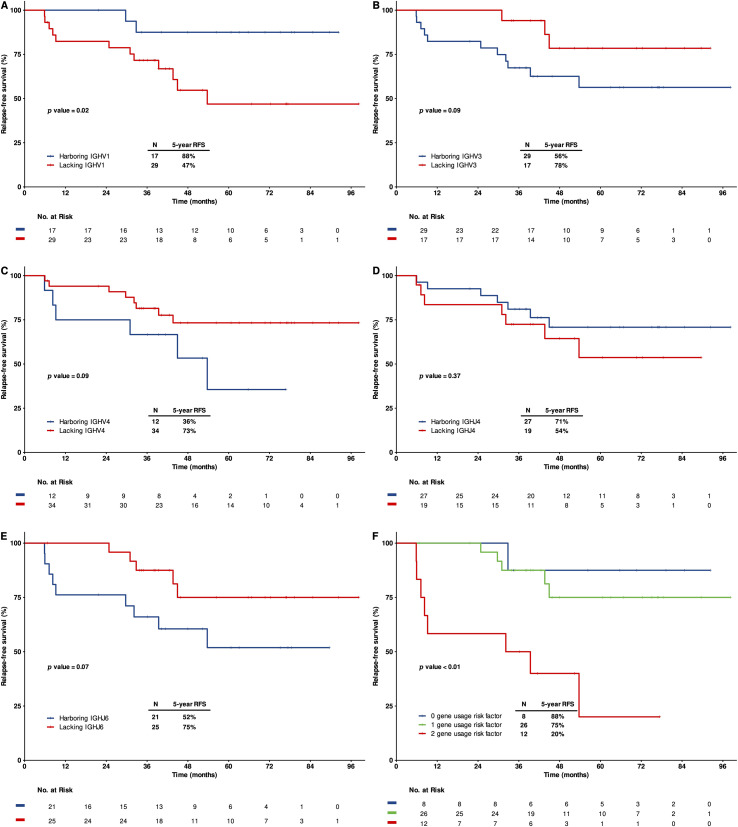 Figure 2
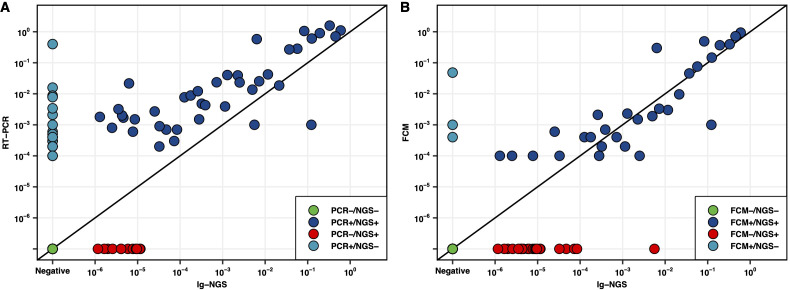 Figure 3
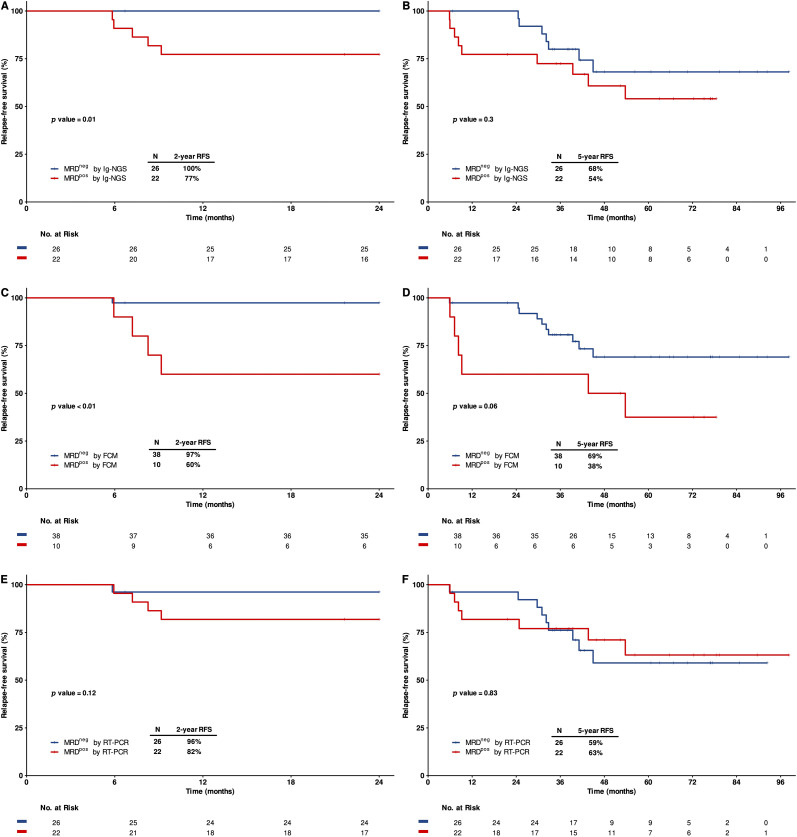 Figure 4
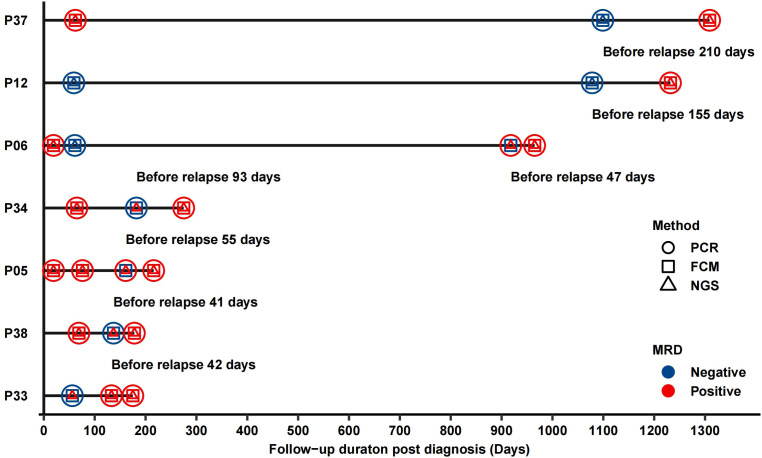 Figure 5
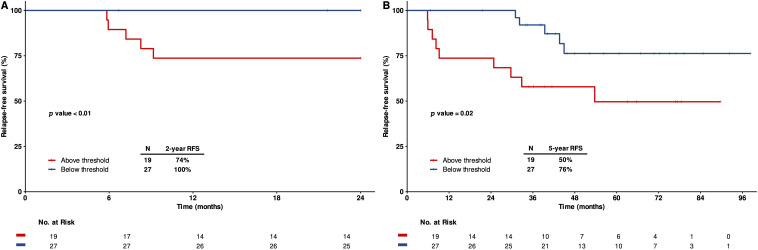 Figure 6
Peer Reviews
No public reviews on file for this paper yet. If you reviewed it on a platform where reviews are public (OpenReview, ICLR, NeurIPS, ICML), you can paste yours below so the community can read it here.
Videos
No videos yet. Explain this paper in a talk, walkthrough, or lecture? Add one.
Taxonomy
TopicsAcute Lymphoblastic Leukemia research · Chronic Myeloid Leukemia Treatments · Acute Myeloid Leukemia Research