The anti-biofilm compound 4-ethoxybenzoic acid inhibits Staphylococcus aureus virulence factor production via a putative 4EB-binding pocket in key virulence-associated proteins
Caroline C. Taylor, Adonis Aviles-Gonzalez, Alexander Marchesani, Christina Kiessling, Travis Patrick, Linxin Chen, Haozhe Yao, Zixuan Li, Abbie Seward, Kuk-Jeong Chin, Eric S. Gilbert

TL;DR
4-ethoxybenzoic acid (4EB) reduces Staphylococcus aureus biofilm and virulence by binding to key proteins involved in pathogenesis.
Contribution
4EB's dual anti-biofilm and anti-virulence effects are linked to binding a conserved pocket in virulence-associated proteins.
Findings
4EB reduced S. aureus biofilm formation by 88% and virulence factors like alpha-hemolysin by 60%.
4EB downregulated virulence genes hla and lukDvEv by over 100-fold and SaeR by 35-fold.
Molecular docking showed 4EB binds strongly to 9 virulence regulators, including SaeS and IcaR.
Abstract
There is a need for dual action anti-virulence and anti-biofilm agents that target the opportunistic pathogen Staphylococcus aureus. Previous research determined that 0.8 mg/mL 4-ethoxybenzoic acid (4EB) reduced S. aureus ATCC 6538 biofilm formation by 88% relative to untreated controls with moderate inhibition of planktonic cell growth. Here we report that 4EB impacted S. aureus virulence phenotypes across all growth phases, including alpha-hemolysin (Hla) and serine protease (SplB/C) exoprotein production (60% reduction), staphyloxanthin pigment accumulation (73% reduction) and alpha-hemolysis (>87% reduction) compared to untreated control cells. RT-qPCR analysis demonstrated that 4EB downregulated virulence gene expression, including >100-fold reduction of alpha-hemolysin (hla) and leukocidins (lukDvEv), and a 35-fold decrease of the response regulator SaeR. Phenol-soluble modulin…
Genes, proteins, chemicals, diseases, species, mutations and cell lines named across the full text — each resolved to its canonical identifier and authoritative record.
Click any figure to enlarge with its caption.
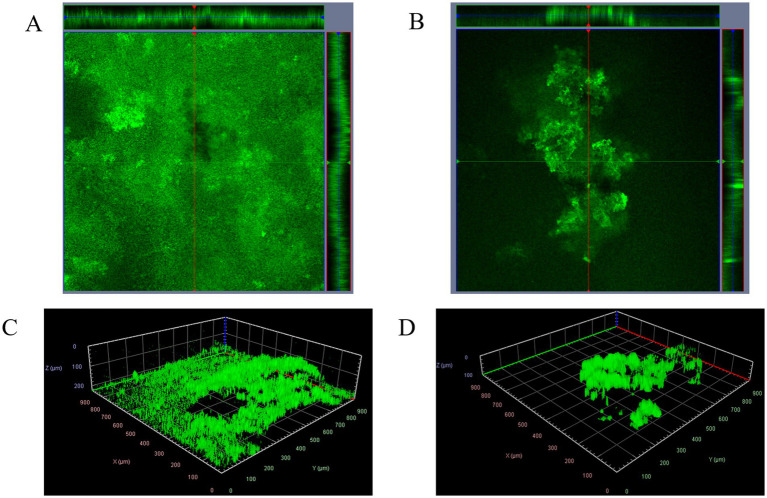 Figure 1
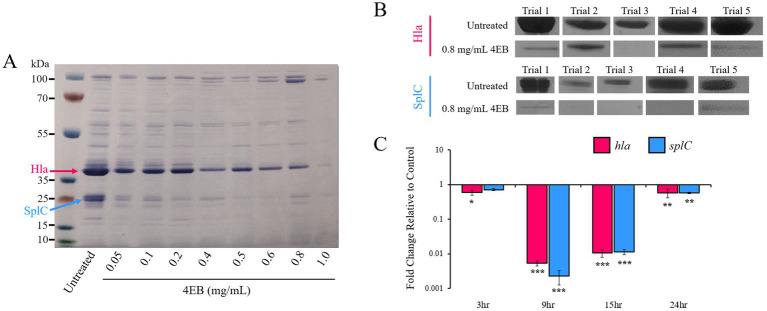 Figure 2
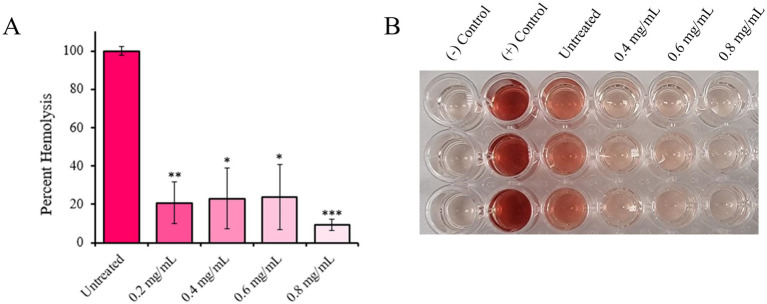 Figure 3
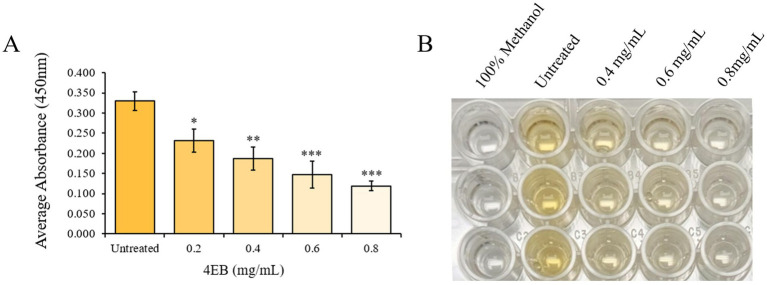 Figure 4
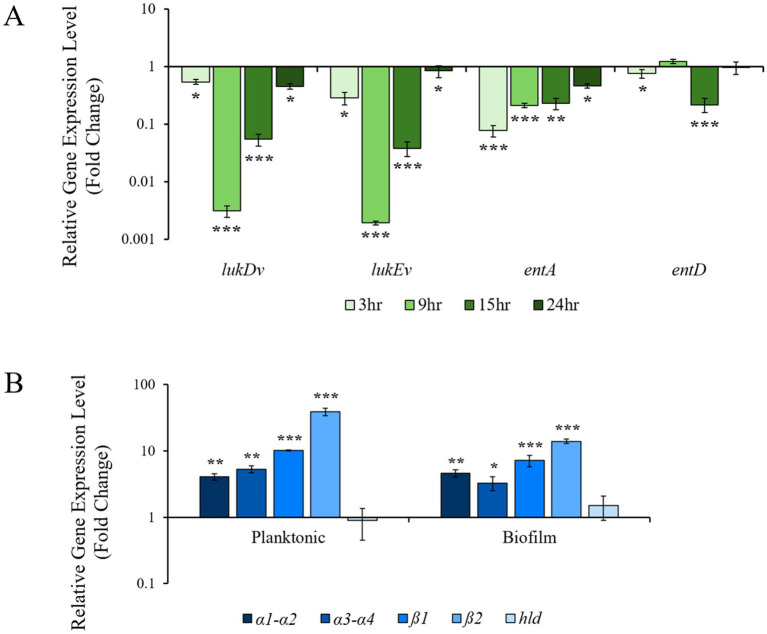 Figure 5
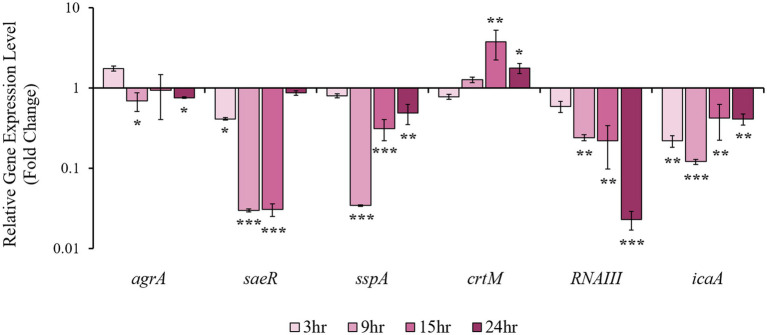 Figure 6
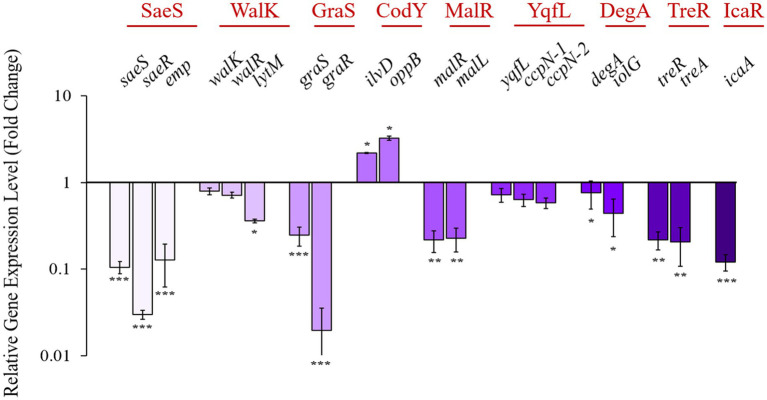 Figure 7
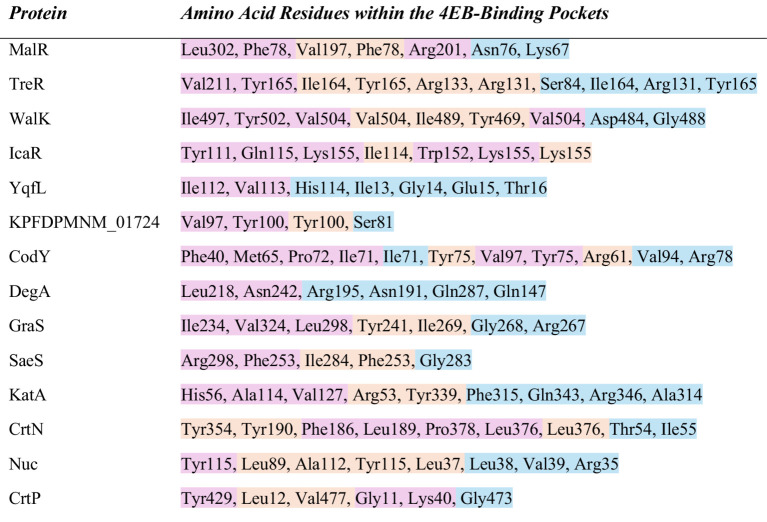 Figure 8
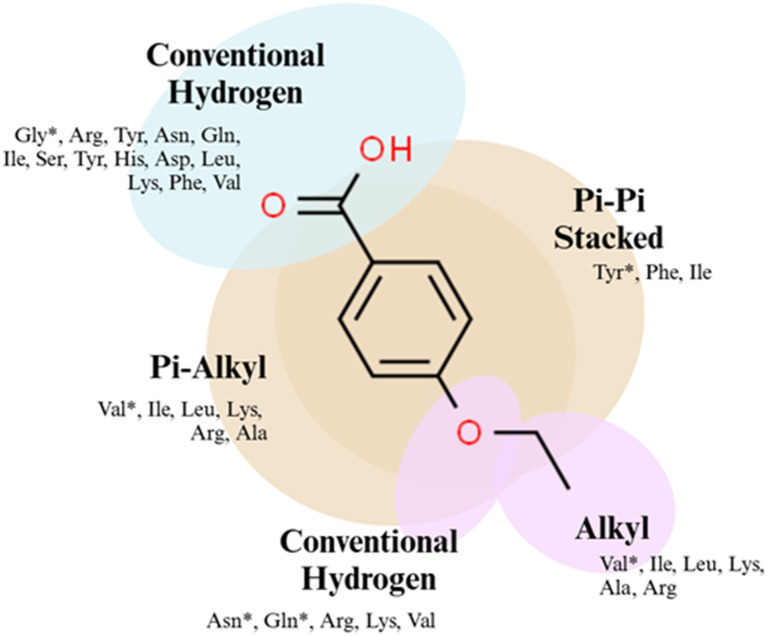 Figure 9
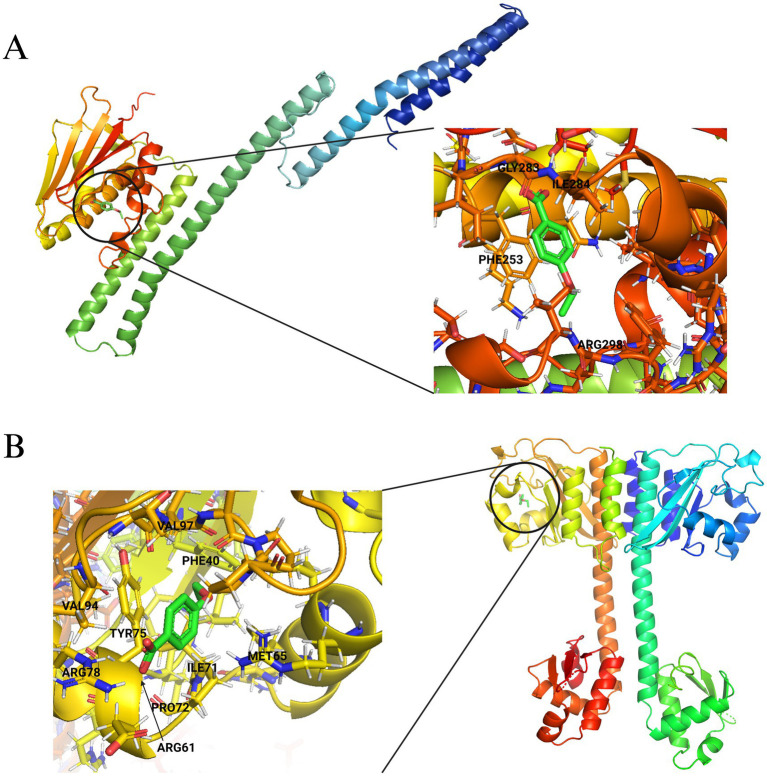 Figure 10
Peer Reviews
No public reviews on file for this paper yet. If you reviewed it on a platform where reviews are public (OpenReview, ICLR, NeurIPS, ICML), you can paste yours below so the community can read it here.
Videos
No videos yet. Explain this paper in a talk, walkthrough, or lecture? Add one.
Taxonomy
TopicsAntimicrobial Resistance in Staphylococcus · Bacterial biofilms and quorum sensing · Biochemical and Structural Characterization