The dysregulation of the immune microenvironment during endometrial intraepithelial neoplasia serves as a marker of endometrial carcinogenesis
Yingying Peng, Guanglei Zhong, Minqi Zhou, Yuwei Yao, Kejun Dong, Zheng Yang, Lanfen An, Jun Zhang, Jiarui Zhang, Shuo Zhang, Qianqian Tang, Hongbo Wang

TL;DR
This review explains how immune system changes during early endometrial neoplasia mark the start of cancer development and could help guide early treatment.
Contribution
The paper highlights immune microenvironment dysregulation during endometrial intraepithelial neoplasia as a key marker of early carcinogenesis.
Findings
Estrogen-driven interactions between endothelial cells and macrophages contribute to immune dysregulation.
Endometrial intraepithelial neoplasia represents a critical stage of immune imbalance preceding cancer.
Different endometrial cancer subtypes have distinct immune microenvironment profiles.
Abstract
The development of endometrial cancer is a gradual malignant transformation process driven by multiple factors, and the immune microenvironment is closely related to clinical outcomes and immunotherapy responses. Under physiological conditions, the immune microenvironment of the normal endometrium undergoes periodic reshaping under the regulation of estrogen and progesterone, maintaining the balance between immune defense and reproductive capacity. However, continuous exposure to risk factors, such as non-antagonistic estrogen, may trigger endometrial intraepithelial neoplasia. During this period, the immune microenvironment becomes dysregulated, supporting malignant progression. For example, estrogen-stimulated interactions between endothelial cells and macrophages, elevated neutrophil/lymphocyte ratios, and the accumulation of regulatory T cells all combine to cause dysregulation of…
Genes, proteins, chemicals, diseases, species, mutations and cell lines named across the full text — each resolved to its canonical identifier and authoritative record.
Click any figure to enlarge with its caption.
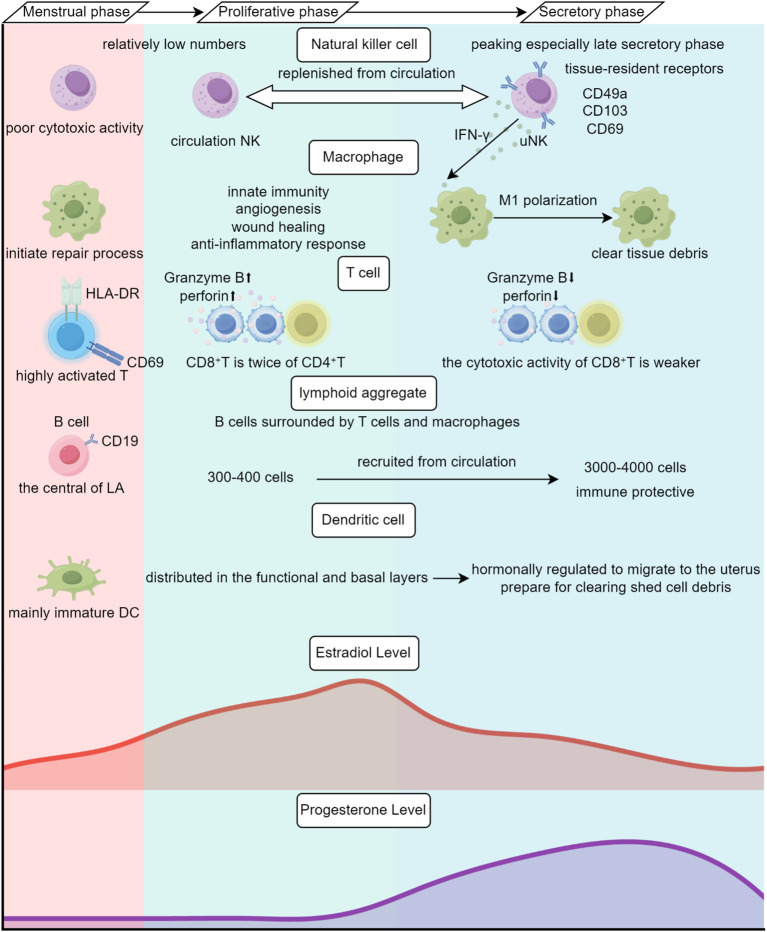 Figure 1
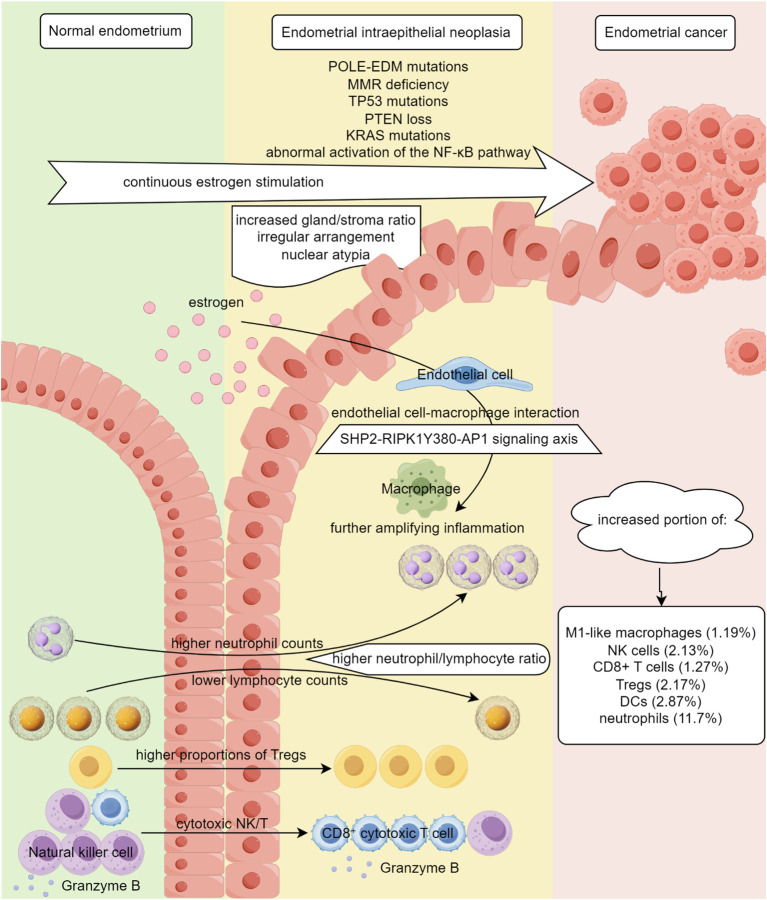 Figure 2
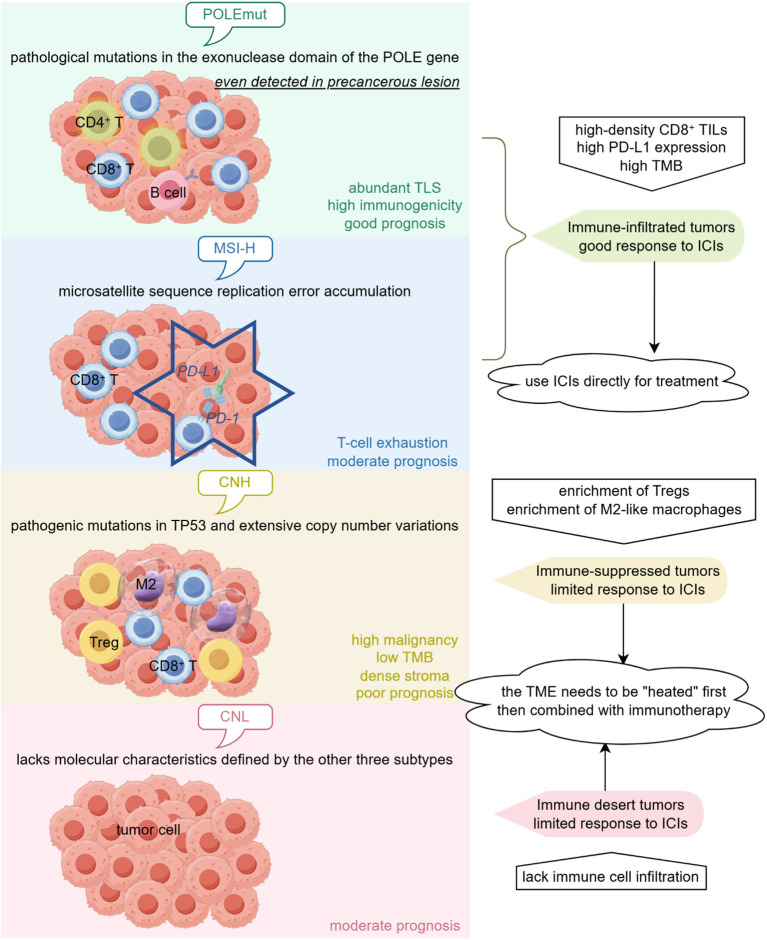 Figure 3
Peer Reviews
No public reviews on file for this paper yet. If you reviewed it on a platform where reviews are public (OpenReview, ICLR, NeurIPS, ICML), you can paste yours below so the community can read it here.
Videos
No videos yet. Explain this paper in a talk, walkthrough, or lecture? Add one.
Taxonomy
TopicsReproductive System and Pregnancy · Endometrial and Cervical Cancer Treatments · Immune cells in cancer