Nocturnal BiPAP Therapy Improved Chronic Respiratory Failure in Chilaiditi Syndrome
Takeshi Kouga, Reizo Tsukamoto

TL;DR
A 79-year-old man with Chilaiditi syndrome experienced improved breathing and sleep after using BiPAP therapy at night.
Contribution
This case report suggests that nocturnal BiPAP therapy can be an effective treatment for respiratory symptoms in Chilaiditi syndrome.
Findings
The patient's dyspnea and sleep disturbance improved with nocturnal BiPAP therapy.
BiPAP therapy may reduce diaphragmatic compression caused by intestinal enlargement.
BiPAP should be considered as a treatment option for Chilaiditi syndrome patients.
Abstract
Chilaiditi syndrome includes the Chilaiditi sign, a radiological finding where a segment of bowel loop or small intestine has wandered between the liver and diaphragm and also any symptoms related to intestinal interference. We report the case of a 79‐year‐old man with Chilaiditi syndrome whose dyspnea and sleep disturbance improved after nocturnal biphasic positive airway pressure (BiPAP) therapy implementation. BiPAP therapy may contribute to thoracic pressure elevation and reduce diaphragmatic compression due to intestinal enlargement, thus leading to improvements in respiratory symptoms. BiPAP therapy should therefore be considered as a treatment option for Chilaiditi syndrome patients.
Genes, proteins, chemicals, diseases, species, mutations and cell lines named across the full text — each resolved to its canonical identifier and authoritative record.
Click any figure to enlarge with its caption.
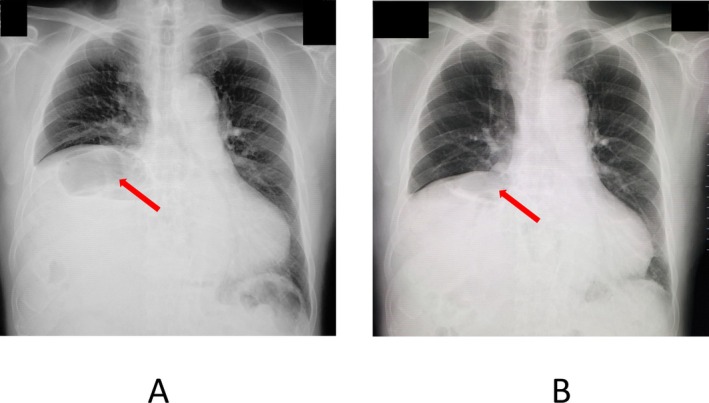 Figure 1
Peer Reviews
No public reviews on file for this paper yet. If you reviewed it on a platform where reviews are public (OpenReview, ICLR, NeurIPS, ICML), you can paste yours below so the community can read it here.
Videos
No videos yet. Explain this paper in a talk, walkthrough, or lecture? Add one.
Taxonomy
TopicsIntestinal Malrotation and Obstruction Disorders · Congenital Diaphragmatic Hernia Studies · Cystic Fibrosis Research Advances