Contrasting haemosporidian infections in two ecologically distinct wading birds from breeding colonies in the southeastern United States
Ke Zhang, Samantha M. Wisely, Chris K. Gulick, Abby N. Powell

TL;DR
The study compares haemosporidian infections in two wading bird species, finding that white ibis have higher infection rates and may act as parasite reservoirs.
Contribution
This is the first direct comparison of hemoparasite infections in two ecologically distinct wading bird species using movement data to explain infection differences.
Findings
White ibis had a higher Haemoproteus plataleae infection prevalence (42.1%) compared to tricolored herons (14.5%).
White ibis used more freshwater habitats, potentially supporting vector habitats, while tricolored herons remained in coastal areas.
White ibis may serve as major reservoirs for H. plataleae, while tricolored herons may disperse parasites regionally.
Abstract
Wading birds may serve as ideal hosts for avian hemoparasites, as they are long-lived, undertake extensive movements, form dense breeding colonies, and inhabit water-associated environments that support vectors. Although previous studies have reported parasite species and prevalence in various wading bird species, little is known about their associations with bird behavior and life stage. To address this gap, we examined haemosporidian infections in two ecologically distinct species, white ibis (Eudocimus albus) and tricolored heron (Egretta tricolor), to explore differences in life stage and movement that may explain prevalence differences. We combined blood screening for hemoparasites with satellite tracking data describing birds’ movement patterns. We screened 95 white ibis (67 juveniles and 28 adults or subadults) and 69 tricolored herons (45 juveniles and 24 adults). We detected a…
Genes, proteins, chemicals, diseases, species, mutations and cell lines named across the full text — each resolved to its canonical identifier and authoritative record.
Click any figure to enlarge with its caption.
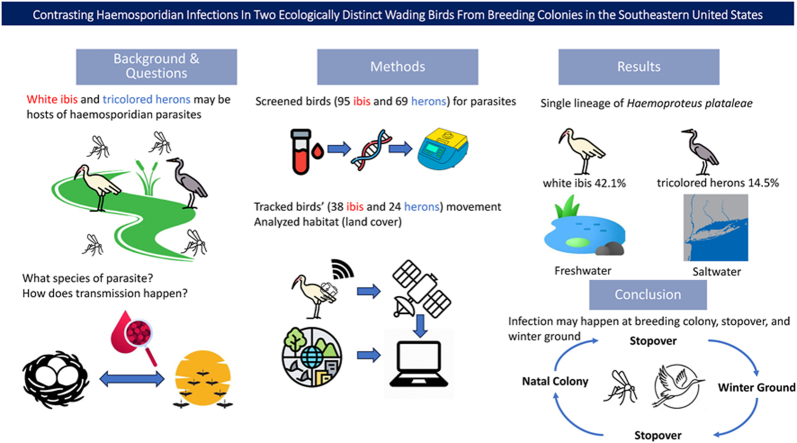 Figure 1
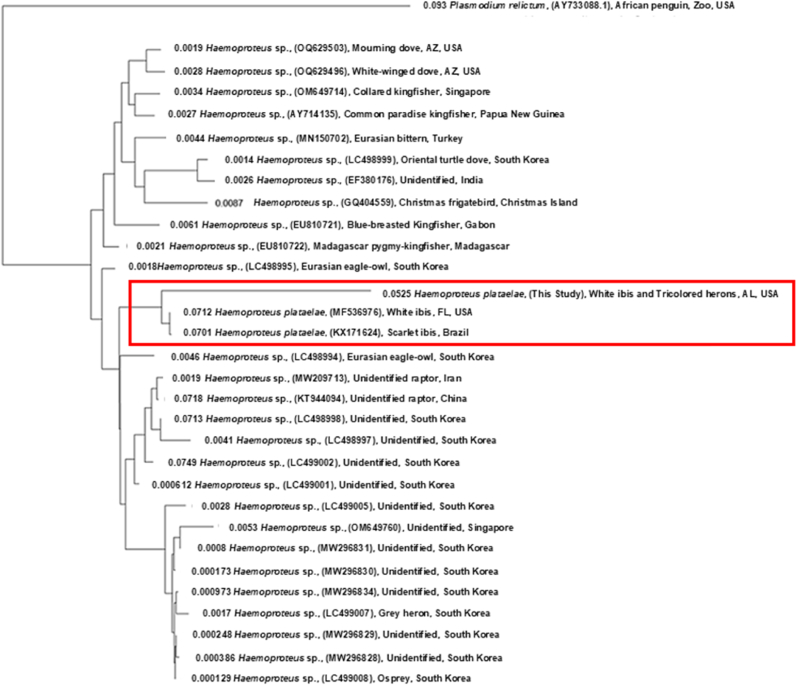 Figure 2
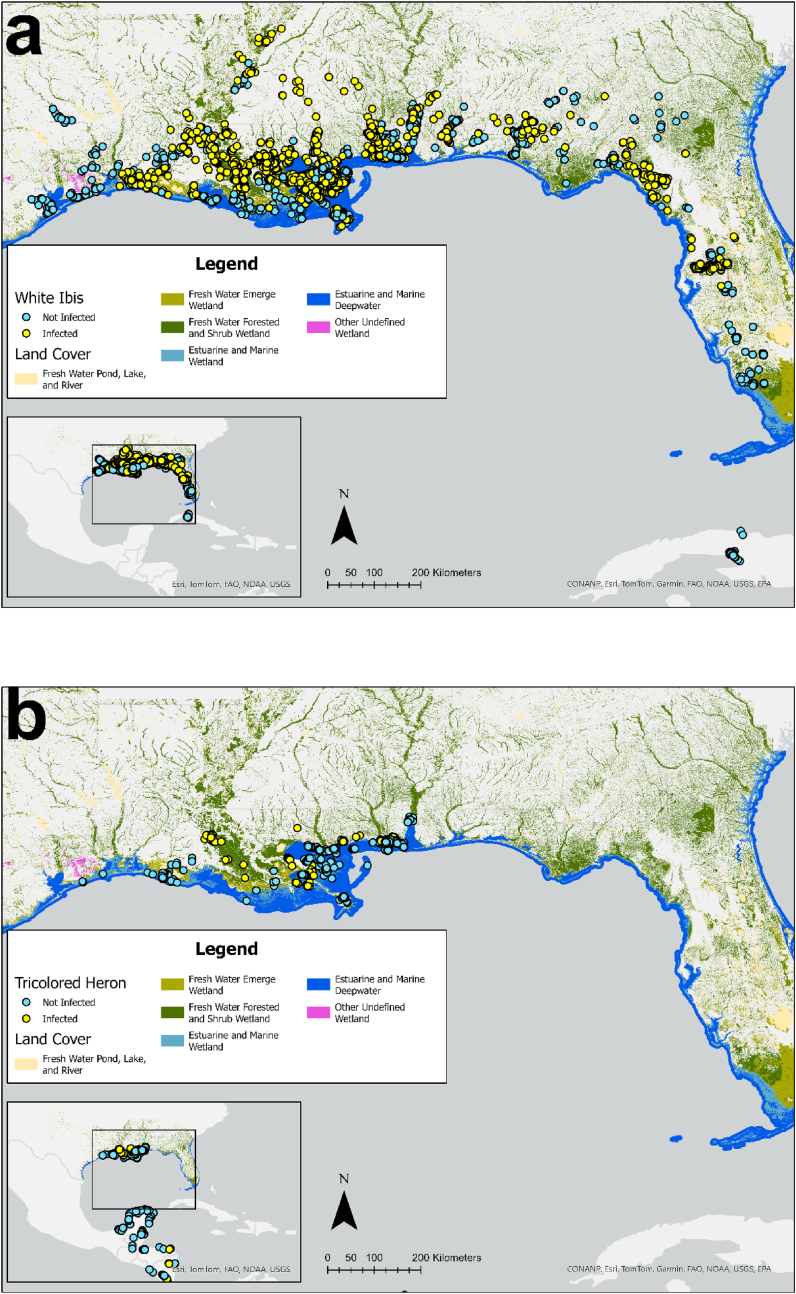 Figure 3
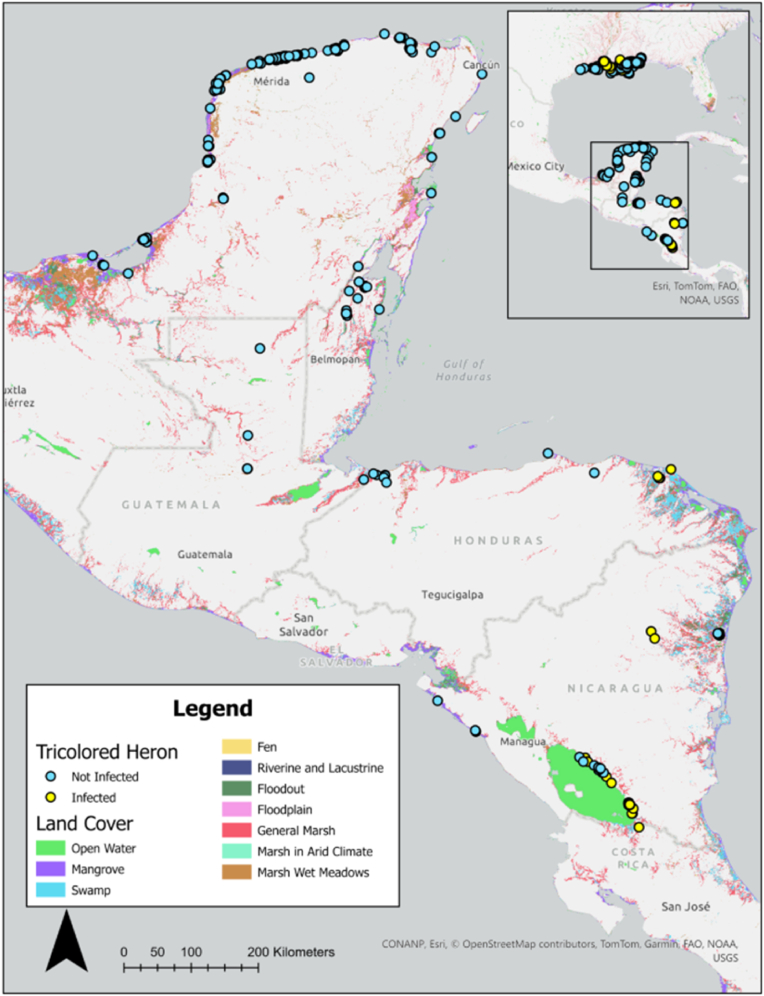 Figure 4
Peer Reviews
No public reviews on file for this paper yet. If you reviewed it on a platform where reviews are public (OpenReview, ICLR, NeurIPS, ICML), you can paste yours below so the community can read it here.
Videos
No videos yet. Explain this paper in a talk, walkthrough, or lecture? Add one.
Taxonomy
TopicsBird parasitology and diseases · Vector-borne infectious diseases · Bartonella species infections research