Evolution of foodborne disease surveillance in China: A 32-year journey from monitoring to early warning
Zhifang Zhang, Weiwei Chen, Xuejie Liu, Yanqin Deng, Huarong Hong, Shenggen Wu

TL;DR
China's foodborne disease surveillance system has evolved over 32 years, shifting from passive to proactive monitoring and improving detection and prevention.
Contribution
The paper provides a 32-year analysis of China's foodborne disease surveillance evolution and highlights the need for a 'One Health' approach.
Findings
China's surveillance system transitioned from passive to active monitoring and integrated international standards.
Vibrio parahaemolyticus has been the leading cause of foodborne disease outbreaks in China for 32 years.
The number of outbreaks has increased, but case fatality rates have decreased due to improved detection technologies.
Abstract
China's foodborne disease (FBD) surveillance system was implemented later than those in most developed countries. However, in the past 32 years, it has undergone improvements: from pilot projects to full coverage; from a passive mode to an active one; from localized development to the integration of international standards; and from a single function to a comprehensive system. During this process, China's health administrative departments have adjusted their regulatory departments and functions for FBDs in response to evolving epidemiological patterns of FBD. Simultaneously, they have used a phased, step-by-step approach to promote the use of whole genome sequencing (WGS) technology, according to the level of regional economic development, to facilitate FBD traceability. However, the system must be further improved in terms of traceability capabilities, multi-departmental…
Genes, proteins, chemicals, diseases, species, mutations and cell lines named across the full text — each resolved to its canonical identifier and authoritative record.
Click any figure to enlarge with its caption.
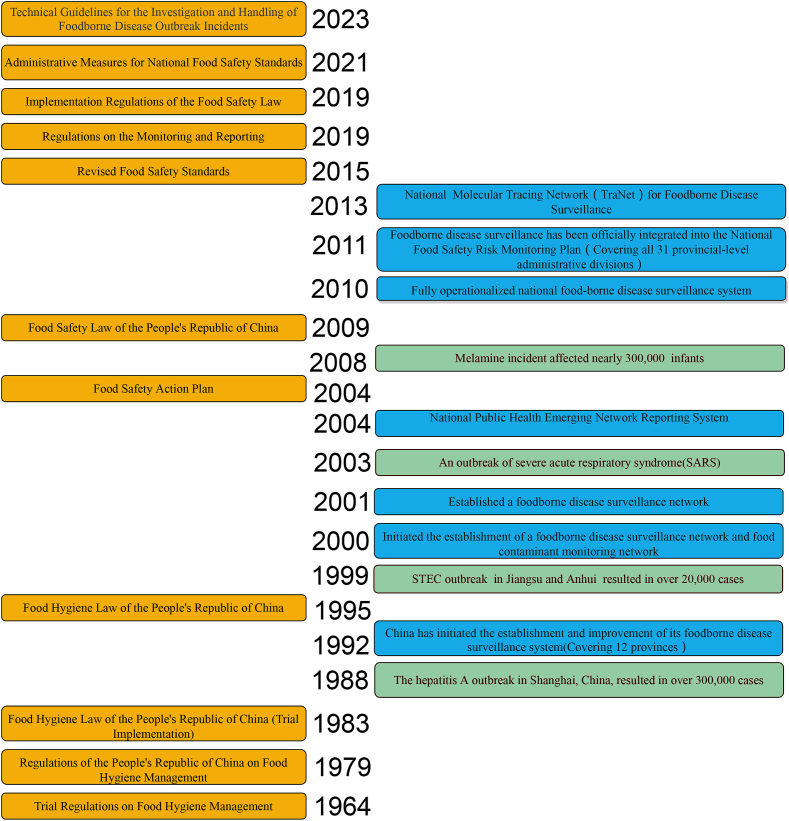 Figure 1
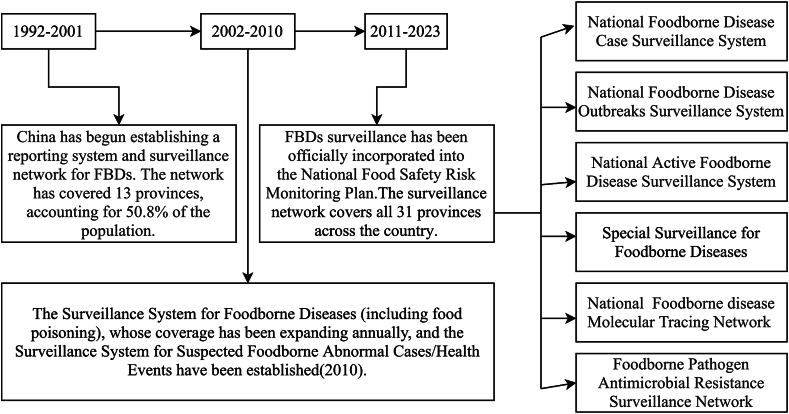 Figure 2
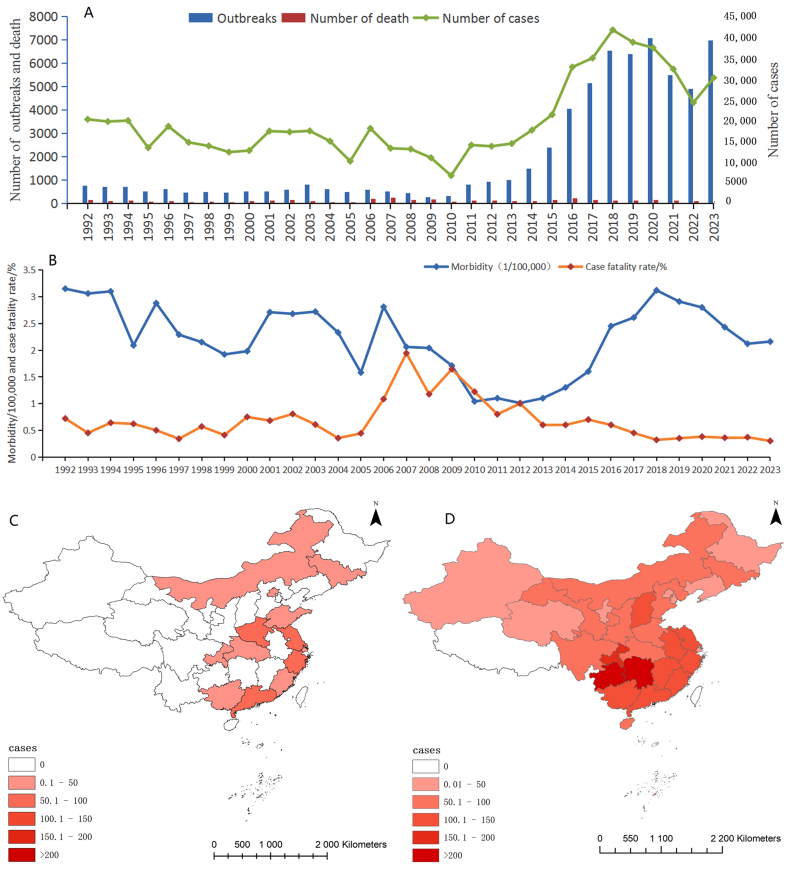 Figure 3
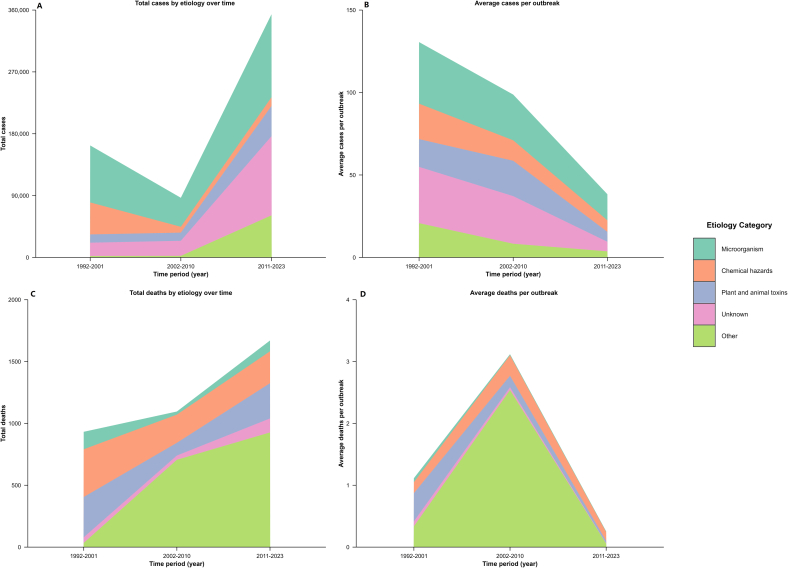 Figure 4
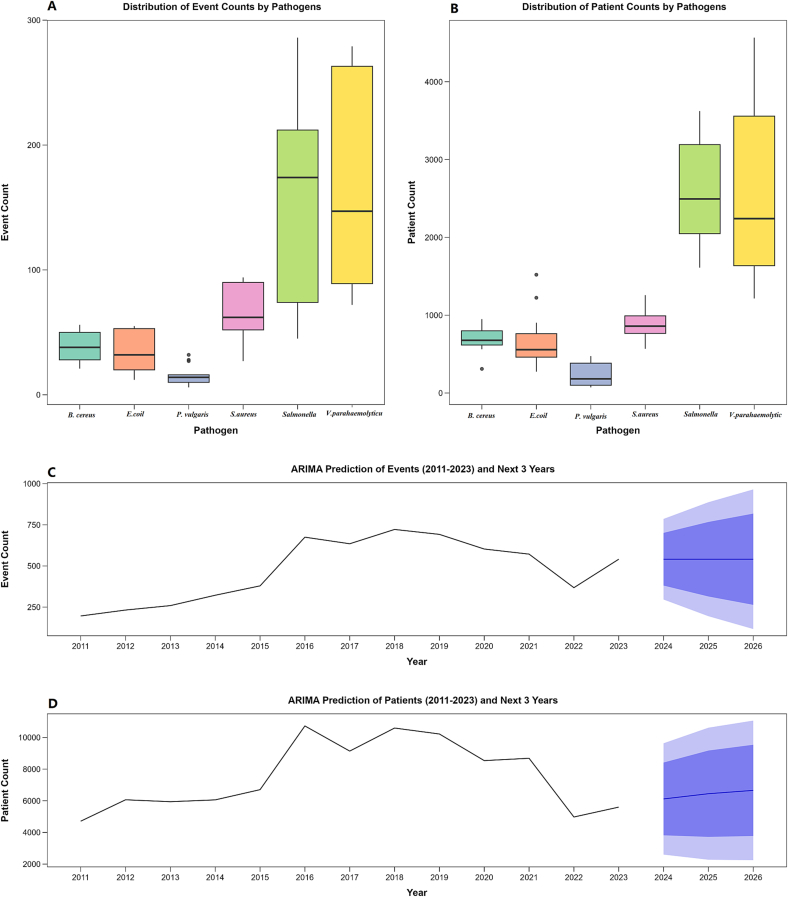 Figure 5
Peer Reviews
No public reviews on file for this paper yet. If you reviewed it on a platform where reviews are public (OpenReview, ICLR, NeurIPS, ICML), you can paste yours below so the community can read it here.
Videos
No videos yet. Explain this paper in a talk, walkthrough, or lecture? Add one.
Taxonomy
TopicsSalmonella and Campylobacter epidemiology · Vibrio bacteria research studies · Food Safety and Hygiene