Severe pediatric hypocalcemia in Vietnam: etiologic profile, clinical outcomes and risk factors in 246 cases
Thanh T. Nguyen, Giang T.K. Dang, Phuong Thao Bui, Mai Kieu Anh, Pham Thi Thuy Hoa, Dongryeol Ryu, Vu Chi Dung

TL;DR
This study examines 246 children in Vietnam with severe hypocalcemia, finding vitamin D deficiency and hypoparathyroidism as main causes, and highlights the risk of seizures and cardiac issues.
Contribution
The study provides novel region-specific insights into the etiology and clinical outcomes of severe hypocalcemia in a tropical setting with presumed adequate sunlight exposure.
Findings
Vitamin D deficiency was the most common cause of severe hypocalcemia (67.1%) in Vietnamese children.
Lower ionized calcium and 25-hydroxyvitamin D levels independently predicted seizures in affected children.
Children with DiGeorge syndrome exhibited distinct biochemical profiles with very low PTH levels and preserved phosphate.
Abstract
Severe hypocalcemia in children can precipitate life-threatening neurologic and cardiovascular events, including seizures and cardiac dysfunction. Etiologies range from nutritional deficiency to genetic syndromes, yet local epidemiologic and clinical data remain limited, particularly in Southeast Asia. We retrospectively reviewed 246 children (newborns to 18 years) admitted with severe hypocalcemia at the Vietnam National Children’s Hospital (2018 - 2024), the leading tertiary center in Northern Vietnam. Demographic, clinical, and comprehensive biochemical data were collected. Descriptive, bivariate, and multivariable logistic regression analyses identified independent predictors of major clinical outcomes. Among 246 children, infants and young children predominated (70.7%; median age 67 days). Seizures occurred in 79.2%, while vitamin D deficiency (67.1%) and hypoparathyroidism…
Genes, proteins, chemicals, diseases, species, mutations and cell lines named across the full text — each resolved to its canonical identifier and authoritative record.
Click any figure to enlarge with its caption.
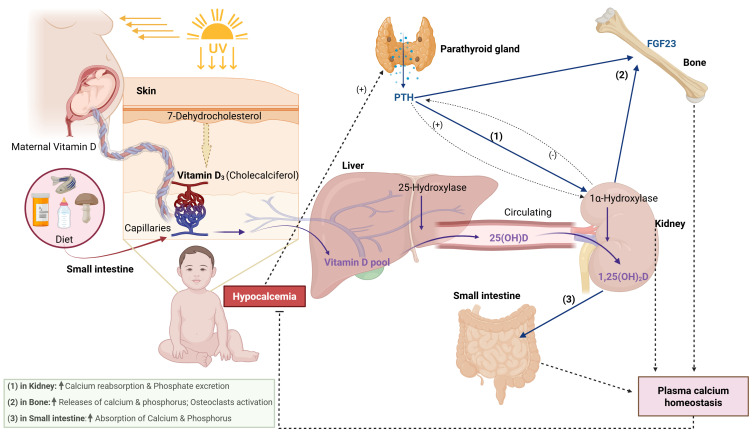 Figure 1
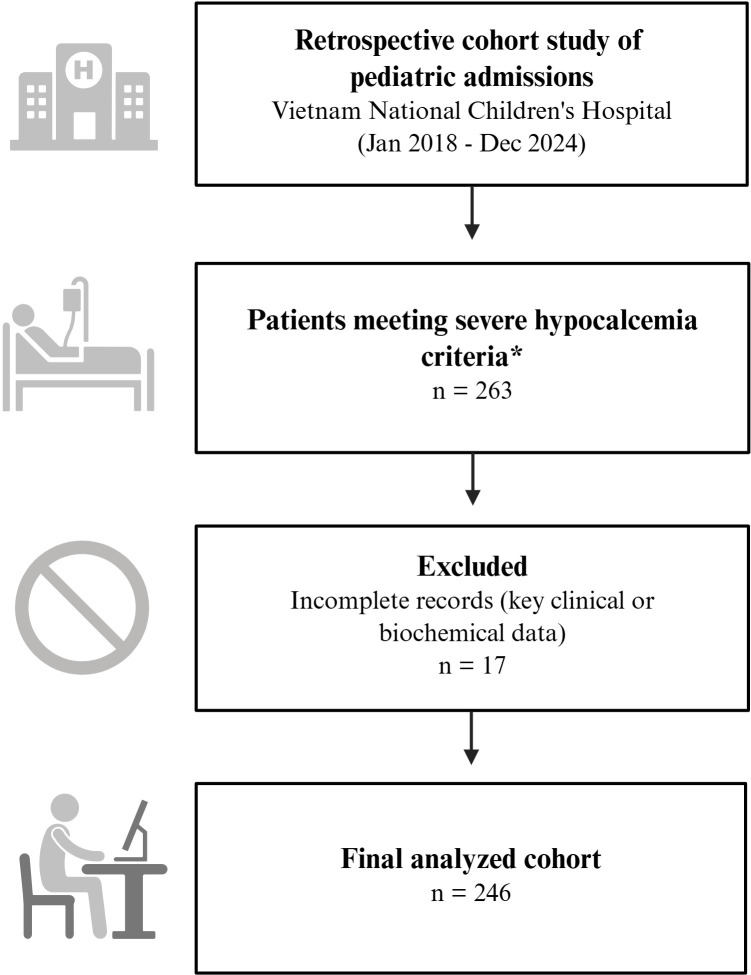 Figure 2
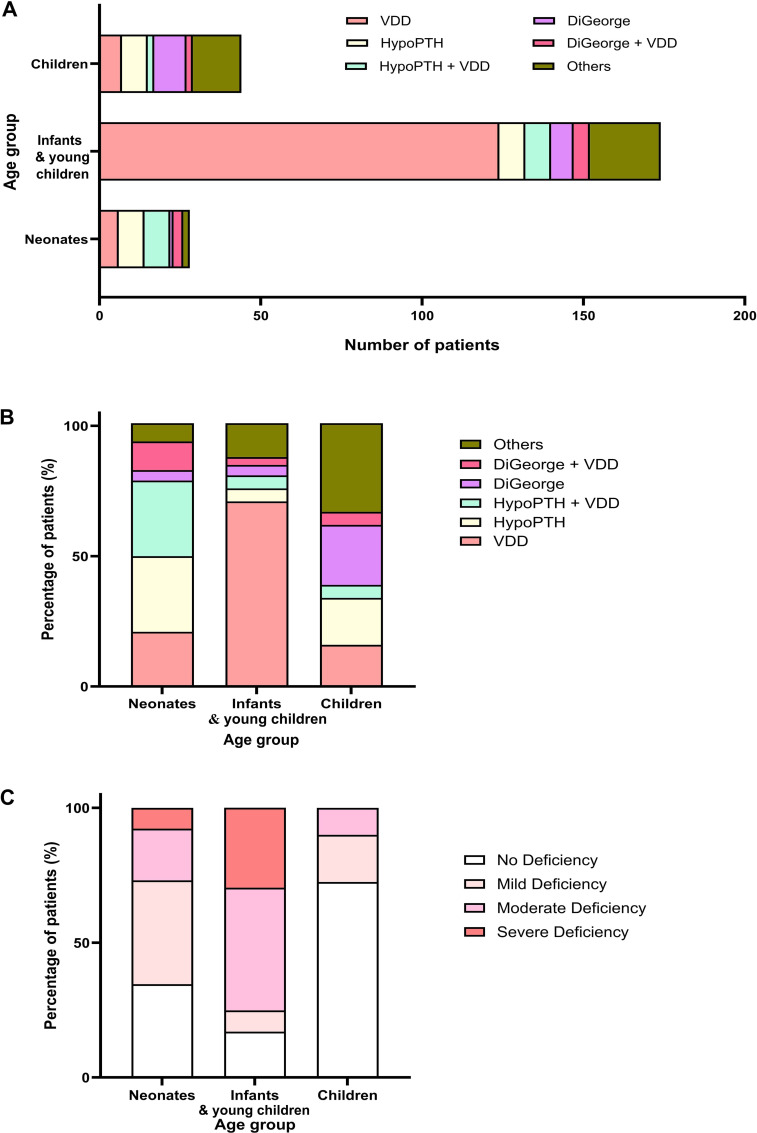 Figure 3
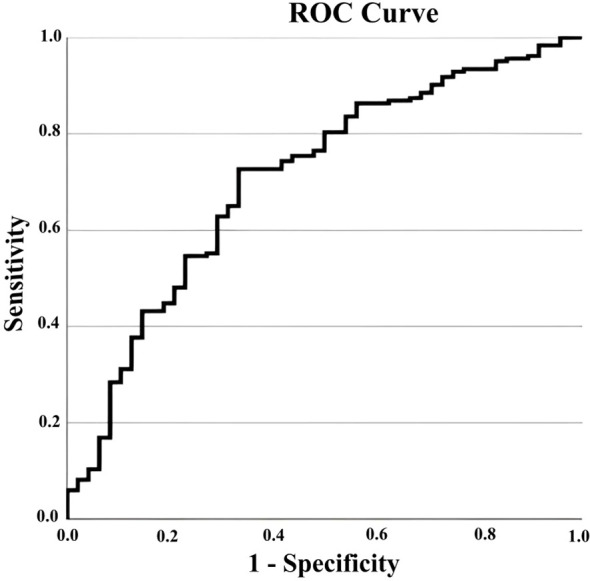 Figure 4
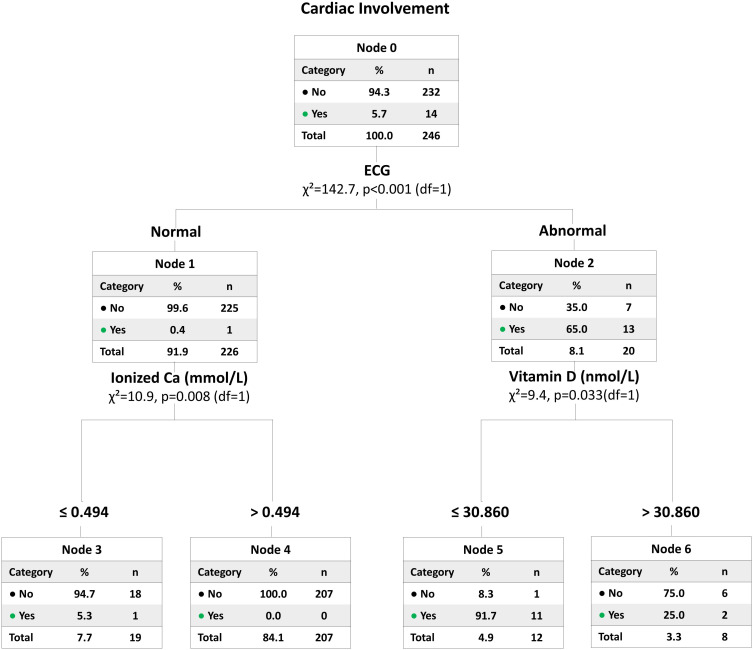 Figure 5
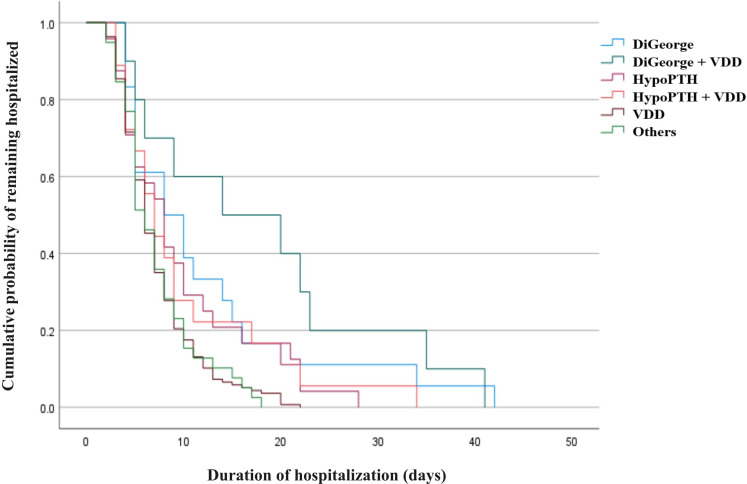 Figure 6
Peer Reviews
No public reviews on file for this paper yet. If you reviewed it on a platform where reviews are public (OpenReview, ICLR, NeurIPS, ICML), you can paste yours below so the community can read it here.
Videos
No videos yet. Explain this paper in a talk, walkthrough, or lecture? Add one.
Taxonomy
TopicsParathyroid Disorders and Treatments · Thyroid and Parathyroid Surgery · Craniofacial Disorders and Treatments