Multifaceted roles of fibronectin type III domain containing 3B (FNDC3B) in cell biology and signaling
Afreen Khanum, Althaf Mahin, Fathimathul Lubaba, Ashika Bangera, Athira Perunelly Gopalakrishnan, Sowmya Soman, Rajesh Raju

TL;DR
FNDC3B is a multifunctional protein involved in cell adhesion, migration, and signaling, with roles in both normal development and cancer progression.
Contribution
This review comprehensively outlines the diverse roles of FNDC3B in cell biology and its dual function in cancer.
Findings
FNDC3B promotes adipogenesis and lung cell maturation, essential for neonatal survival.
Dysregulation of FNDC3B is linked to cancer progression via EMT and oncogenic pathways.
FNDC3B acts as both an oncogene and tumor suppressor, depending on the cellular context.
Abstract
FNDC3B is an endoplasmic reticulum (ER)-anchored transmembrane protein with diverse roles in cell adhesion, migration, and growth signaling. Recognized as multifunctional, it contributes to key cellular processes such as adhesion, proliferation, differentiation, and migration, yet its molecular functions remain largely unannotated in the Gene Ontology database. Initially identified as a regulator of adipogenesis, promoting fat cell differentiation, FNDC3B also facilitates lung cell maturation, which is essential for neonatal survival. Dysregulation of FNDC3B is implicated in cancer progression through the promotion of epithelial–mesenchymal transition (EMT), metastasis, and modulation of multiple oncogenic signaling pathways. Intriguingly, it exhibits dual roles, acting as either an oncogene or a tumor suppressor, depending on the cellular context. However, the mechanistic determinants…
Genes, proteins, chemicals, diseases, species, mutations and cell lines named across the full text — each resolved to its canonical identifier and authoritative record.
Click any figure to enlarge with its caption.
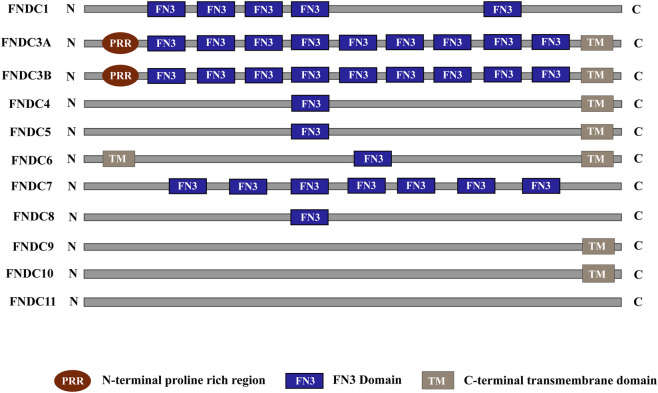 Figure 1
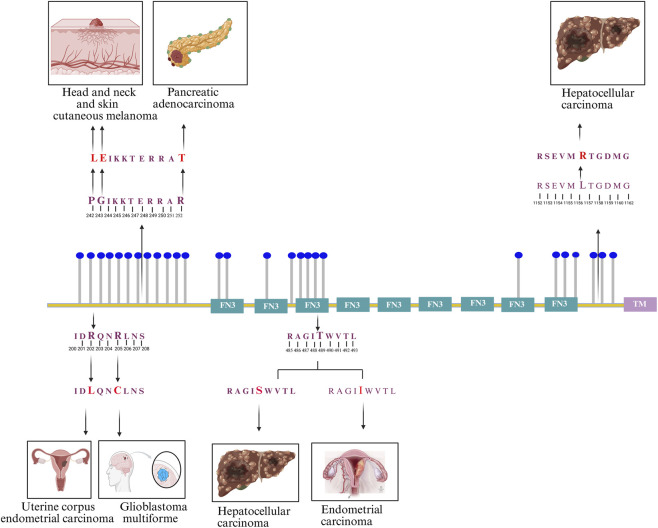 Figure 2
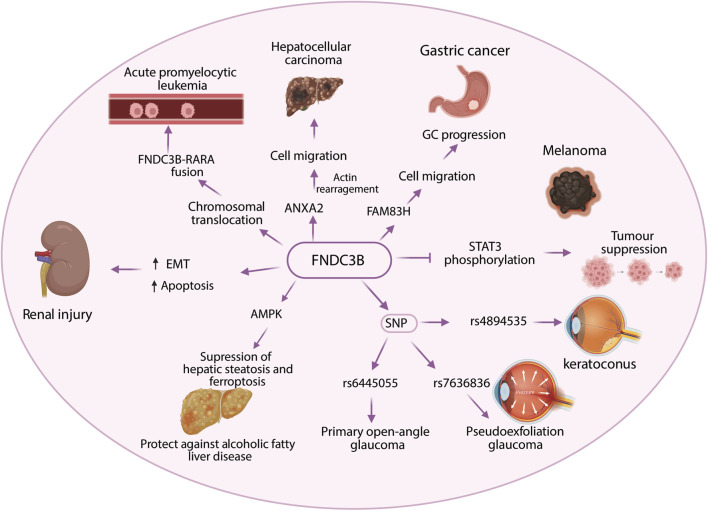 Figure 3
Peer Reviews
No public reviews on file for this paper yet. If you reviewed it on a platform where reviews are public (OpenReview, ICLR, NeurIPS, ICML), you can paste yours below so the community can read it here.
Videos
No videos yet. Explain this paper in a talk, walkthrough, or lecture? Add one.
Taxonomy
TopicsCell Adhesion Molecules Research · Caveolin-1 and cellular processes · Cellular Mechanics and Interactions