Capturing the inflammatory landscape within kidney compartments of human diabetic kidney disease: a digital spatial profiling study
Khaled M. Elhusseiny, Farha G. Deceus, Lynn D. Cornell, Xiaohui Bian, Yaohua Ma, Jennifer M. Kachergus, E. Aubrey Thompson, LaTonya J. Hickson

TL;DR
This study uses digital spatial profiling to map immune cell markers in diabetic kidney disease, revealing inflammatory patterns that could improve treatment approaches.
Contribution
The novel use of NanoString GeoMx™ Digital Spatial Profiling to quantitatively analyze immune cell markers in specific kidney compartments of DKD patients.
Findings
Inflammatory cell surface markers like CD4, CD68, and CD40 are elevated in DKD tubules and interstitium compared to normal tissue.
CD163, a prorepair macrophage marker, is increased in DKD tubules and interstitium compared to normal tissue.
CD34 levels are lower in DKD tubules and interstitium compared to normal but higher in DKD than in TIN.
Abstract
To quantitatively examine immune cell markers and spatial distribution in human diabetic kidney disease (DKD) to enhance understanding of the inflammatory landscape contributing to injury. Maladaptive inflammation is an underrecognized contributor to DKD pathogenesis and progression and remains undertreated. NanoString GeoMx™ Digital Spatial Profiling technology targeted antibodies labeled with unique oligonucleotide barcode in kidney biopsy [DKD (n=5), tubulointerstitial nephritis (TIN; n=4), and normal (n=2)] with regions of interest selection of compartments (glomeruli, tubules, interstitium). Inflammation-related proteins were analyzed with differential expression through linear mixed modeling. Compared to normal tissue, inflammatory cell surface protein markers were increased in DKD tubules and interstitium. Markers of T cells (CD4, CD44), macrophages (CD68; proinflammatory), and…
Genes, proteins, chemicals, diseases, species, mutations and cell lines named across the full text — each resolved to its canonical identifier and authoritative record.
Click any figure to enlarge with its caption.
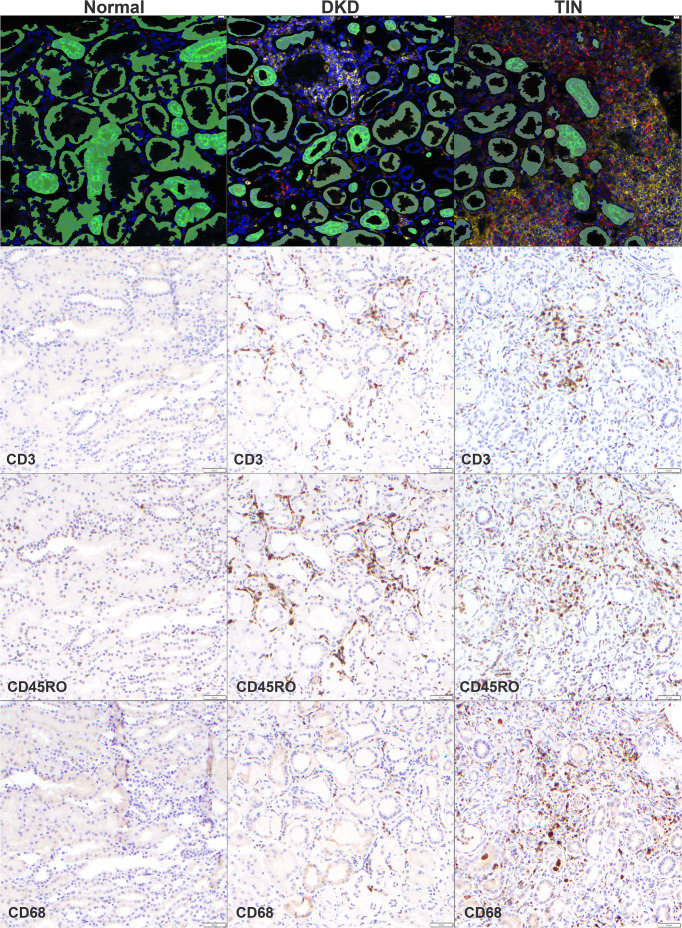 Figure 1
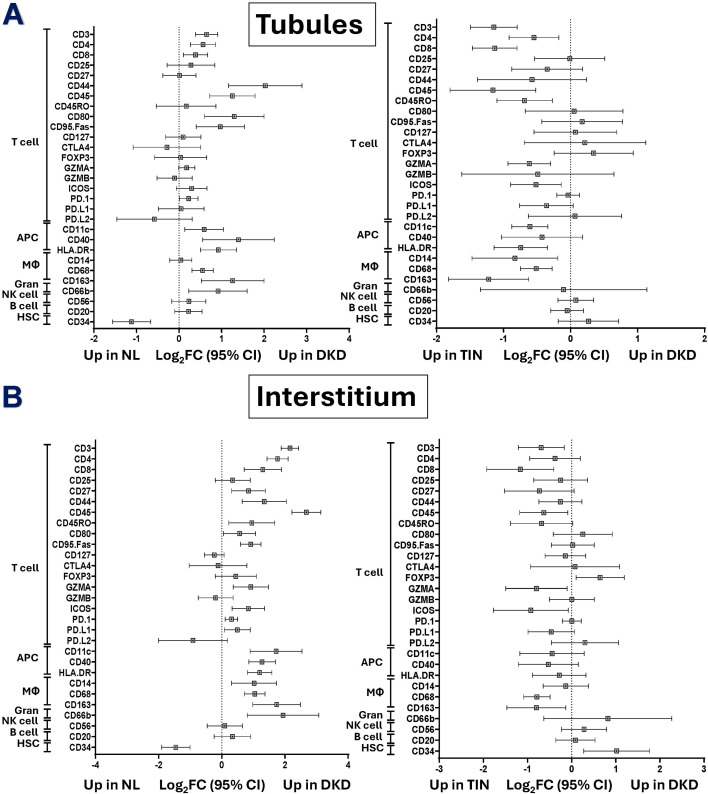 Figure 2
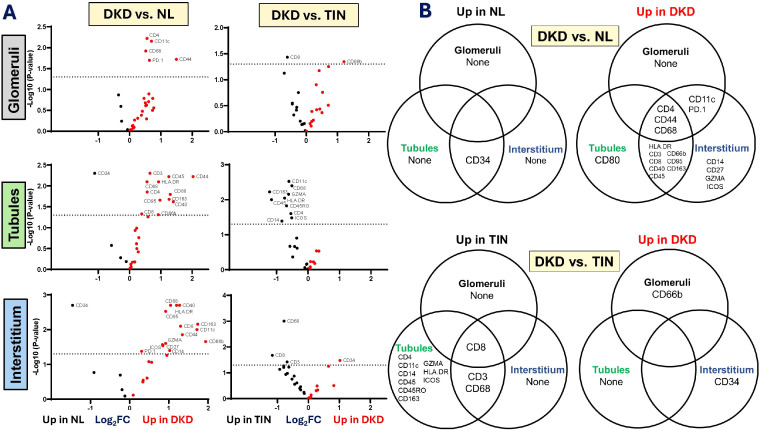 Figure 3
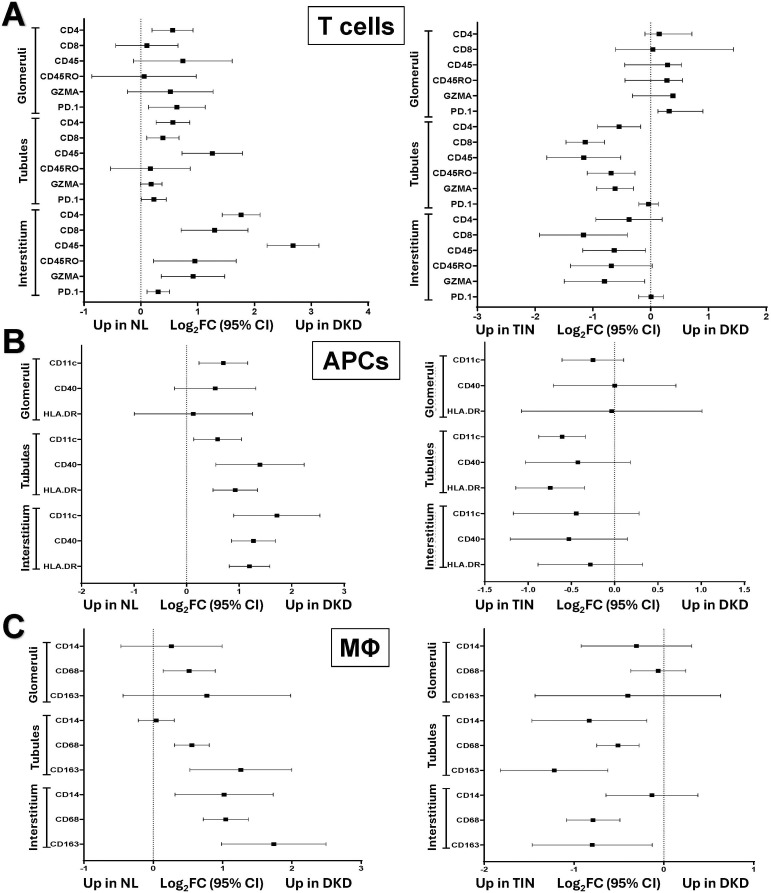 Figure 4
Peer Reviews
No public reviews on file for this paper yet. If you reviewed it on a platform where reviews are public (OpenReview, ICLR, NeurIPS, ICML), you can paste yours below so the community can read it here.
Videos
No videos yet. Explain this paper in a talk, walkthrough, or lecture? Add one.
Taxonomy
TopicsChronic Kidney Disease and Diabetes · Single-cell and spatial transcriptomics · Neutrophil, Myeloperoxidase and Oxidative Mechanisms