Quantitative assessment of relative peripheral refraction in children with different refractive statuses and its associations with ocular biometry
Chaoying Ye, Xingxue Zhu, Yangfan Xu, Yuliang Wang, Yujia Liu, Jianmin Shang, Xiaomei Qu

TL;DR
The study examines how peripheral refraction varies in children with different vision types and how it relates to eye structure.
Contribution
The study provides new insights into peripheral refraction patterns and their associations with ocular biometry in children with different refractive statuses.
Findings
Emmetropic and myopic children showed increasing positive peripheral refraction with greater eccentricity.
Hyperopic children exhibited reduced peripheral refraction beyond 30° eccentricity.
Axial length/corneal radius was most strongly associated with far peripheral refraction in myopic children.
Abstract
This study aimed to evaluate the distribution of relative peripheral refraction (RPR) and its relationship with ocular biometry in Chinese children of different refractive statuses. This study included 309 participants aged 4 to 14 years who were divided into three groups based on refraction: hyperopia, emmetropia, and myopia. IOLMaster 700 was used to acquire ocular biometry data, and RPR was measured using multispectral refraction topography. Refraction difference values (RDVs) were used to describe the RPR and included the total defocus (TRDV), defocus at 0° to 15° (RDV15), 15° to 30° (RDV15–30), 30° to 45° (RDV30–45), and 45° to 53° (RDV45–53) eccentricities, and superior (RDV-S), inferior (RDV-I), temporal (RDV-T), and nasal (RDV-N) quadrants. In participants with emmetropia and myopia, RPR values became more positive as the distance from the foveal pit increased, whereas…
Genes, proteins, chemicals, diseases, species, mutations and cell lines named across the full text — each resolved to its canonical identifier and authoritative record.
Click any figure to enlarge with its caption.
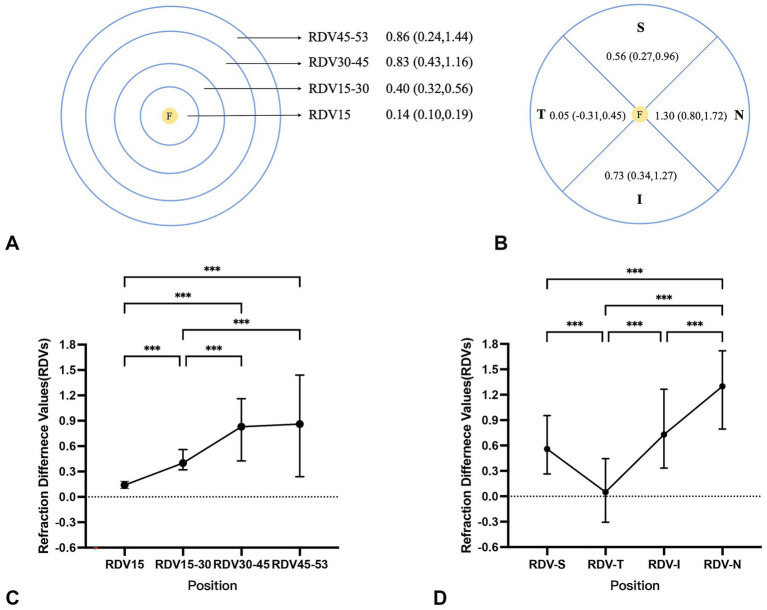 Figure 1
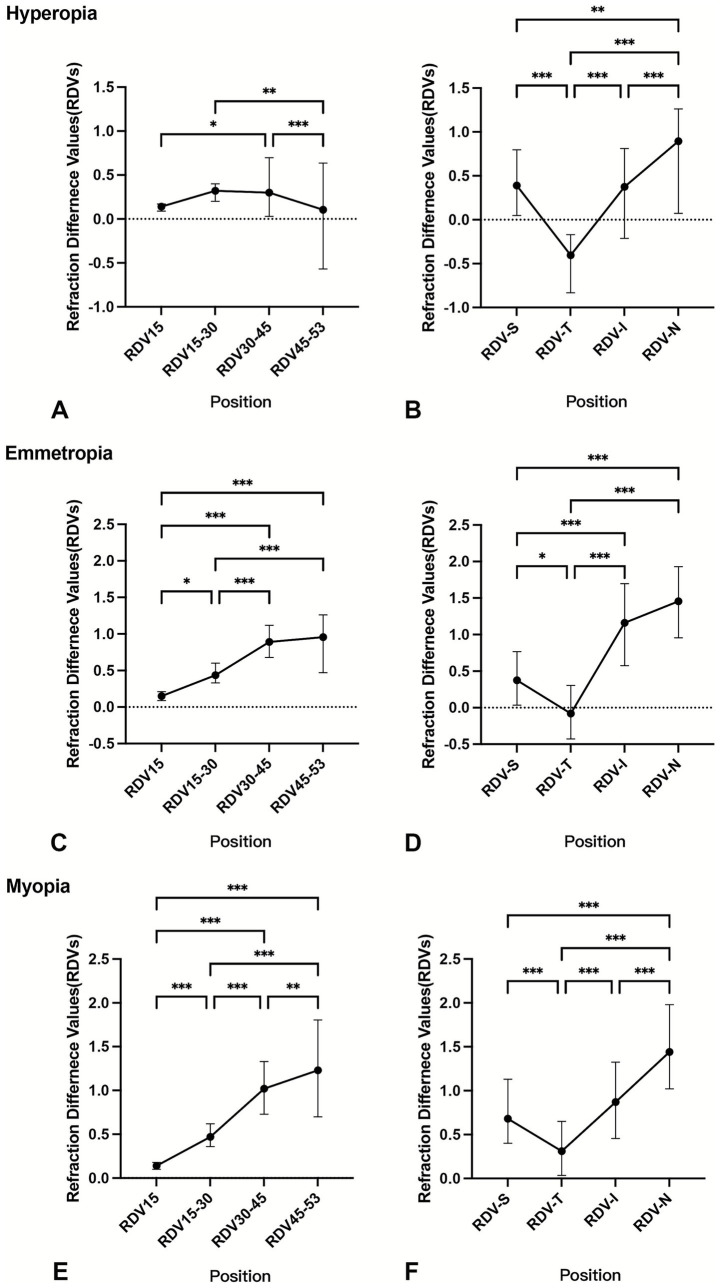 Figure 2
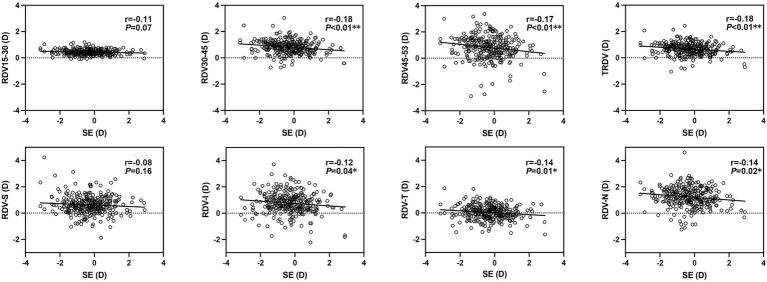 Figure 3
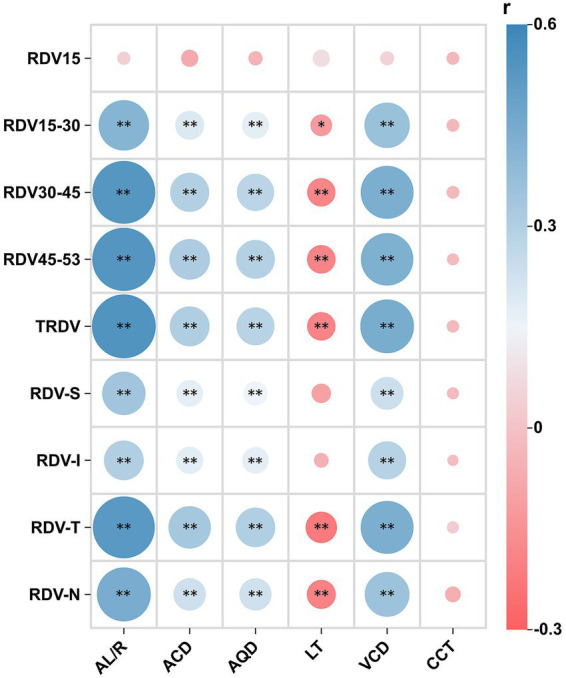 Figure 4
Peer Reviews
No public reviews on file for this paper yet. If you reviewed it on a platform where reviews are public (OpenReview, ICLR, NeurIPS, ICML), you can paste yours below so the community can read it here.
Videos
No videos yet. Explain this paper in a talk, walkthrough, or lecture? Add one.
Taxonomy
TopicsOphthalmology and Visual Impairment Studies · Glaucoma and retinal disorders · Corneal surgery and disorders