From plaque to event: coronary plaque burden and morphology in predicting adverse cardiovascular outcomes
E. Dvinelis, S. Sakalauske, M. Kapacinskaite, G. Cesnaite, R. Stasilo, G. Vrublevska, J. Bacevicius, A. Tamosiunas, S. Glaveckaite

TL;DR
This study shows that the amount and type of coronary plaque can predict major heart events in high-risk patients, with non-calcified plaque features being especially important.
Contribution
The study demonstrates that plaque morphology, particularly non-calcified features, independently predicts cardiovascular events in high-risk populations.
Findings
Plaque burden, fibrofatty, and necrotic core volumes were the strongest predictors of major adverse cardiovascular events.
Plaque burden showed the highest discriminatory performance for predicting MACE with specific cut-off thresholds.
Non-calcified plaque features provided independent prognostic value beyond traditional risk factors.
Abstract
This study aimed to identify the association of plaque burden and morphological features, such as burden, length, and composition, with major adverse cardiovascular events (MACE) in populations with very high cardiovascular risk using coronary computed tomography angiography (CTA). A retrospective cohort study was performed in Lithuania among stable symptomatic patients who underwent coronary CTA. All plaques were manually inspected using plaque analysis software. The study included 772 patients. The mean age was 59.6 ± 9.9 years in men and 65.2 ± 8.7 years in women (p < 0.001). Women exhibited relatively greater proportions of densely calcified plaque volume, whereas men demonstrated significantly higher proportions of fibrous, fibrofatty, and necrotic core volumes (all p < 0.001). Across cardiovascular risk categories, plaque burden, length, total plaque volume, and plaque dense…
Genes, proteins, chemicals, diseases, species, mutations and cell lines named across the full text — each resolved to its canonical identifier and authoritative record.
Click any figure to enlarge with its caption.
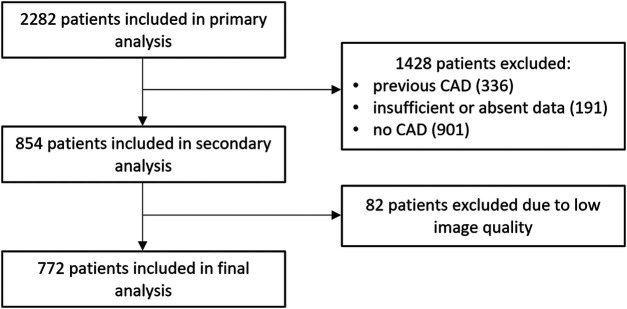 Figure 1
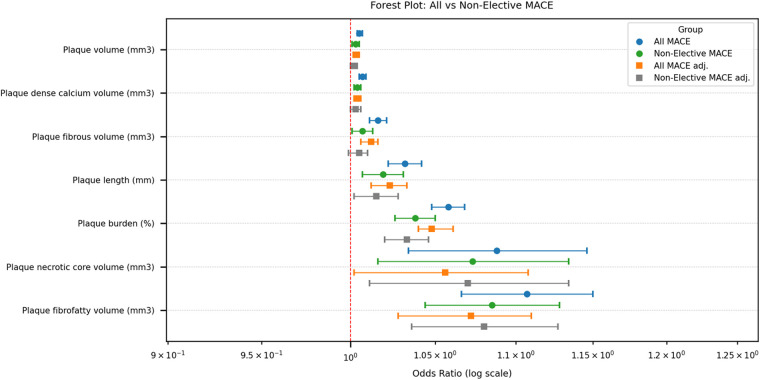 Figure 2
Peer Reviews
No public reviews on file for this paper yet. If you reviewed it on a platform where reviews are public (OpenReview, ICLR, NeurIPS, ICML), you can paste yours below so the community can read it here.
Videos
No videos yet. Explain this paper in a talk, walkthrough, or lecture? Add one.
Taxonomy
TopicsCardiac Imaging and Diagnostics · Coronary Interventions and Diagnostics · Cerebrovascular and Carotid Artery Diseases