Teledermatology and face-to-face pathways for basal cell carcinoma diagnosis in a southern European cohort: a comparative histopathologic analysis
Marta Cebolla-Verdugo, Carlos Llamas-Segura, Husein Husein-ElAhmed, Ricardo Ruiz-Villaverde

TL;DR
Teledermatology leads to the diagnosis of shallower basal cell carcinomas compared to in-person consultations, suggesting earlier detection.
Contribution
This study is the first to compare histopathologic features of BCCs diagnosed via teledermatology versus face-to-face consultations in a southern European cohort.
Findings
Teledermatology was associated with significantly shallower tumor depth compared to face-to-face consultations.
Nodular and micronodular BCC subtypes were more common in teledermatology cases, while superficial and sclerodermiform subtypes were more frequent in face-to-face cases.
Tumor depth was the only independent predictor of consultation pathway, indicating a consistent trend across subtypes.
Abstract
Teledermatology has expanded markedly in the post-pandemic era; however, its impact on the histopathologic presentation of basal cell carcinoma (BCC) remains insufficiently characterized. Tumor depth and histologic subtype are key prognostic factors and may differ according to diagnostic pathway. We conducted a retrospective observational study at a tertiary referral hospital in southern Europe, including all histologically confirmed BCCs diagnosed in 2019 through face-to-face dermatology and in 2022 through teledermatology. A total of 486 tumors were analyzed (201 face-to-face; 285 teledermatology). Histologic subtypes (superficial, nodular, micronodular, sclerodermiform) were examined individually and grouped into non-aggressive (superficial/nodular) versus aggressive (micronodular/sclerodermiform) categories. Statistical analyses included Welch’s t-test, chi-square tests, and…
Genes, proteins, chemicals, diseases, species, mutations and cell lines named across the full text — each resolved to its canonical identifier and authoritative record.
Click any figure to enlarge with its caption.
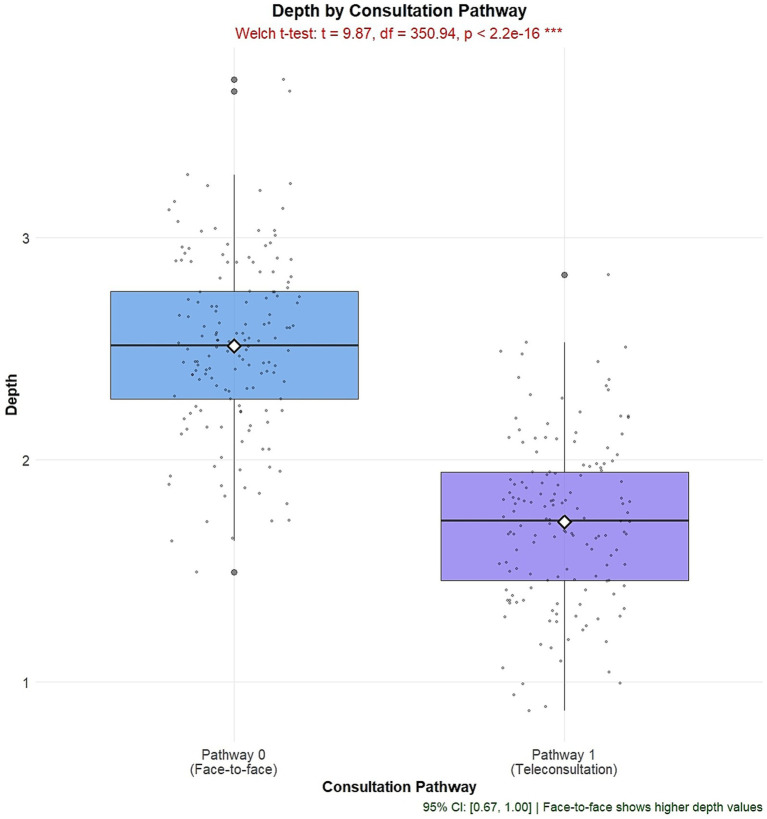 Figure 1
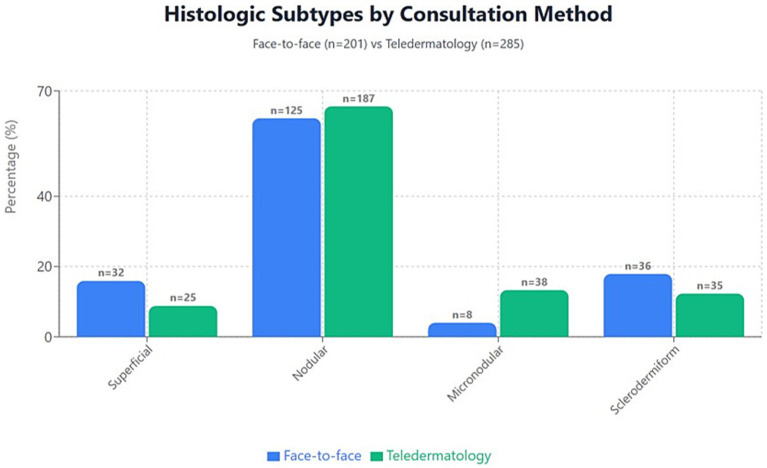 Figure 2
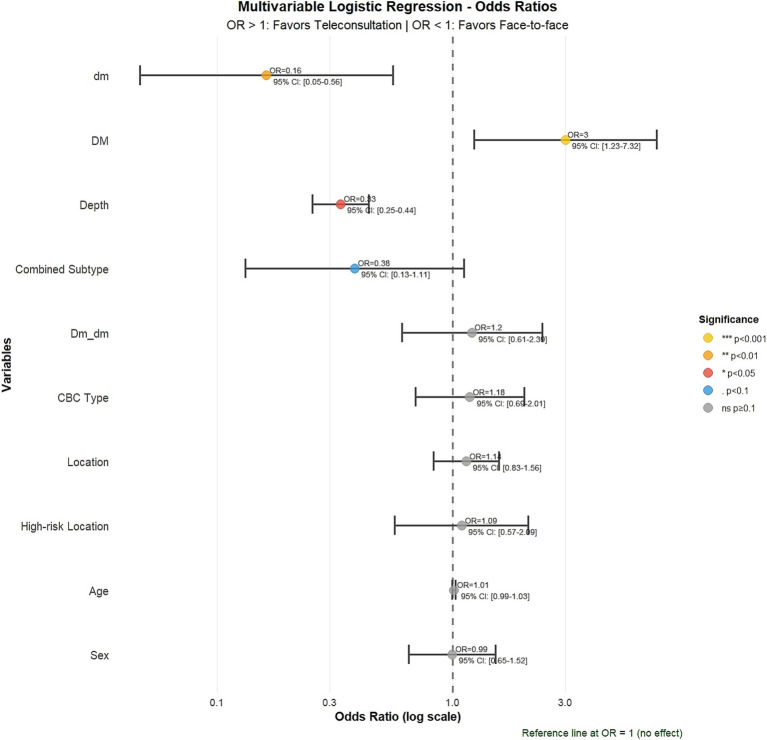 Figure 3
Peer Reviews
No public reviews on file for this paper yet. If you reviewed it on a platform where reviews are public (OpenReview, ICLR, NeurIPS, ICML), you can paste yours below so the community can read it here.
Videos
No videos yet. Explain this paper in a talk, walkthrough, or lecture? Add one.
Taxonomy
TopicsNonmelanoma Skin Cancer Studies · Cutaneous Melanoma Detection and Management · Polyomavirus and related diseases