Aurkb deficiency disrupts microglial development, homeostasis and hinders remyelination following cuprizone-induced demyelination
Weixing Yan, Dong Xiang, Li Du, Di Zhu, Qi Jia, Yuting Liu, Siyu Wang, Li Liu, Haihao Guan, Yelin Zhao, Guan Jiang, Sijia Gao, Hui Wang

TL;DR
Aurkb is essential for microglial development and function, and its deficiency impairs the clearance of myelin debris and remyelination in disease models.
Contribution
This study identifies Aurkb as a novel regulator of microglial development, homeostasis, and remyelination.
Findings
Aurkb deficiency disrupts microglial mitosis, density, and morphology in neonatal mice.
Aurkb loss in adulthood leads to microglial dystrophy and impaired autophagy.
Aurkb-deficient microglia fail to clear myelin debris and hinder remyelination in demyelination models.
Abstract
Microglia are crucial for phagocytic clearance of myelin debris, which hinders remyelination and leads to neurological decline during aging and in multiple sclerosis (MS). However, the molecular mechanism enabling microglia to expand and function effectively in remyelination remains elusive. Here, we identified that mitotic kinase Aurkb was upregulated in microglia during early development and in MS. Neonatal deletion of Aurkb disrupted cell density, morphology, and proliferation, which is attributed to stalled mitosis. Inducible Aurkb ablation in adulthood led to microglial dystrophy and disrupted homeostasis. Aurkb deficiency compromised microglial activation in response to LPS-induced inflammation. Critically, Aurkb-deficient mice exhibited accumulated myelin debris and impaired oligodendrocyte regeneration and remyelination in the CPZ-induced demyelination model. Additionally, Aurkb…
Genes, proteins, chemicals, diseases, species, mutations and cell lines named across the full text — each resolved to its canonical identifier and authoritative record.
Click any figure to enlarge with its caption.
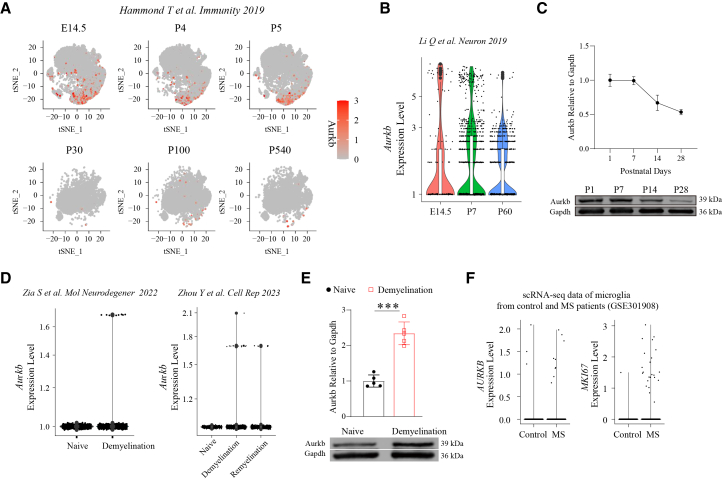 Figure 1
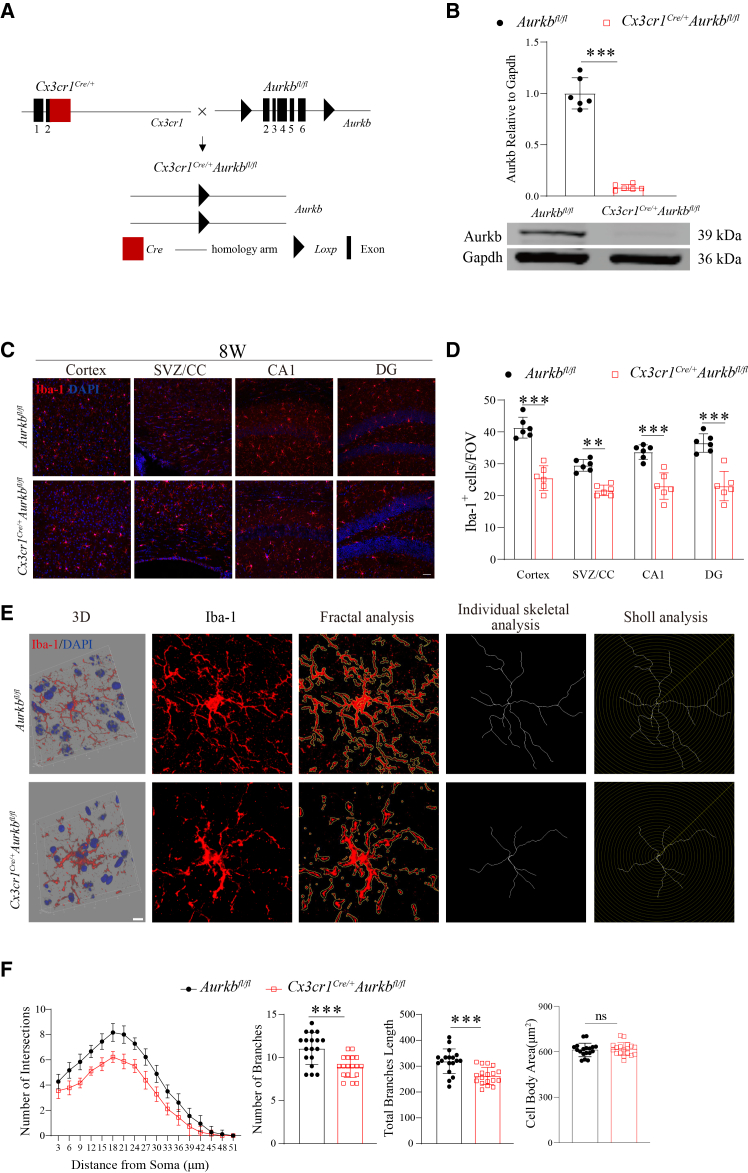 Figure 2
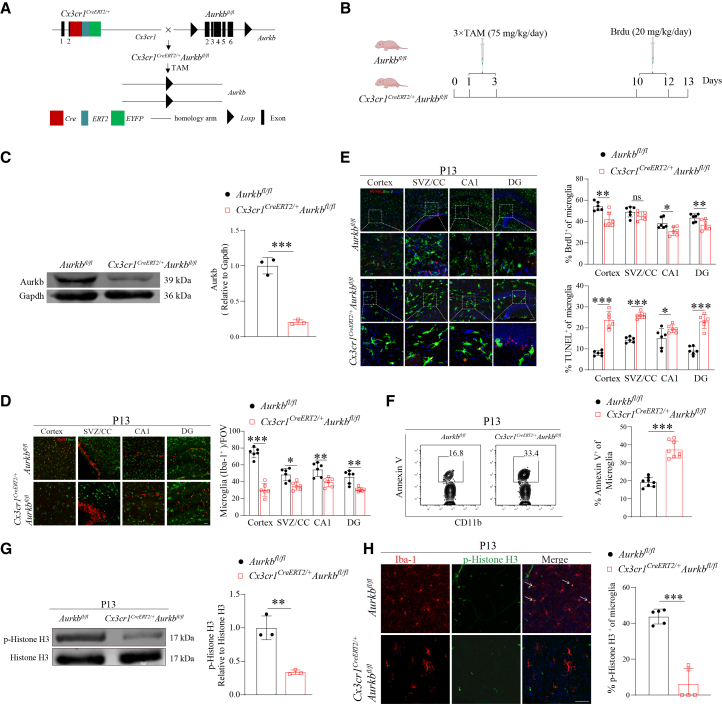 Figure 3
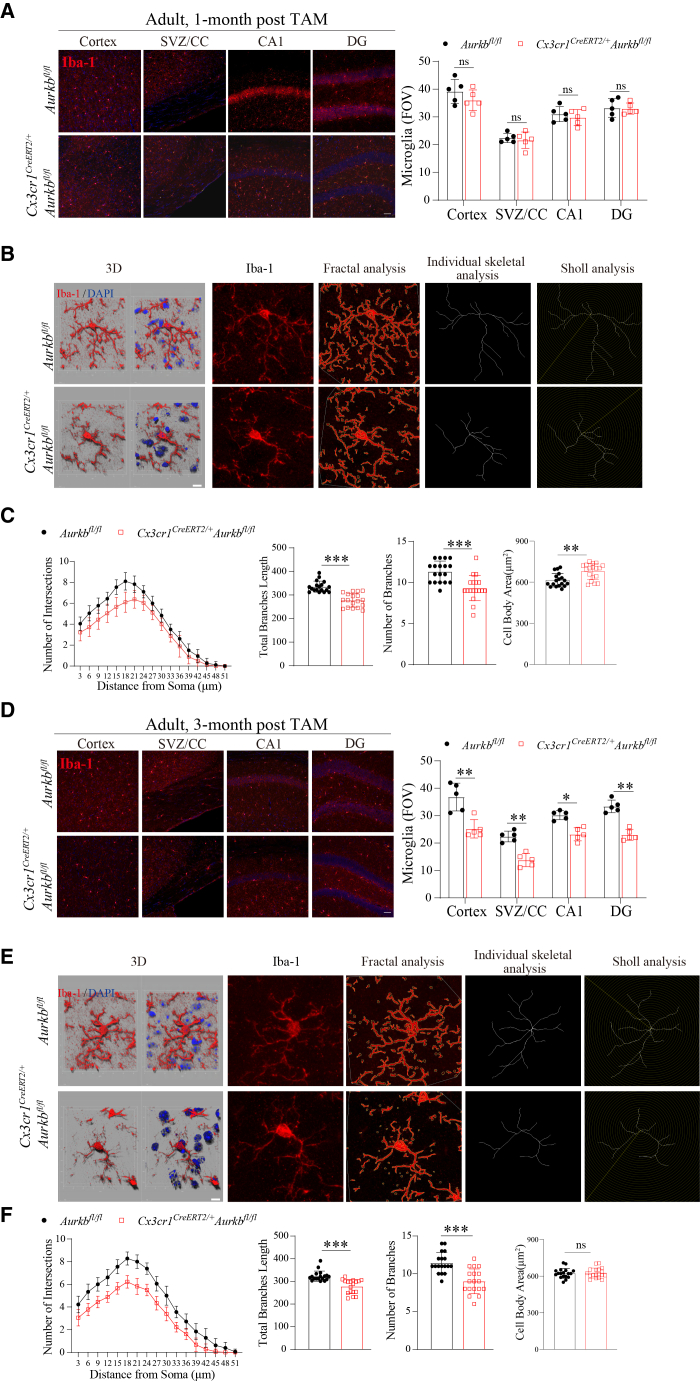 Figure 4
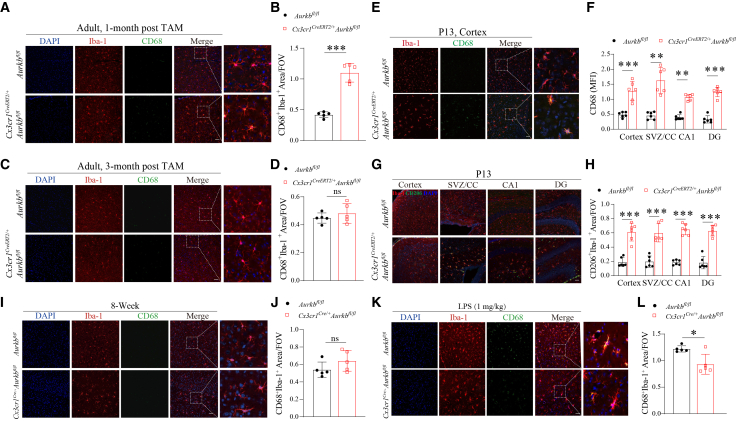 Figure 5
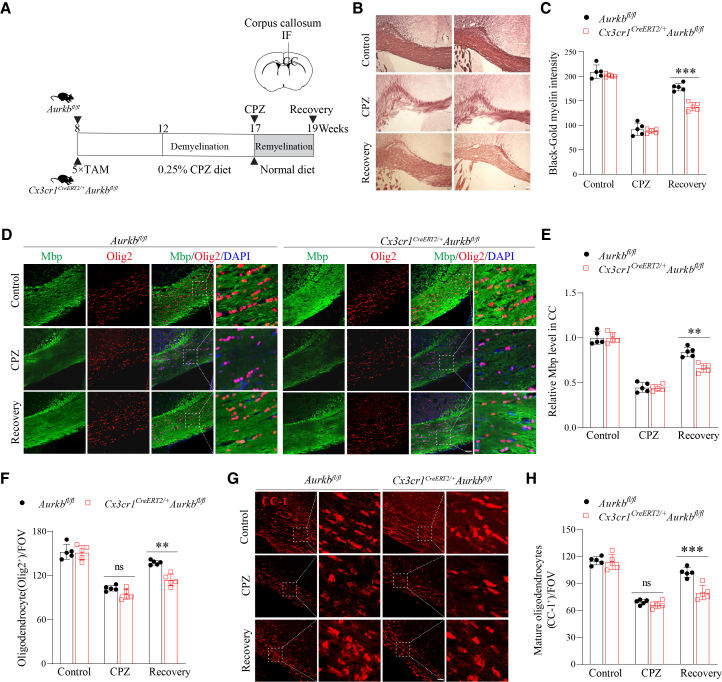 Figure 6
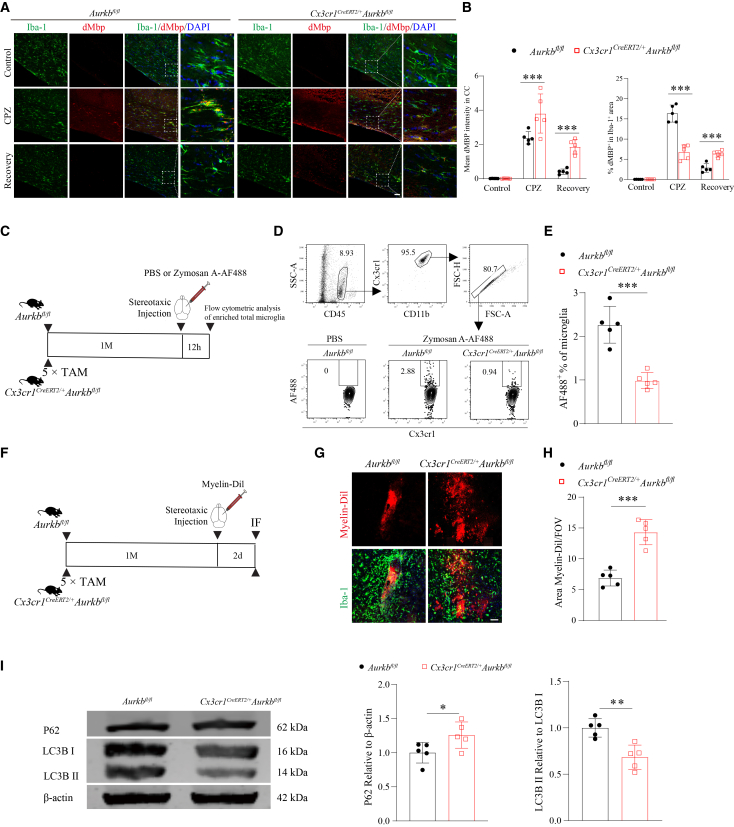 Figure 7
Peer Reviews
No public reviews on file for this paper yet. If you reviewed it on a platform where reviews are public (OpenReview, ICLR, NeurIPS, ICML), you can paste yours below so the community can read it here.
Videos
No videos yet. Explain this paper in a talk, walkthrough, or lecture? Add one.
Taxonomy
TopicsNeuroinflammation and Neurodegeneration Mechanisms · Neurogenesis and neuroplasticity mechanisms · Nerve injury and regeneration