D-ribose-loaded hydrogel modulates necrosis progression and wound stability in a rabbit random-pattern skin flap model
Khalil Rostami, Omid Zehtab, Helia Ghorbani, Mahdi Mohebbi, Payam Asadi Ghahnaviyeh, Parisa Haghi, Sayed Esmaeil Tabatabaei

TL;DR
A hydrogel loaded with D-ribose was found to delay tissue death and improve wound stability in a rabbit model of skin flap surgery.
Contribution
This study introduces a novel metabolically active hydrogel using D-ribose to enhance wound healing under ischemic conditions.
Findings
D-ribose hydrogel delayed flap failure, increasing the median time to 50% necrosis from 7 to 11 days.
Wound dehiscence occurred less frequently in the D-ribose group compared to controls.
Necrosis percentage correlated positively with wound dehiscence extent.
Abstract
Random-pattern skin flaps remain highly susceptible to ischemic injury, resulting in progressive distal necrosis and wound instability. Early metabolic failure is a central component of ischemia–reperfusion injury in flap tissue. D-ribose, a pentose sugar involved in adenine nucleotide and adenosine triphosphate (ATP) resynthesis, may support metabolic recovery in ischemic environments. This study investigated whether local delivery of a D-ribose-loaded hydrogel modulates necrosis progression and wound stability in a rabbit random-pattern skin flap model. Twenty-six adult male New Zealand White rabbits were randomly assigned to receive either a D-ribose-loaded chitosan hydrogel or an identical ribose-free control. A standardized caudally based random-pattern dorsal skin flap was elevated in each animal. Flap necrosis percentage, absolute necrotic area, and wound dehiscence were…
Genes, proteins, chemicals, diseases, species, mutations and cell lines named across the full text — each resolved to its canonical identifier and authoritative record.
Click any figure to enlarge with its caption.
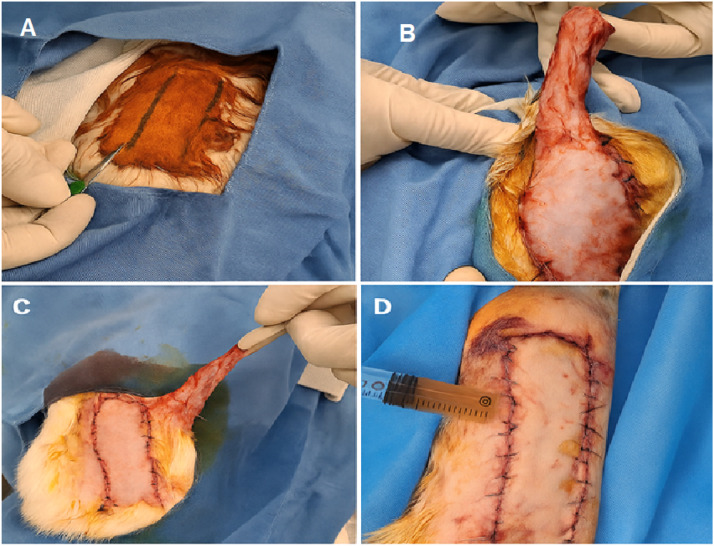 Figure 1
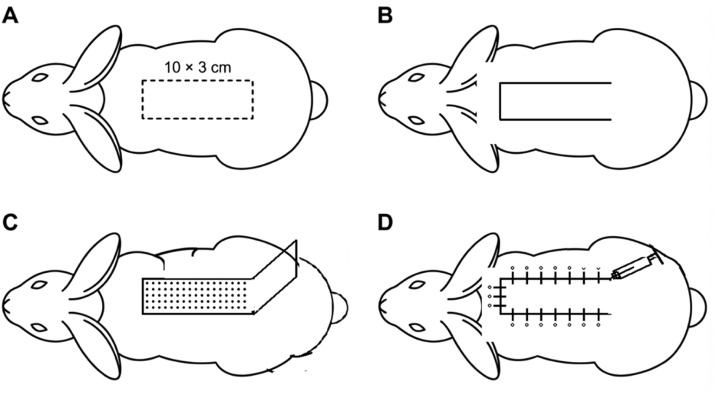 Figure 2
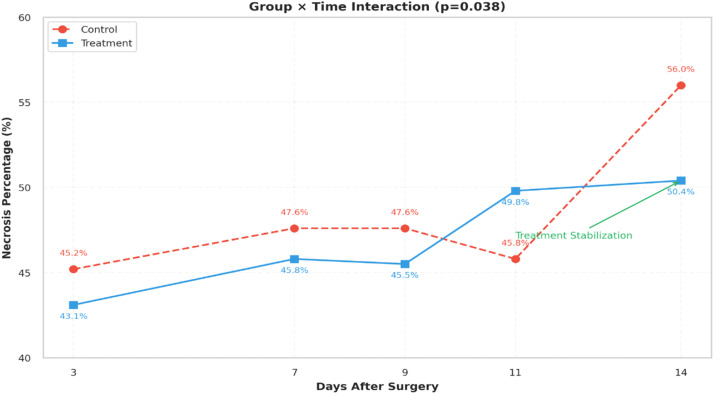 Figure 3
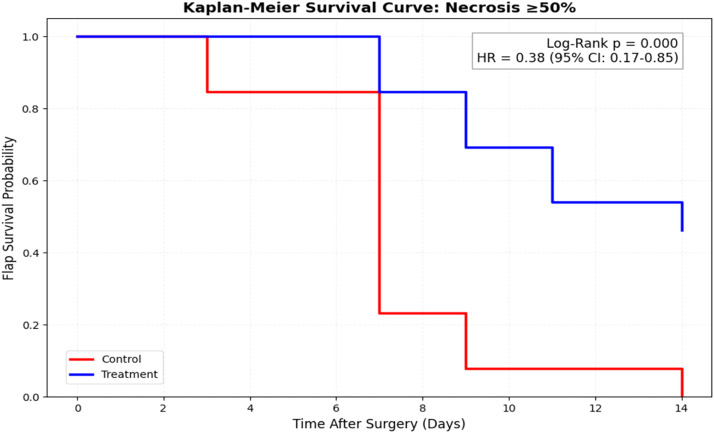 Figure 4
Peer Reviews
No public reviews on file for this paper yet. If you reviewed it on a platform where reviews are public (OpenReview, ICLR, NeurIPS, ICML), you can paste yours below so the community can read it here.
Videos
No videos yet. Explain this paper in a talk, walkthrough, or lecture? Add one.
Taxonomy
TopicsWound Healing and Treatments · Reconstructive Surgery and Microvascular Techniques · Diabetic Foot Ulcer Assessment and Management