Soluble urokinase plasminogen activator receptor is a prognostic biomarker in decompensated cirrhosis
Sven Lamatsch, Mohsin Hassan, Kai Kappert, Hilmar Berger, Qingquan Bai, Zhengyang Zhao, Nirbaanjot Walia, Carlos De La Peña-Ramirez, Raphael Mohr, Münevver Demir, Juan Wang, Fabian Artusa, Richard Sittner, Fausto Andreola, Rhea Veelken, Florian van Boemmel, Jonas Schumacher

TL;DR
This study shows that suPAR, a protein linked to inflammation, can predict severe outcomes in patients with advanced liver disease.
Contribution
suPAR is identified as an independent biomarker for mortality and disease progression in decompensated cirrhosis.
Findings
suPAR levels ≥14.0 ng/ml independently predict 90-day mortality in decompensated cirrhosis.
suPAR correlates with disease severity markers like MELD score, bilirubin, and ICU treatment.
suPAR reflects systemic and liver-specific inflammation, providing prognostic value beyond existing scoring systems.
Abstract
Cirrhosis poses a significant healthcare burden, with decompensation and acute-on-chronic liver failure (ACLF) resulting in high morbidity and mortality. Reliable biomarkers of disease progression are urgently needed. Urokinase plasminogen activator receptor (uPAR) and its soluble form (suPAR) are linked to systemic inflammation in liver disease. This study aims to evaluate suPAR as a prognostic marker and its role in chronic liver disease. SuPAR levels were measured in a derivation cohort (n = 178) and a validation cohort (n = 197) from two centers, including healthy controls and patients with cirrhosis, acute decompensation, and ACLF. In a mouse model using carbon tetrachloride and lipopolysaccharide, suPAR levels correlated with liver uPAR expression. Single-cell RNA sequencing was used to analyze uPAR expression in immune cells from healthy controls and from patients with…
Genes, proteins, chemicals, diseases, species, mutations and cell lines named across the full text — each resolved to its canonical identifier and authoritative record.
Click any figure to enlarge with its caption.
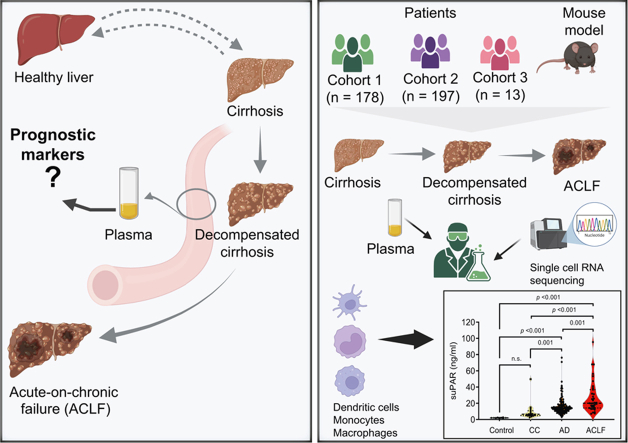 Figure 1
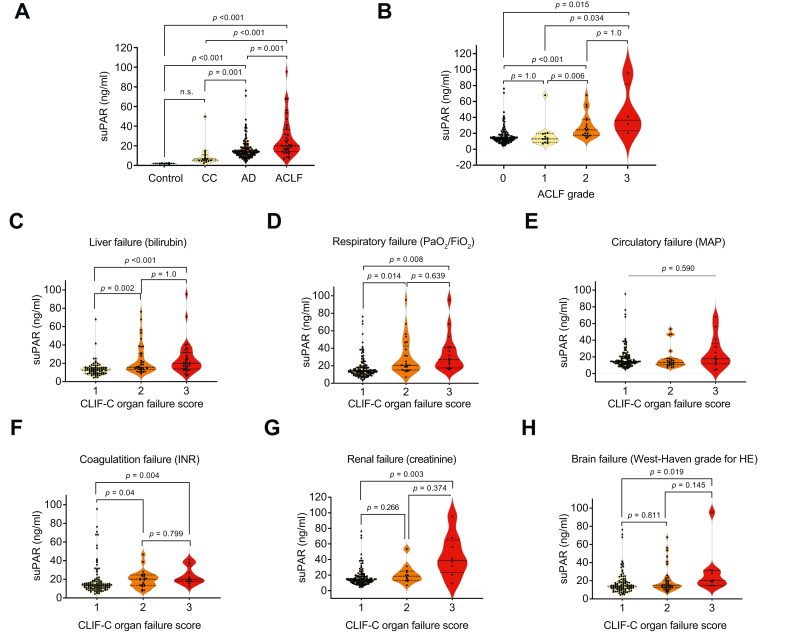 Figure 2
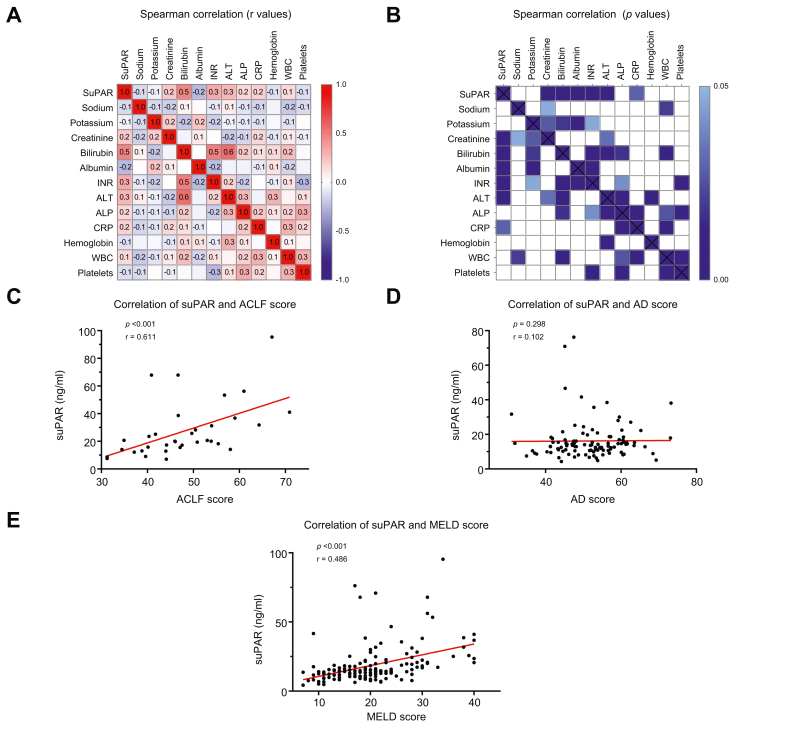 Figure 3
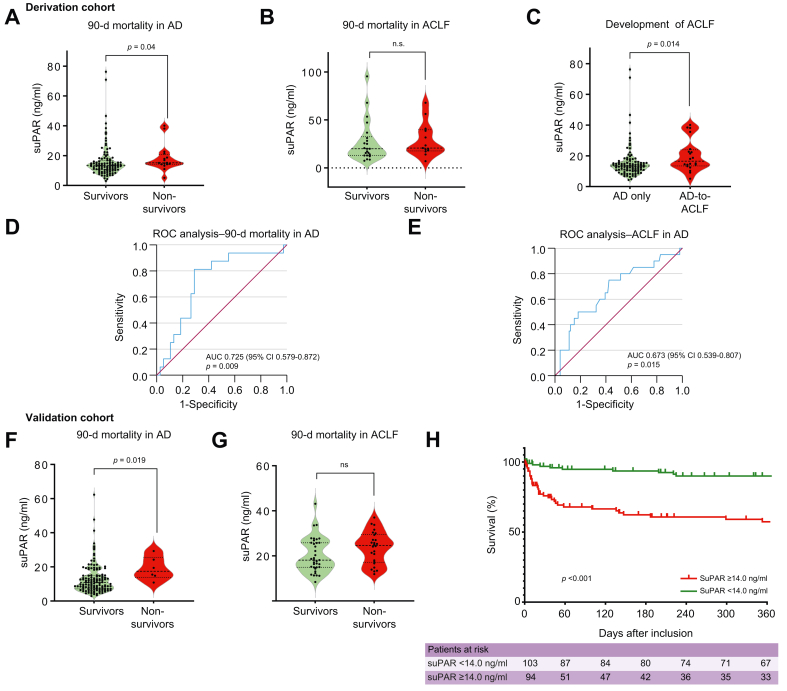 Figure 4
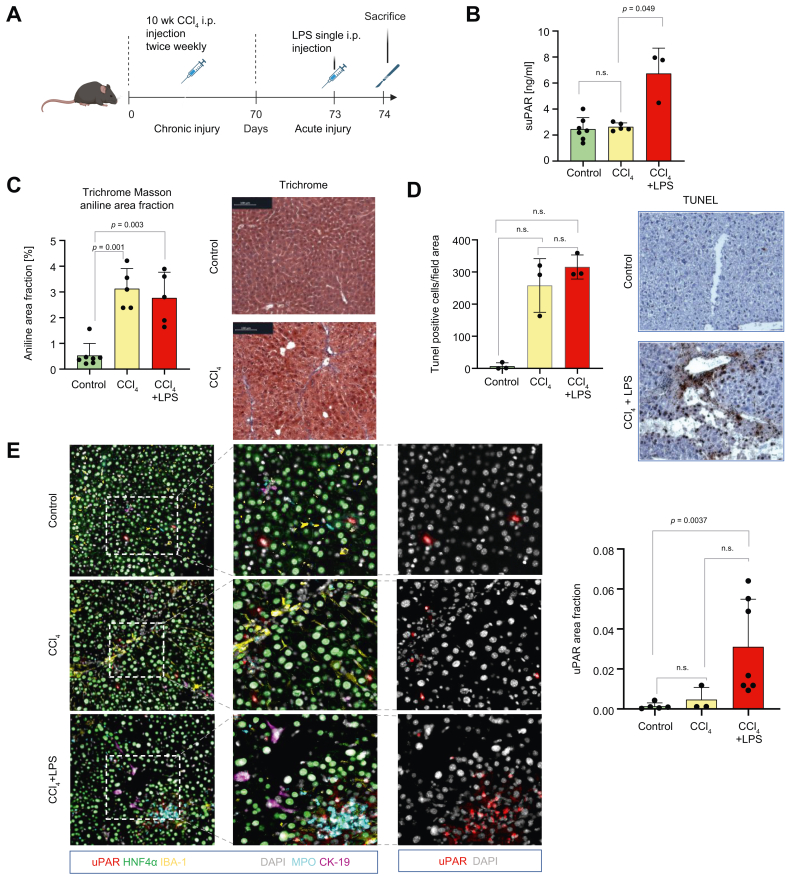 Figure 5
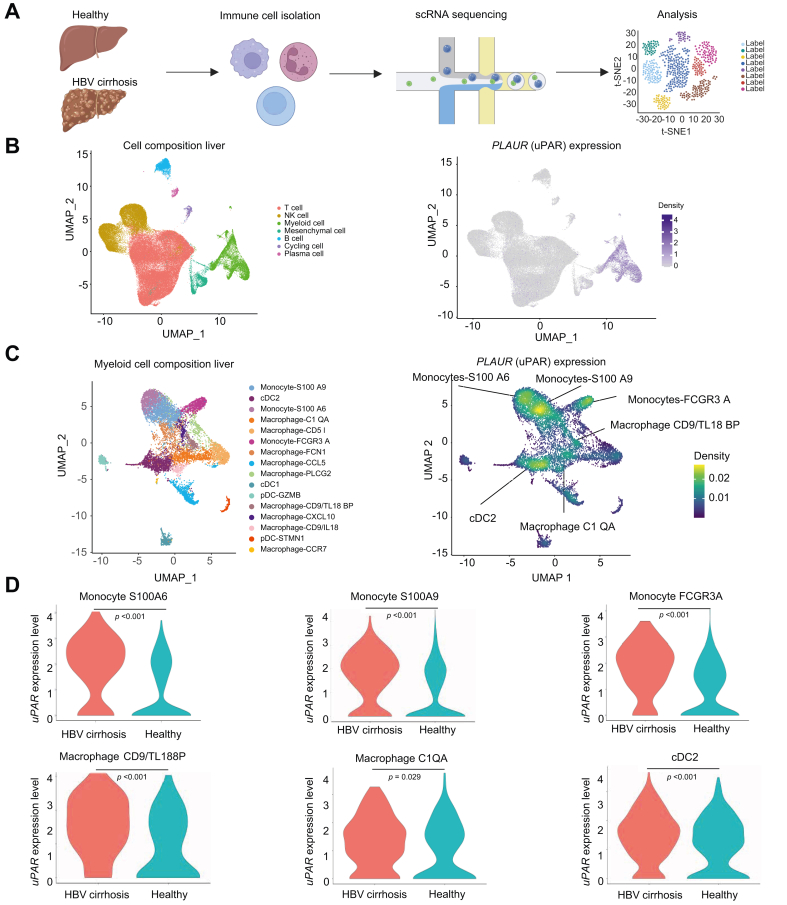 Figure 6
Peer Reviews
No public reviews on file for this paper yet. If you reviewed it on a platform where reviews are public (OpenReview, ICLR, NeurIPS, ICML), you can paste yours below so the community can read it here.
Videos
No videos yet. Explain this paper in a talk, walkthrough, or lecture? Add one.
Taxonomy
TopicsLiver Disease and Transplantation · Protease and Inhibitor Mechanisms · Liver physiology and pathology