Activation of SNr GABA neurons drives liver-brain-eye axis dysfunction in hepatic encephalopathy
Kenan Li, Zhenhua Wang, Shaoheng Li, Feifei Wu, Yunhu Bai, Shujiao Li, Changlei Zhu, Ziwei Ni, Shuai Zhang, Yousheng Wu, Fei Tian, Nannan Liu, Tao Chen, Cailian Ruan, Zuoming Zhang, Yanling Yang, Yayun Wang

TL;DR
This study reveals that overactive brain neurons link liver disease to vision problems, offering a new understanding of how liver failure affects the brain and eyes.
Contribution
The study identifies a specific brain pathway responsible for liver-brain-eye dysfunction in hepatic encephalopathy.
Findings
Aberrant activation of mSNrGAD2 neurons was observed in acute hepatic encephalopathy.
Chemogenetic inhibition of the mSNrGAD2-SC pathway restored retinal function and reduced GABA release.
Chronic hepatic encephalopathy caused retinal layer thinning, unlike acute cases.
Abstract
Hepatic encephalopathy (HE) is frequently accompanied by visual dysfunction, yet the mechanisms underlying the liver-brain-eye axis remain unclear. We established mouse models of acute hepatic encephalopathy (AHE) using thioacetamide and chronic hepatic encephalopathy (CHE) using bile duct ligation, confirming hyperammonemia and visual impairment by electroretinogram (ERG) and visual evoked potentials (VEPs). Retinal analyses revealed preserved structure in AHE, whereas CHE induced significant thinning of the ganglion cell layer (GCL), inner nuclear layer (INL), and outer plexiform layer (OPL). Viral anterograde tracing identified aberrant activation of medial substantia nigra pars reticulata glutamate decarboxylase 2-positive (mSNrGAD2) projections to the superior colliculus (SC) under AHE conditions. Chemogenetic inhibition of this pathway restored retinal function, normalized visual…
Genes, proteins, chemicals, diseases, species, mutations and cell lines named across the full text — each resolved to its canonical identifier and authoritative record.
Click any figure to enlarge with its caption.
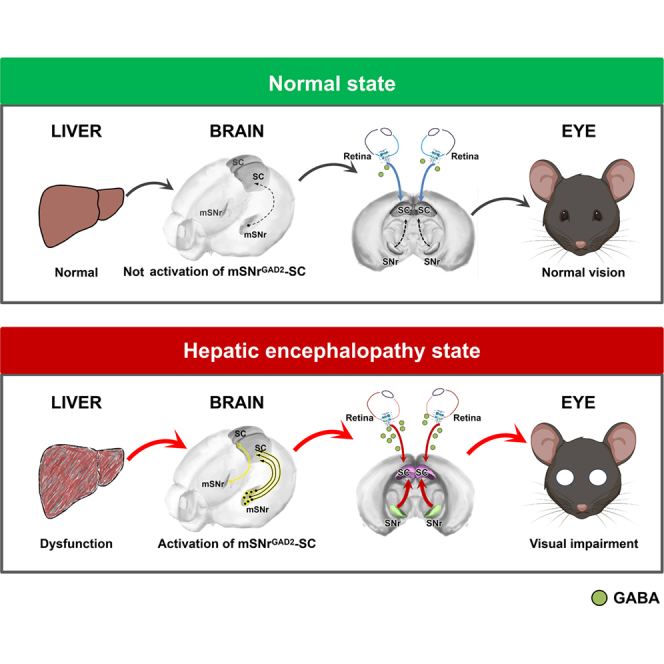 Figure 1
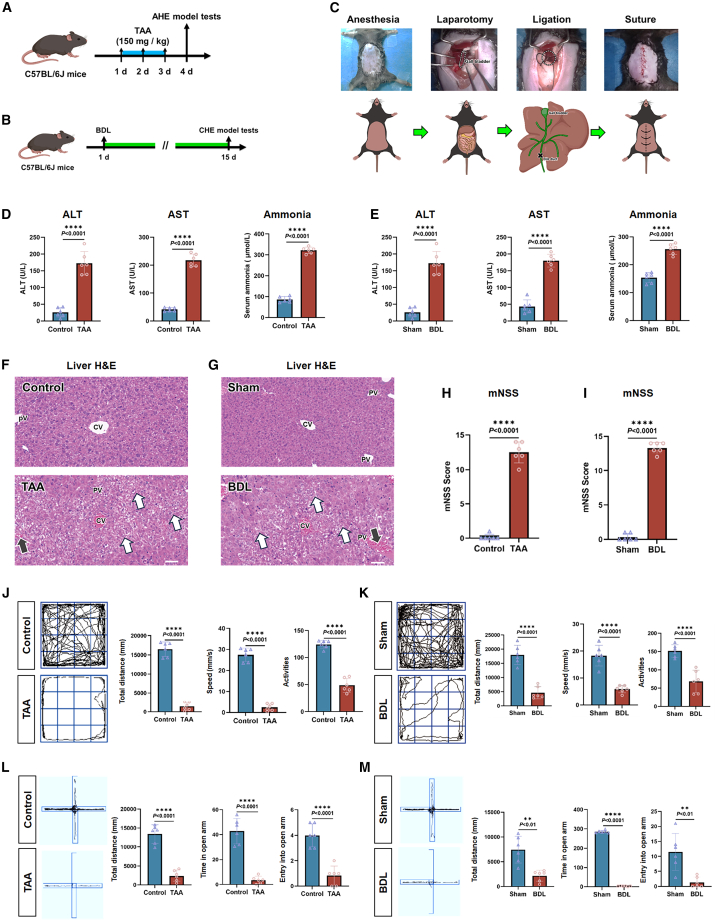 Figure 2
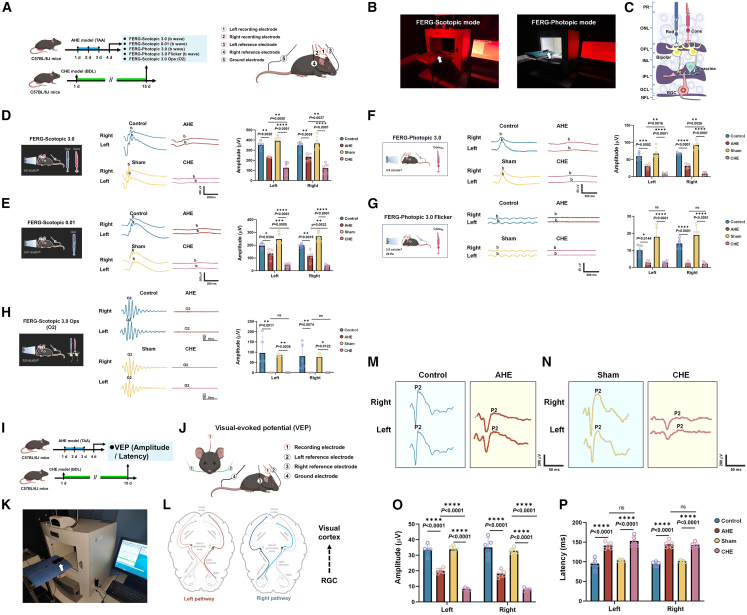 Figure 3
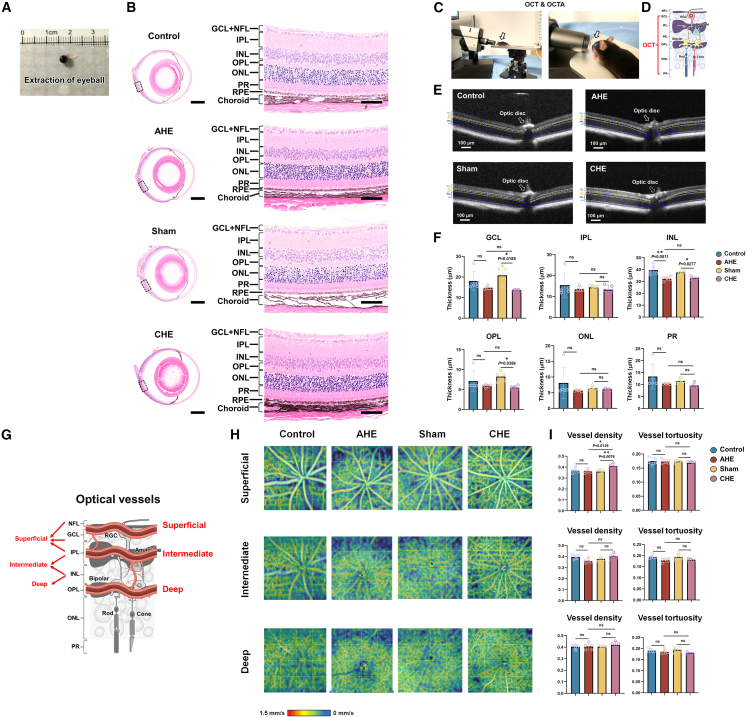 Figure 4
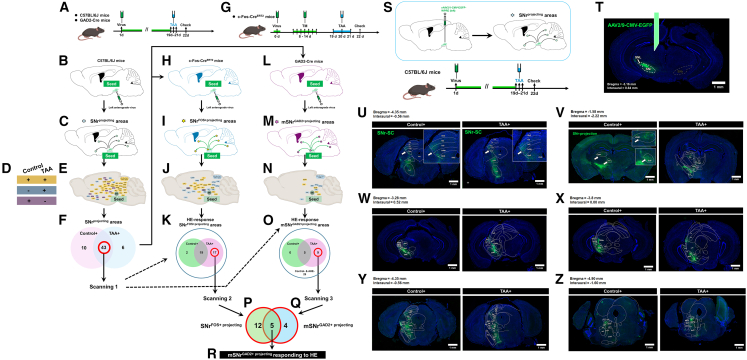 Figure 5
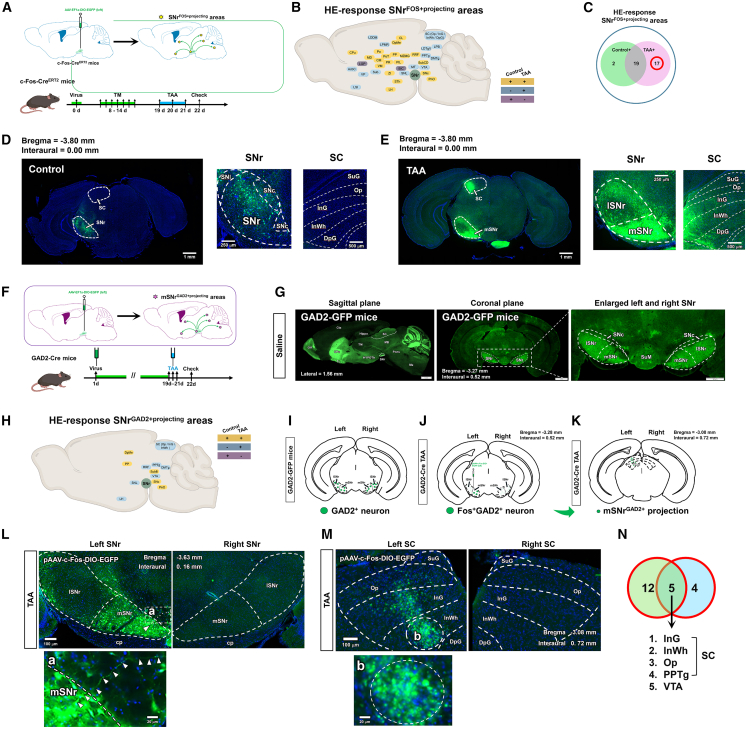 Figure 6
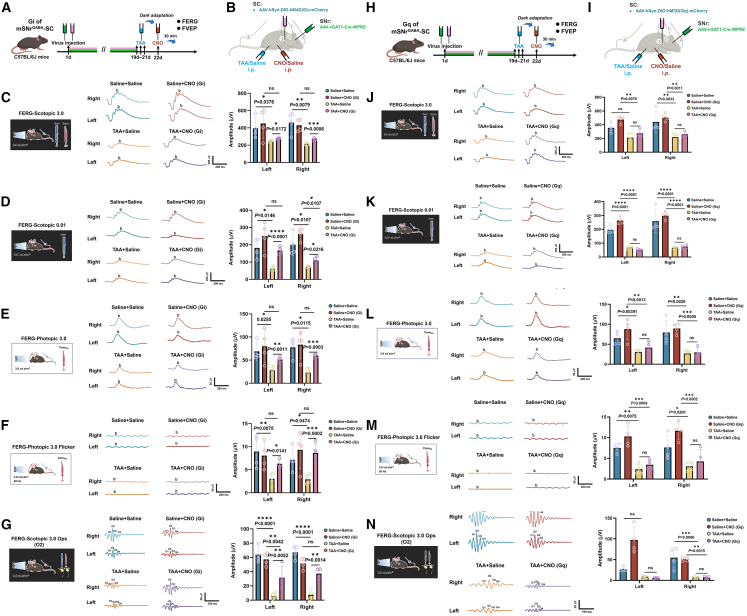 Figure 7
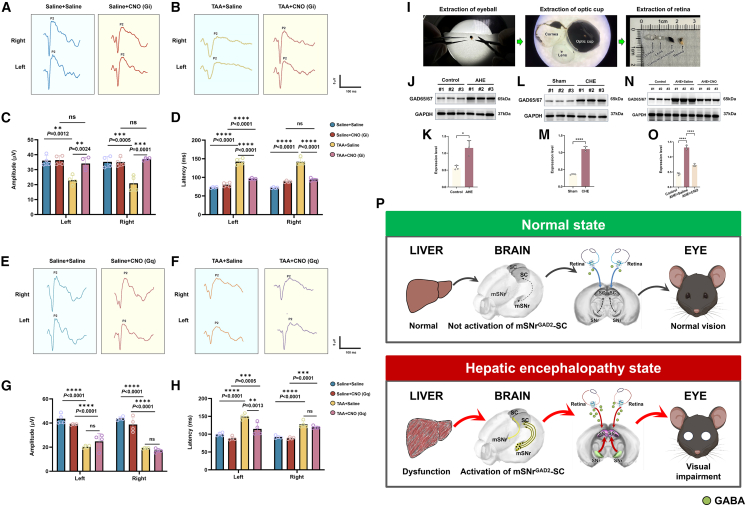 Figure 8
Peer Reviews
No public reviews on file for this paper yet. If you reviewed it on a platform where reviews are public (OpenReview, ICLR, NeurIPS, ICML), you can paste yours below so the community can read it here.
Videos
No videos yet. Explain this paper in a talk, walkthrough, or lecture? Add one.
Taxonomy
TopicsLiver Disease and Transplantation · Drug-Induced Hepatotoxicity and Protection · Liver Disease Diagnosis and Treatment