Valorization of Pretreated Salvinia molesta Biomass for Ciprofloxacin Biosorption: Kinetic Performance, pH‐Dependent Mechanisms, and Circular Economy Implications
Leticia Yoshie Kochi, Raul Victor Santana Rios, Raizza Zorman Marques, Lia Sumie Nakao, Marcelo Pedrosa Gomes

TL;DR
Pretreated Salvinia molesta biomass can effectively remove ciprofloxacin from water, especially at neutral pH, offering a low-cost solution for decentralized water treatment.
Contribution
Demonstrates the use of invasive Salvinia molesta biomass as a sustainable biosorbent for antibiotic removal under real-world conditions.
Findings
Biosorption efficiency of ciprofloxacin reached ~95% at pH 6, aligning with the biomass's point of zero charge.
Protein and polyphenol content positively correlated with biosorption at pH 6–7, indicating multiple interaction mechanisms.
Biosorption equilibrium was reached within 30 minutes, following pseudo-second-order kinetics.
Abstract
The valorization of pretreated waste Salvinia molesta biomass represents a sustainable and circular strategy to address both water contamination and biomass disposal. This study investigated the biosorption performance of pretreated and powdered S. molesta biomass in controlled aqueous solutions of ciprofloxacin (CIP), a widely detected fluoroquinolone antibiotic, under environmentally relevant conditions. The biomass was characterized by a high cell wall fraction (~61%) and moderate protein and polyphenol content, offering a multifunctional surface for biosorption. Batch experiments were conducted to evaluate the effects of pH (4–8) and contact time (up to 60 min) on CIP removal (initial concentration = 1.5 μg/L). The maximum biosorption efficiency (~95%) occurred at pH 6, which aligned with the biomass's point of zero charge (pHpzc = 6.2) and the CIP zwitterionic speciation.…
Genes, proteins, chemicals, diseases, species, mutations and cell lines named across the full text — each resolved to its canonical identifier and authoritative record.
Click any figure to enlarge with its caption.
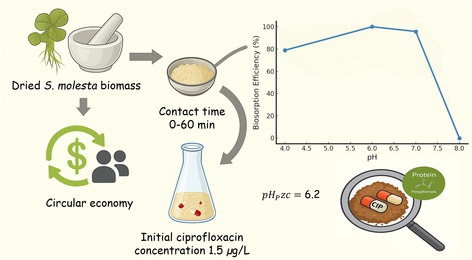 Figure 1
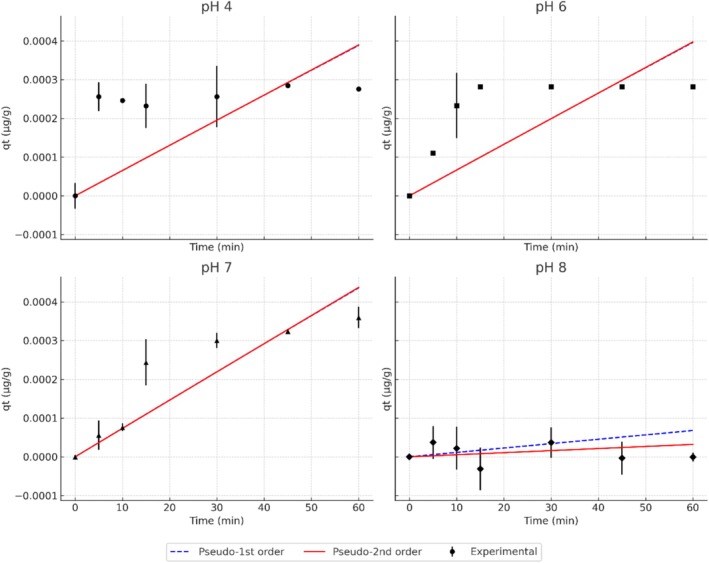 Figure 2
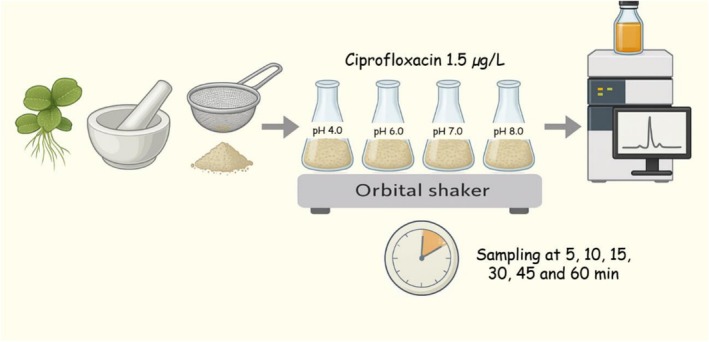 Figure 3
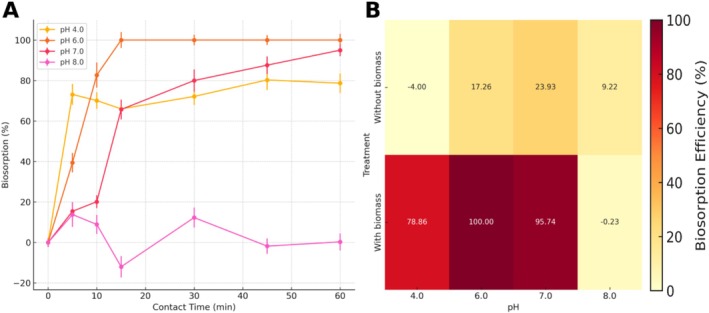 Figure 4
Peer Reviews
No public reviews on file for this paper yet. If you reviewed it on a platform where reviews are public (OpenReview, ICLR, NeurIPS, ICML), you can paste yours below so the community can read it here.
Videos
No videos yet. Explain this paper in a talk, walkthrough, or lecture? Add one.
Taxonomy
TopicsAdsorption and biosorption for pollutant removal · Pharmaceutical and Antibiotic Environmental Impacts · Phosphorus and nutrient management