Pan‐Genomic and Phenotypic Characterisation of Petroleum Hydrocarbon Degradation by Pseudomonas Species
Xiaopeng Guo, Shuhua Zhu, Ning Zhu, Shuhan Zhang, Shenghui Yang, Guanghong Luo, Hongbin Li, Yonggang Wang, Jing Sun, Borong Ma

TL;DR
This study explores how different Pseudomonas bacteria break down petroleum hydrocarbons by analyzing their genomes and finding key genes involved in the process.
Contribution
The study introduces a genus-level pan-genomic analysis of Pseudomonas to reveal complementary degradation pathways for bioremediation.
Findings
Pseudomonas strains like P. citronellolis and P. putida have the highest abundance of genes related to petroleum hydrocarbon degradation.
Degradation-related genes are concentrated in the accessory genome, indicating metabolic specialization and potential synergistic interactions.
P. aeruginosa, P. luteola, and P. putida show broader genetic access to PAH degradation pathways.
Abstract
Pseudomonas, a cornerstone genus in petroleum hydrocarbon bioremediation, exhibits remarkable metabolic diversity. To systematically decipher the genetic basis of this trait, we constructed a curated collection of representative Pseudomonas strains with documented degradation capabilities through a bibliometrics‐driven approach. Comparative genomic analysis revealed that these strains possess a rich repertoire of genes linked to petroleum hydrocarbon degradation, including those encoding key enzymes such as monooxygenases, dioxygenases, alcohol dehydrogenases, cytochrome P450, ferredoxins, and regulatory proteins (e.g., LuxR, AraC, GntR). Among the strains examined, P. citronellolis and P. putida contained the highest abundance of such genes. The accessory genome size varied considerably across the 15 strains (ranging from 3290 to 5745 genes), and functional enrichment analysis…
Genes, proteins, chemicals, diseases, species, mutations and cell lines named across the full text — each resolved to its canonical identifier and authoritative record.
Click any figure to enlarge with its caption.
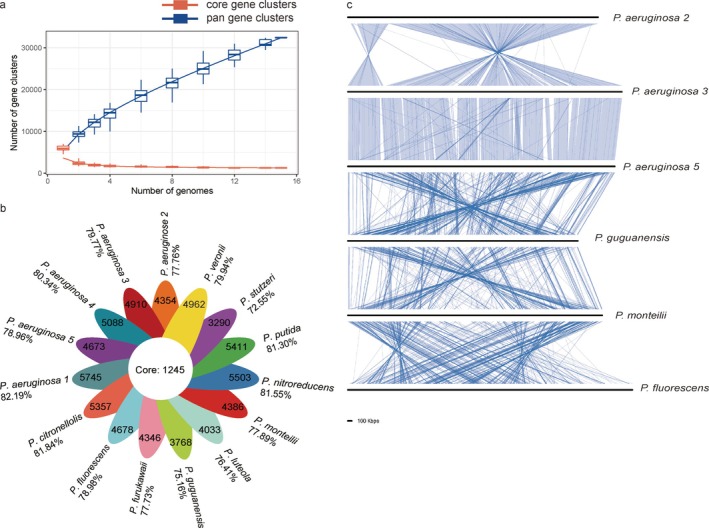 Figure 1
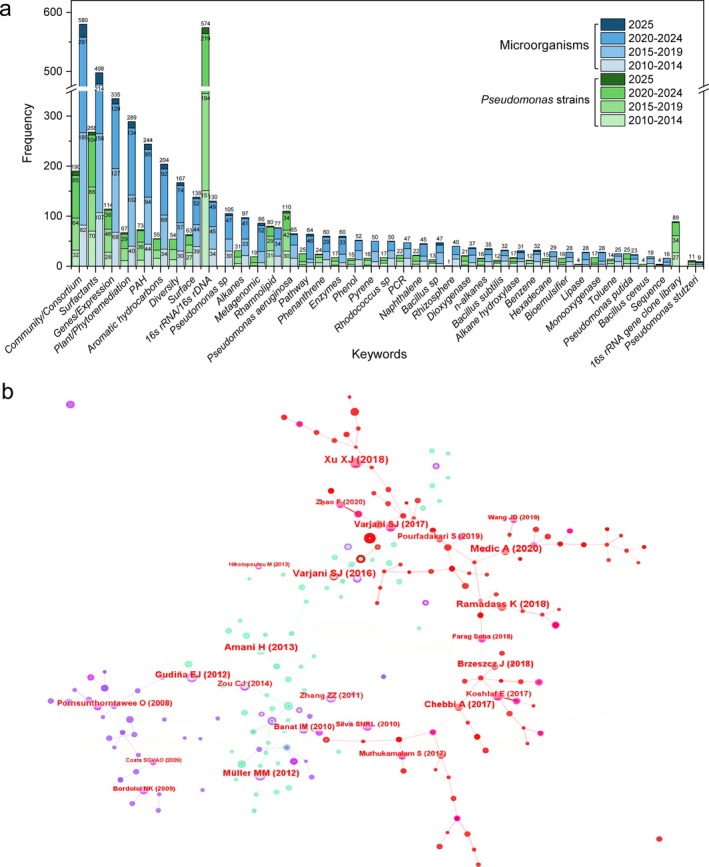 Figure 2
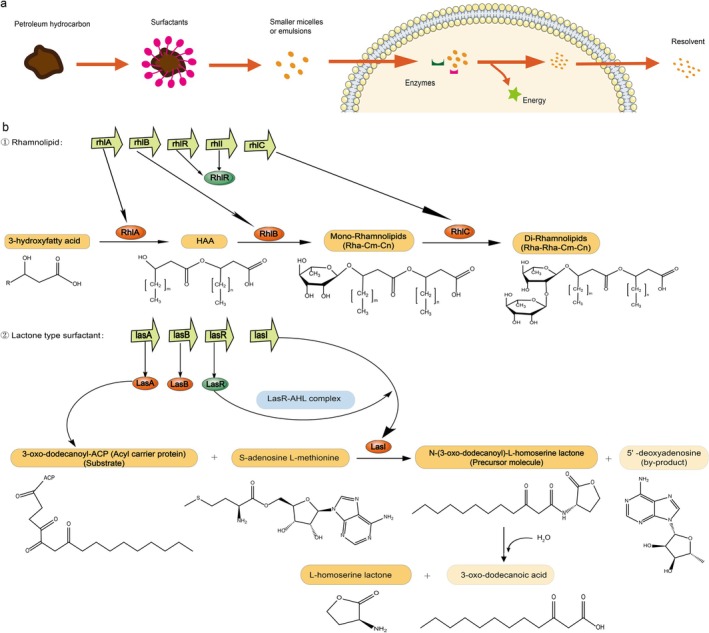 Figure 3
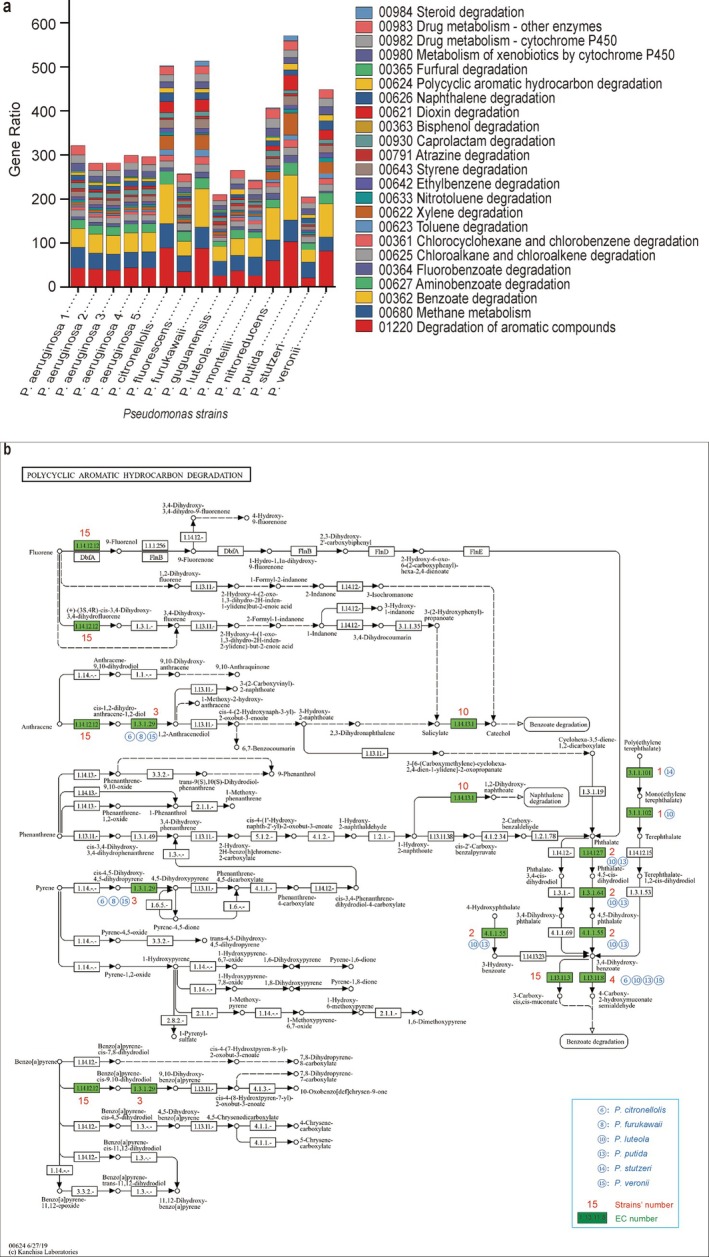 Figure 4
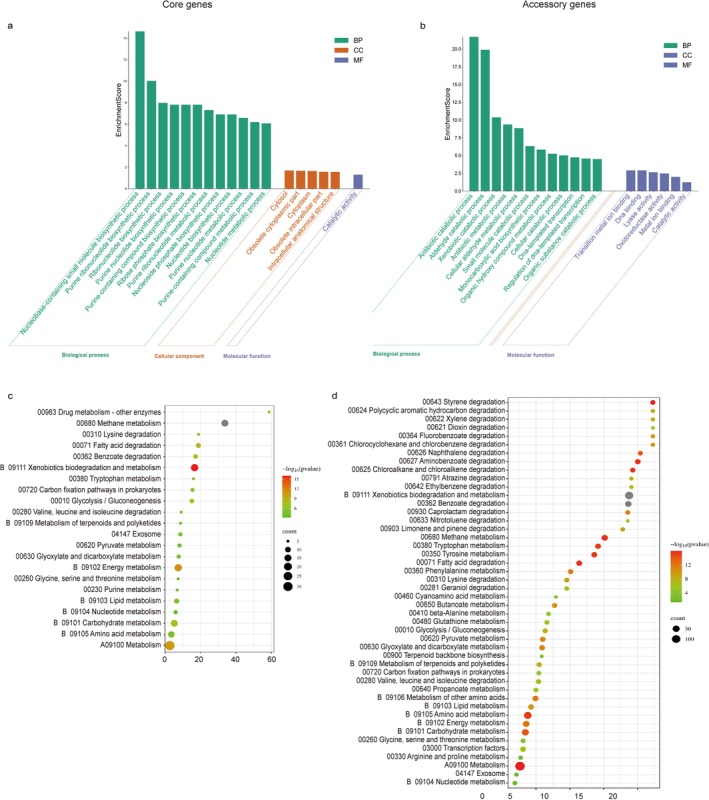 Figure 5
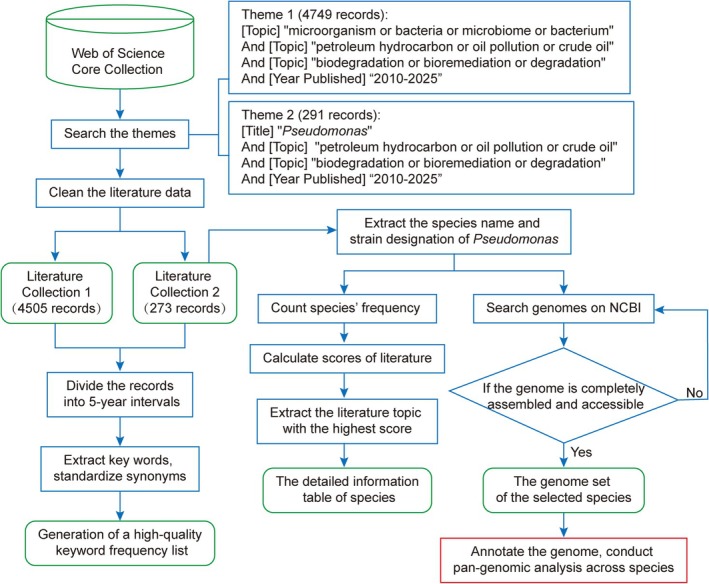 Figure 6
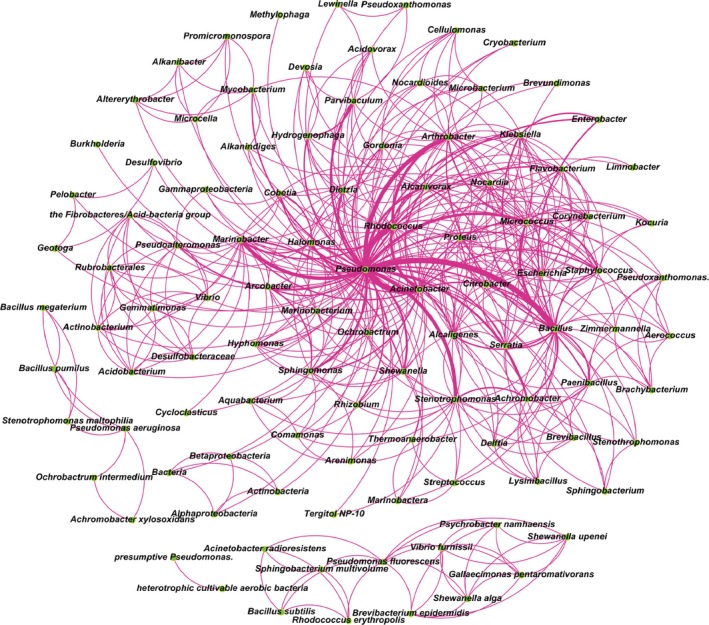 Figure 7
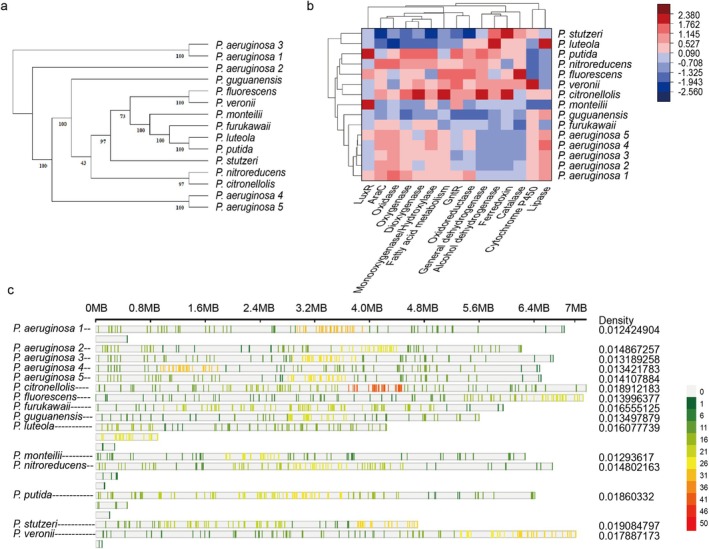 Figure 8
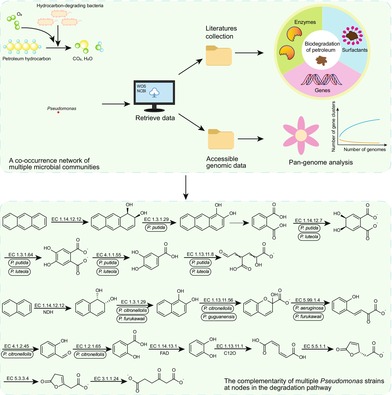 Figure 9
Peer Reviews
No public reviews on file for this paper yet. If you reviewed it on a platform where reviews are public (OpenReview, ICLR, NeurIPS, ICML), you can paste yours below so the community can read it here.
Videos
No videos yet. Explain this paper in a talk, walkthrough, or lecture? Add one.
Taxonomy
TopicsMicrobial bioremediation and biosurfactants · Pesticide and Herbicide Environmental Studies · Toxic Organic Pollutants Impact