The harmonies played by miR-302/367 cluster in pluripotency, reprogramming, and rejuvenation
Melika Zamanian, Sharif Moradi, Hossein Baharvand

TL;DR
This paper reviews how the miR-302/367 cluster helps control cell fate, reprogramming, and aging, with potential for treating age-related diseases.
Contribution
The paper highlights the miR-302/367 cluster's dual role in promoting pluripotency and countering aging, with potential for rejuvenation therapies.
Findings
The miR-302/367 cluster suppresses aging markers like p16INK4a and p21 during reprogramming.
It reduces oxidative stress and fibrosis, suggesting therapeutic use in age-related conditions.
Combining miR-302/367 with delivery systems like lipid nanoparticles could enable targeted rejuvenation.
Abstract
The conserved, pluripotency-associated miR-302/367 cluster coordinates cell fate and aging via epigenetic, cell cycle, and signaling regulation. Highly expressed in pluripotent stem cells and silenced during differentiation, it promotes efficient somatic cell reprogramming by suppressing senescence mediators (eg, p16INK4a, p21) and replacing oncogenes such as c-Myc to minimize tumorigenic risks. Beyond pluripotency, the miR-302/367 cluster reduces oxidative stress, mitochondrial dysfunction, and fibrosis, indicating therapeutic potential in age-associated conditions such as neurodegenerative, ocular, and fibrotic diseases. This review summarizes the dual ability of miR-302/367 cluster in promoting cell state transitions and transiently resetting cellular aging to enable healthspan extension. We critically discuss the pivotal role of miR-302/367 cluster in pluripotency and reprogramming…
Genes, proteins, chemicals, diseases, species, mutations and cell lines named across the full text — each resolved to its canonical identifier and authoritative record.
Click any figure to enlarge with its caption.
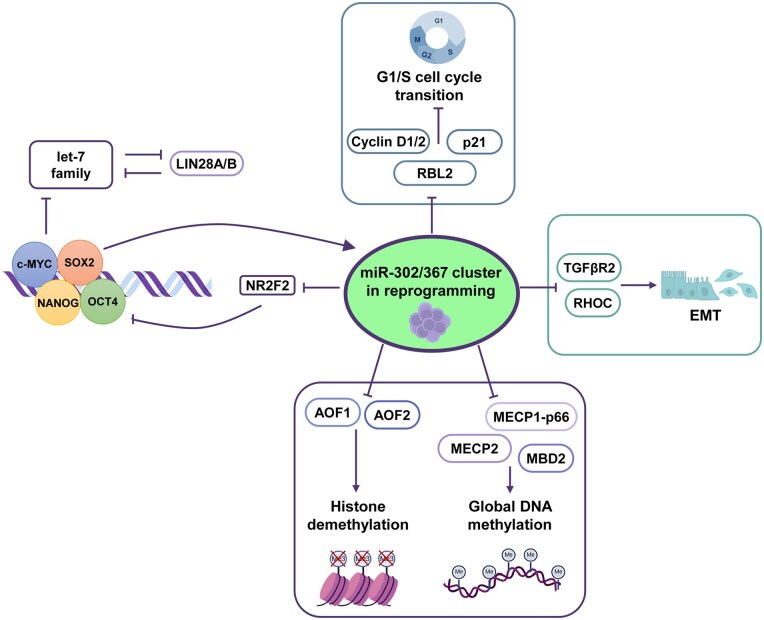 Figure 1
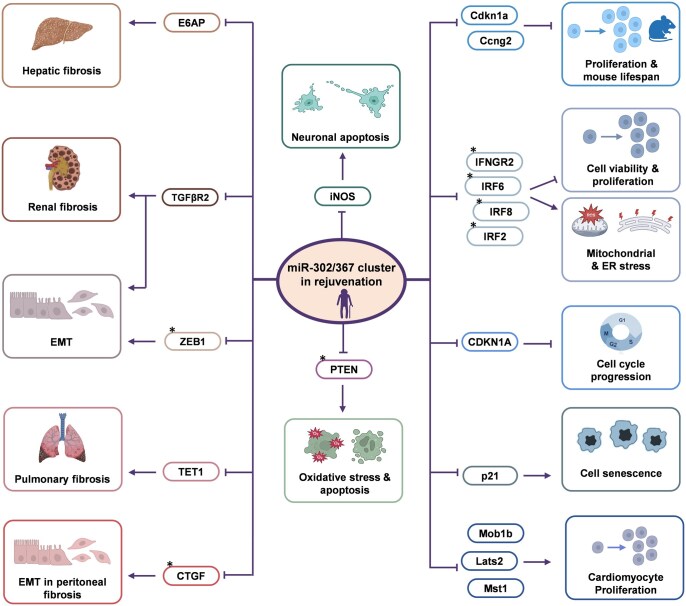 Figure 2
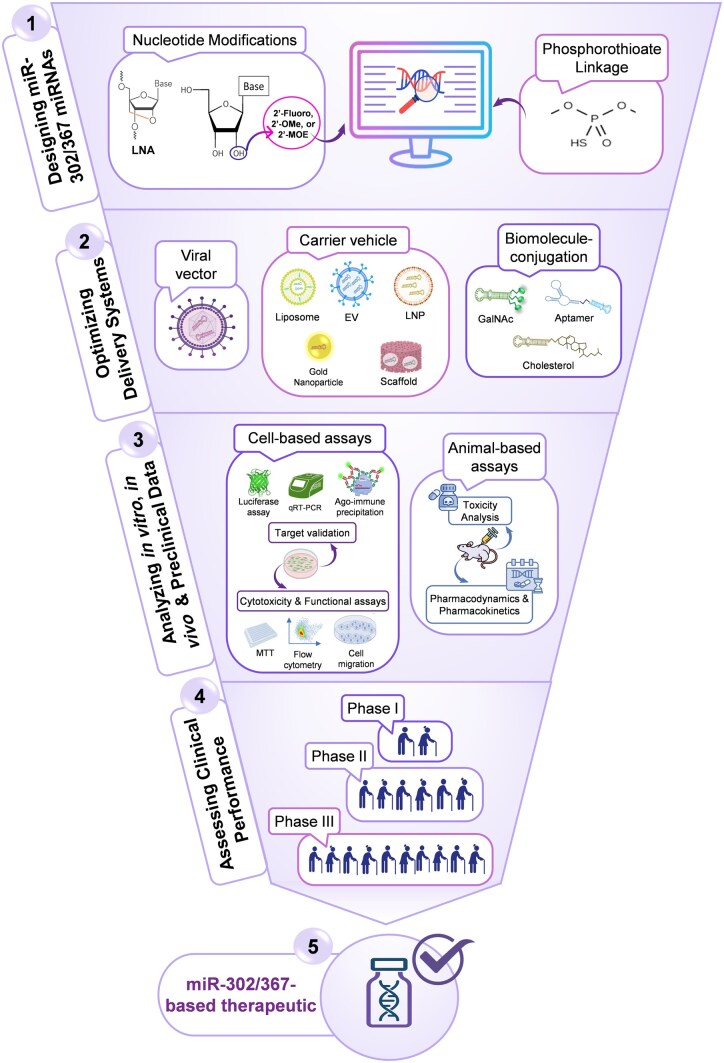 Figure 3
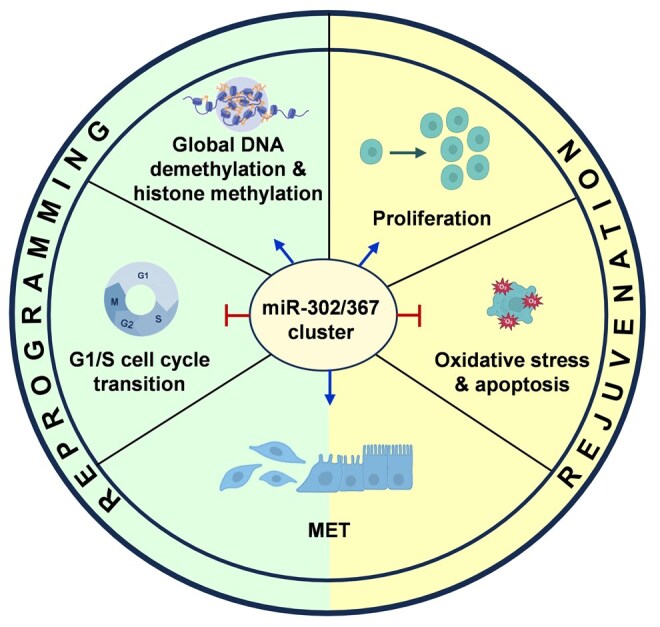 Figure 4
Peer Reviews
No public reviews on file for this paper yet. If you reviewed it on a platform where reviews are public (OpenReview, ICLR, NeurIPS, ICML), you can paste yours below so the community can read it here.
Videos
No videos yet. Explain this paper in a talk, walkthrough, or lecture? Add one.
Taxonomy
TopicsPluripotent Stem Cells Research · MicroRNA in disease regulation · Protein Degradation and Inhibitors