Analysis of CacyBP/SIP, ERK1/2, and p38 Expression in Low‐ and High‐Grade Papillary Urothelial Carcinoma
Natalia Domian, Grzegorz Młynarczyk, Irena Kasacka

TL;DR
This study examines the expression of CacyBP/SIP, ERK1/2, and p38 in low- and high-grade bladder cancer to understand their roles in cancer progression.
Contribution
The study identifies CacyBP/SIP as a potential driver of urothelial carcinoma by modulating ERK1/2 and p38 activity.
Findings
CacyBP/SIP gene expression was strongest in high-grade tumor tissues, mainly in the nucleus.
p38 kinase expression was elevated in tumor tissues, while ERK1/2 expression was reduced.
CacyBP/SIP may contribute to urothelial carcinoma progression by affecting ERK1/2 and p38 activity.
Abstract
Papillary urothelial carcinoma (transitional cell carcinoma) is one of the most common malignant tumors of the urinary tract. Urothelial carcinomas are classified into muscle‐invasive and non‐muscle‐invasive types. Among the latter, papillary urothelial carcinoma is further categorized into low‐grade and high‐grade forms. The aggressiveness of bladder cancer depends on the stage and grade of the disease. The CacyBP/SIP protein and MAP kinases play key roles in various cellular processes and signaling pathways that determine cell survival or death. This study aimed to assess the expression of CacyBP/SIP, ERK1/2, and p38 in low‐ and high‐grade papillary urothelial carcinoma using immunohistochemical and molecular analyses. Tissue samples were obtained from 20 patients with high‐grade urothelial carcinoma and 20 patients with low‐grade urothelial carcinoma. Adjacent non‐cancerous tissues…
Genes, proteins, chemicals, diseases, species, mutations and cell lines named across the full text — each resolved to its canonical identifier and authoritative record.
Click any figure to enlarge with its caption.
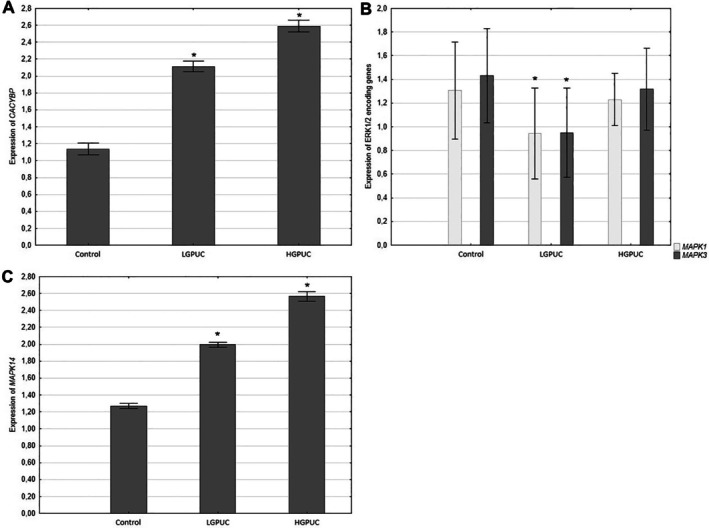 Figure 1
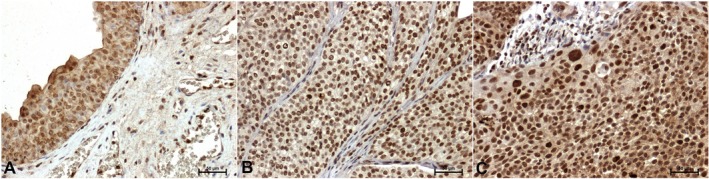 Figure 2
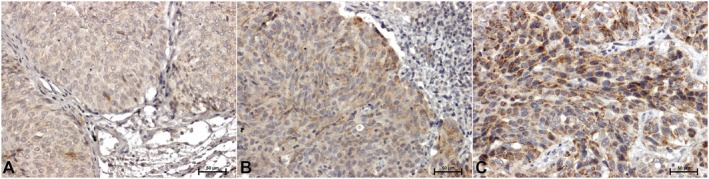 Figure 3
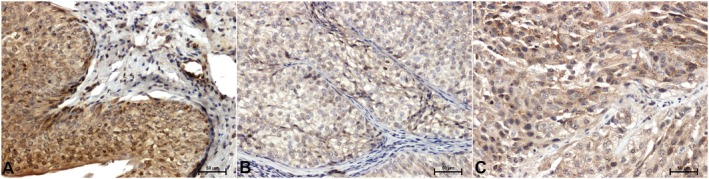 Figure 4
Peer Reviews
No public reviews on file for this paper yet. If you reviewed it on a platform where reviews are public (OpenReview, ICLR, NeurIPS, ICML), you can paste yours below so the community can read it here.
Videos
No videos yet. Explain this paper in a talk, walkthrough, or lecture? Add one.
Taxonomy
TopicsProtease and Inhibitor Mechanisms · S100 Proteins and Annexins · Advanced Proteomics Techniques and Applications