Sac Shrinkage after Endovascular Aneurysm Repair: New Insights into Aneurysm Wall Degeneration and Loss of Elasticity
Toshiya Nishibe, Tsuyoshi Iwasa, Masaki Kano, Akinari Iwahori, Jun Koizumi, Masayasu Nishibe, Alan Dardik

TL;DR
This paper explores how aneurysm sac shrinkage after EVAR is influenced by wall degeneration, stiffness, and factors like renal cysts, suggesting a multifactorial process beyond flow exclusion.
Contribution
The study introduces new insights into the role of wall degeneration, stiffness, and systemic connective tissue changes in sac remodeling after EVAR.
Findings
Sac shrinkage after EVAR is influenced by aneurysm wall degeneration and stiffness, not just pressure reduction.
The presence of simple renal cysts correlates with impaired sac shrinkage and unfavorable remodeling.
Lower arterial stiffness, measured by pulse wave velocity, is associated with better sac shrinkage outcomes.
Abstract
Endovascular aneurysm repair (EVAR) has markedly reduced perioperative morbidity and mortality in the management of abdominal aortic aneurysms. However, its long-term durability remains a concern because of sac expansion, endoleaks, and late rupture. Sac shrinkage serves as a key surrogate marker of procedural success, reflecting favorable remodeling and a lower risk of complications. Sac behavior after EVAR is determined by the interplay between intrasac pressure and aneurysm wall integrity. Although pressure reduction is essential, wall degeneration and stiffness critically influence remodeling outcomes. The presence of simple renal cysts, a localized manifestation of systemic connective tissue degeneration, has been associated with impaired sac shrinkage and may indicate unfavorable remodeling. Arterial stiffness, assessed by pulse wave velocity, also correlates with sac behavior:…
Genes, proteins, chemicals, diseases, species, mutations and cell lines named across the full text — each resolved to its canonical identifier and authoritative record.
Click any figure to enlarge with its caption.
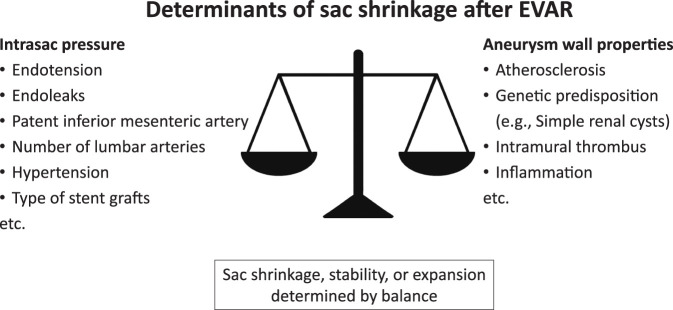 Figure 1
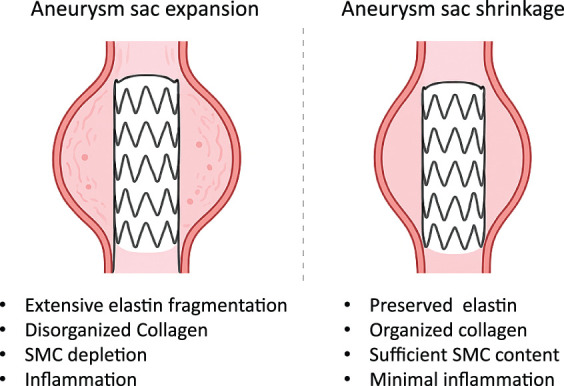 Figure 2
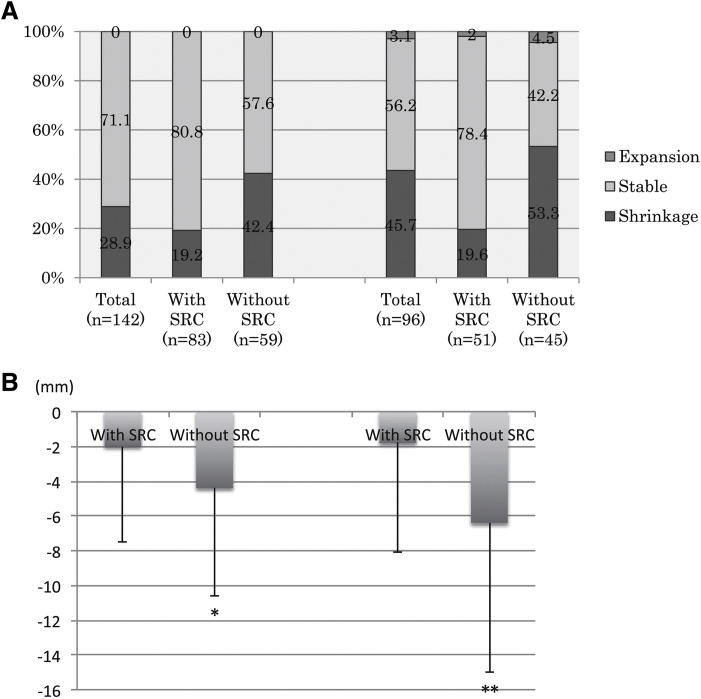 Figure 3
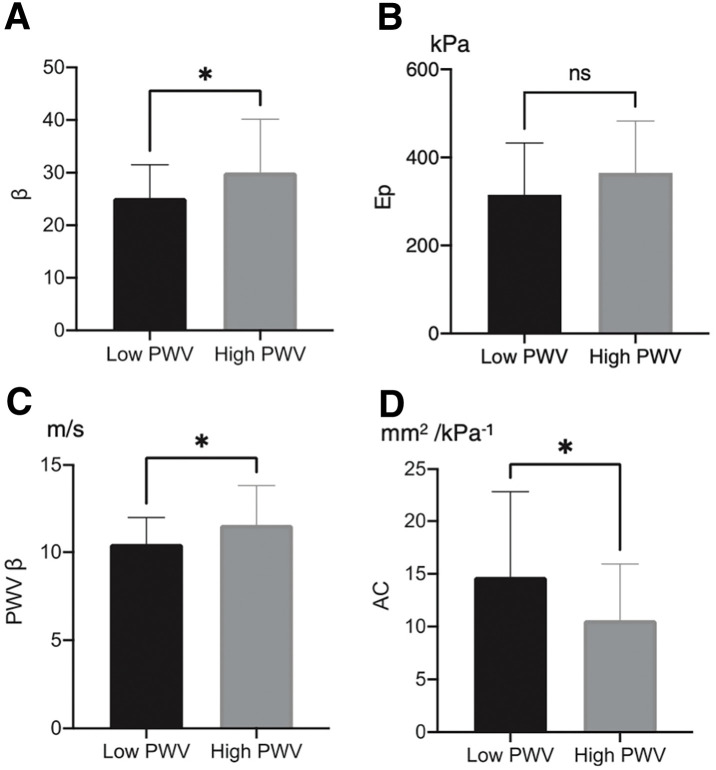 Figure 4
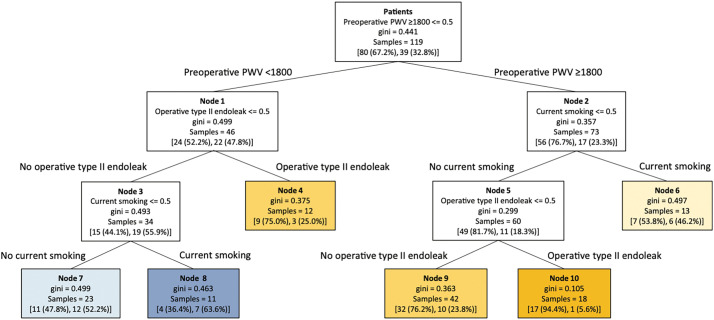 Figure 5
Peer Reviews
No public reviews on file for this paper yet. If you reviewed it on a platform where reviews are public (OpenReview, ICLR, NeurIPS, ICML), you can paste yours below so the community can read it here.
Videos
No videos yet. Explain this paper in a talk, walkthrough, or lecture? Add one.
Taxonomy
TopicsAortic aneurysm repair treatments · Peripheral Artery Disease Management · Aortic Disease and Treatment Approaches