Diagnostic Yield of Ultrasound-Guided Omental Biopsy for Omental Thickening Using Histopathology As the Reference Standard
Quratulain Haroon, Misbah Tahir, Shaiq Hussain, Danial Khalid, Khalid Mustafa, Jawaid Iqbal

TL;DR
This study shows that ultrasound-guided omental biopsy is a safe and effective way to diagnose the cause of omental thickening seen on CT scans.
Contribution
The study demonstrates the diagnostic accuracy of ultrasound-guided omental biopsy as a minimally invasive alternative to surgical procedures.
Findings
Ultrasound-guided omental biopsy provided a definitive diagnosis in 144 out of 167 patients.
Peritoneal carcinomatosis was the most common diagnosis (64.6%) followed by tuberculous peritonitis (18.1%).
Age was significantly associated with peritoneal carcinomatosis and tuberculous peritonitis.
Abstract
Background Histopathological evaluation is vital in distinguishing between benign and malignant lesions. Assessment of the different patterns of peritoneal lesions on CT scans may help to differentiate inflammation and malignancy. It utilizes various imaging modalities, among them, ultrasound-guided percutaneous biopsies are minimally invasive, have low complications, and are cost-effective. Objective To assess different disease patterns by ultrasound-guided omental biopsy in patients with solitary peritoneal thickening found on CT scans, using histopathology as the reference standard. Study design, setting, and duration This was a prospective, cross-sectional study, carried out for over 2.5 years in the Department of Radiology at Liaquat National Hospital, Karachi, Pakistan. Material and methods The study included a total of 167 patients. Biopsies were conclusive in 144…
Genes, proteins, chemicals, diseases, species, mutations and cell lines named across the full text — each resolved to its canonical identifier and authoritative record.
Click any figure to enlarge with its caption.
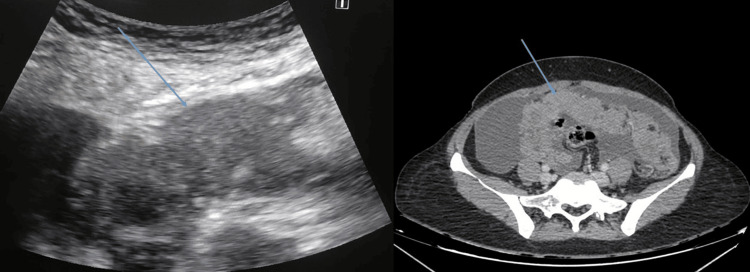 Figure 1
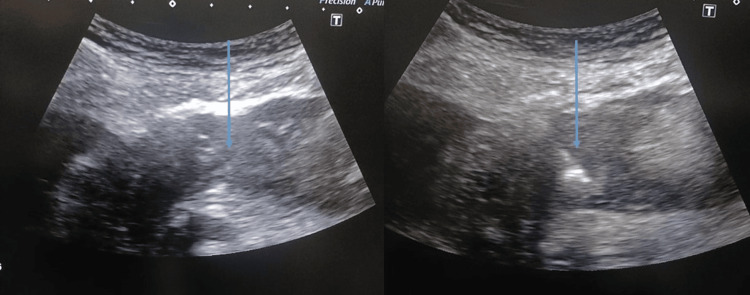 Figure 2
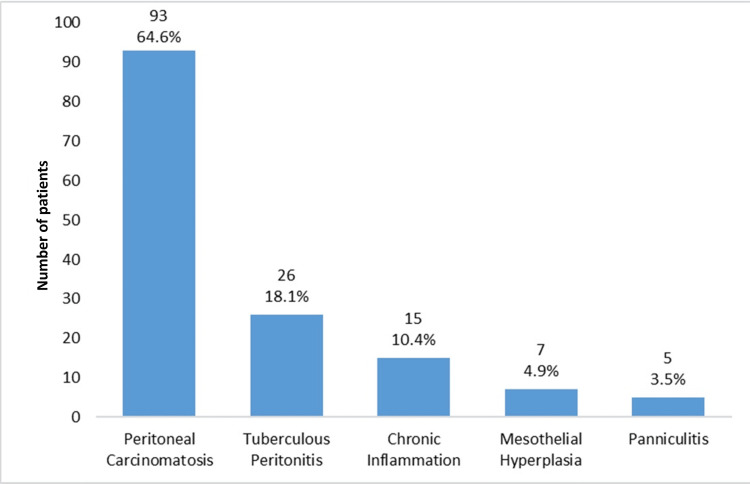 Figure 3
Peer Reviews
No public reviews on file for this paper yet. If you reviewed it on a platform where reviews are public (OpenReview, ICLR, NeurIPS, ICML), you can paste yours below so the community can read it here.
Videos
No videos yet. Explain this paper in a talk, walkthrough, or lecture? Add one.
Taxonomy
TopicsOmental and Epiploic Conditions · Intraperitoneal and Appendiceal Malignancies · Occupational and environmental lung diseases