Adult-onset vanishing white matter disease caused by the EIF2B5 c.185A>T (p.Asp62Val) variant
Jie Zhou, Chunbo Ji, Siqing Ma, Jianying Zhu, Ping Yang

TL;DR
This paper reports a rare case of adult-onset vanishing white matter disease caused by a specific genetic variant, expanding the known age and symptom range for this condition.
Contribution
The first report of the EIF2B5 c.185A>T variant causing adult-onset vanishing white matter disease.
Findings
The c.185A>T variant in EIF2B5 was identified in a 32-year-old female with atypical adult-onset VWMD symptoms.
The variant is associated with non-classical features like headache and menstrual irregularities in adults.
EIF2B5 is the most frequently mutated subunit in adult-onset VWMD cases, with specific initial symptoms and gender-related manifestations.
Abstract
Vanishing white matter disease (VWMD; OMIM 603896), also known as childhood ataxia with central nervous system hypomyelination (CACH), is a rare autosomal recessive leukodystrophy caused by pathogenic variants in the EIF2B gene family (EIF2B1–EIF2B5). Clinical manifestations are highly heterogeneous, with onset ranging from fetal life to adulthood; adult-onset cases remain relatively rare and often present with atypical symptoms. Brain magnetic resonance imaging (MRI) and genetic testing are pivotal for diagnosis. We report a 32-year-old Chinese female with adult-onset VWMD characterized by intermittent headaches, progressive cognitive decline, menstrual irregularities, and hearing loss. Cranial MRI with diffusion-weighted imaging (DWI) revealed symmetrical periventricular and centrum semiovale white matter abnormalities. Whole-exome sequencing (WES) identified a homozygous missense…
Genes, proteins, chemicals, diseases, species, mutations and cell lines named across the full text — each resolved to its canonical identifier and authoritative record.
Click any figure to enlarge with its caption.
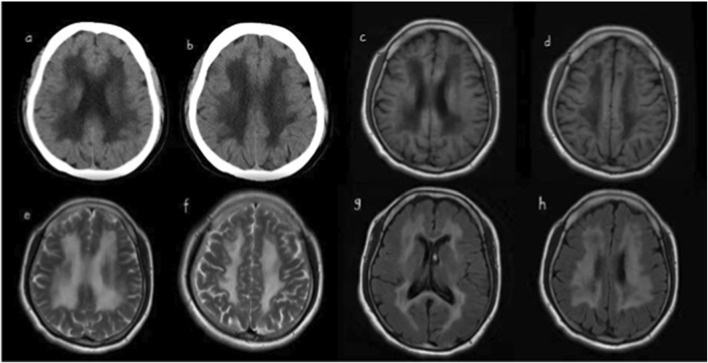 Figure 1
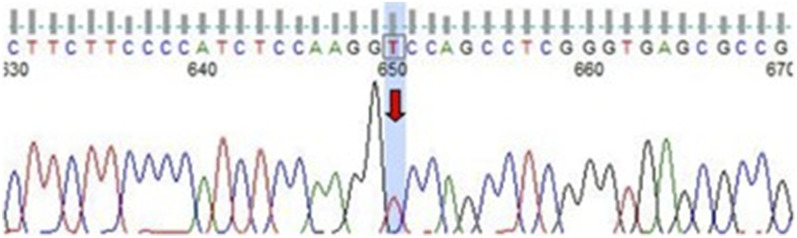 Figure 2
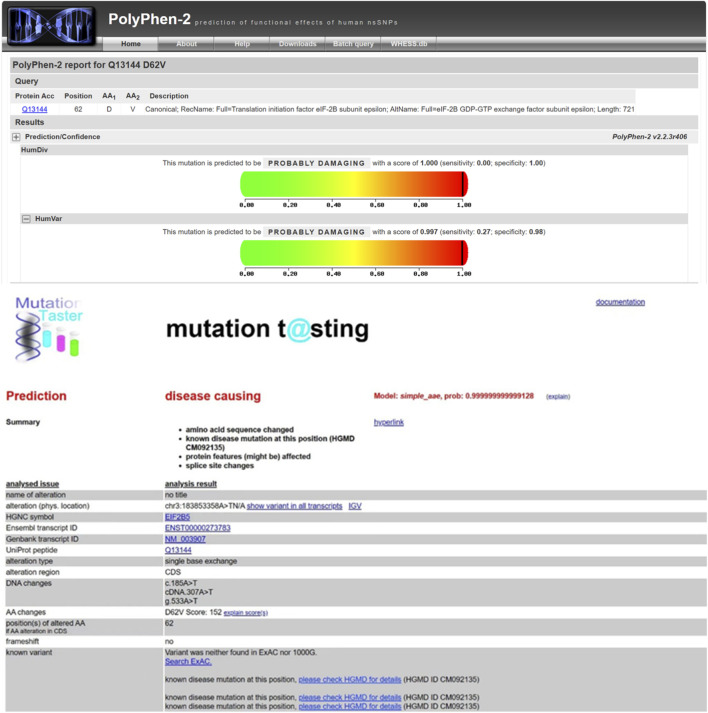 Figure 3
Peer Reviews
No public reviews on file for this paper yet. If you reviewed it on a platform where reviews are public (OpenReview, ICLR, NeurIPS, ICML), you can paste yours below so the community can read it here.
Videos
No videos yet. Explain this paper in a talk, walkthrough, or lecture? Add one.
Taxonomy
TopicsRNA regulation and disease · RNA and protein synthesis mechanisms · RNA Research and Splicing