Job preferences and trade-offs in rural health workforce retention: a discrete choice experiment from western China
Dongqiong Chen, Zigang Zhang, Sisi Ma, Jia Yin, Li Zhao, Lihua Jiang

TL;DR
This study explores what job factors rural healthcare workers in China value most, finding that a state-controlled employment system called Bianzhi is crucial for retaining staff.
Contribution
The study introduces a discrete choice experiment to quantify the relative importance of Bianzhi and other job attributes in rural healthcare worker retention.
Findings
Bianzhi was the most influential factor in job preferences, with workers willing to sacrifice 18.2% of income for it.
Female workers showed higher sensitivity to workplace proximity compared to males.
Combining Bianzhi with children's education support was more effective than salary incentives alone.
Abstract
The shortage and uneven distribution of primary healthcare workers in rural China have long persisted, with many studies focusing predominantly on salary and working conditions improvement. A discrete choice experiment involving 183 rural primary healthcare workers in Sichuan Province revealed the critical role of Bianzhi (a state-controlled employment system) in workforce retention. Findings demonstrated that Bianzhi dominated job preferences (β=0.964), with practitioners willing to sacrifice 18.2% of their monthly income to exchange for it. Beyond Bianzhi, near location, housing allowances, opportunities for continuing education, and children's education support significantly influenced job choices. Female workers exhibited 1.189 times greater sensitivity to workplace proximity than males (P < 0.001), while those with school-age children required 12.64% additional compensation for…
Genes, proteins, chemicals, diseases, species, mutations and cell lines named across the full text — each resolved to its canonical identifier and authoritative record.
Click any figure to enlarge with its caption.
 Figure 1
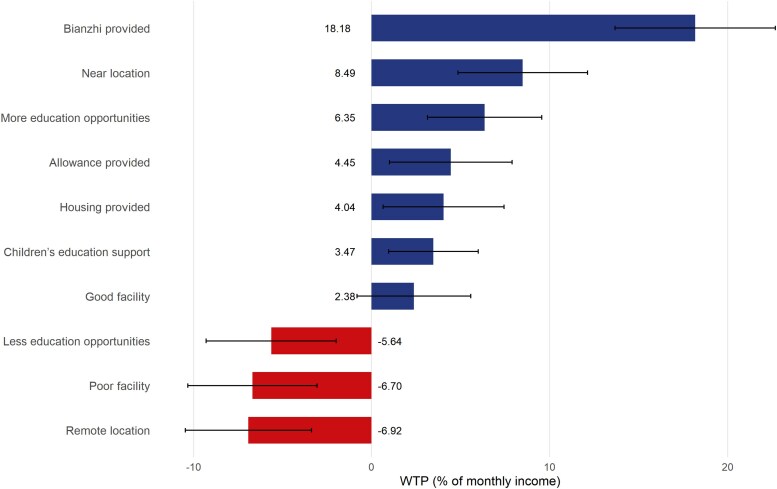 Figure 2
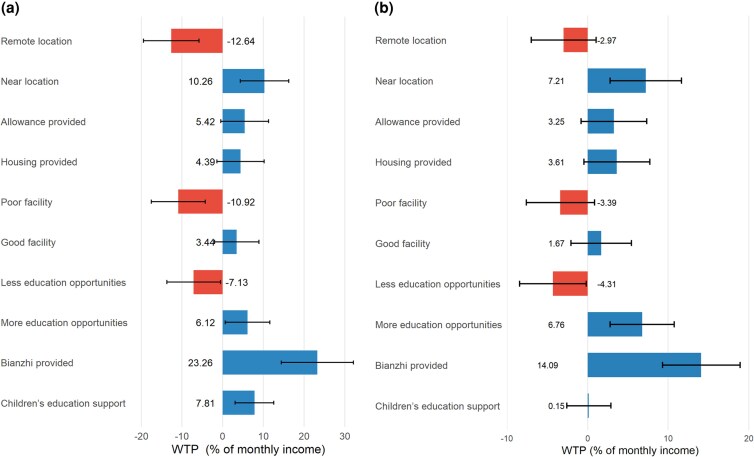 Figure 3
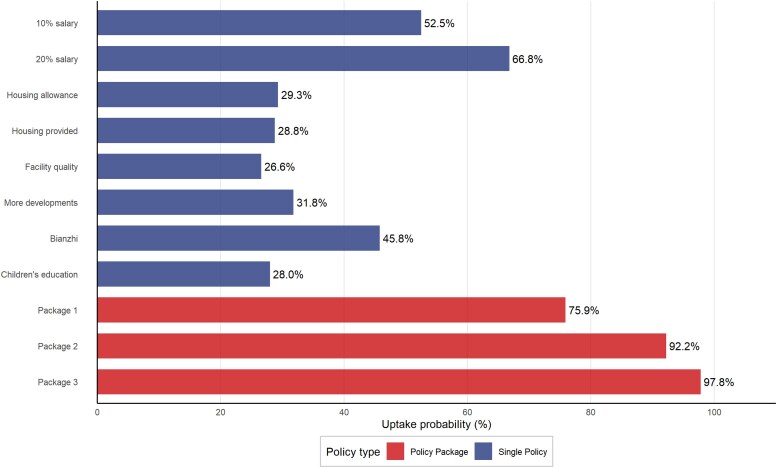 Figure 4
Peer Reviews
No public reviews on file for this paper yet. If you reviewed it on a platform where reviews are public (OpenReview, ICLR, NeurIPS, ICML), you can paste yours below so the community can read it here.
Videos
No videos yet. Explain this paper in a talk, walkthrough, or lecture? Add one.
Taxonomy
TopicsHealthcare Systems and Reforms · Global Maternal and Child Health · Global Health Care Issues