Anthropometric Failure and Associated Factors Among Infants Aged 6–8 Months in West Gojjam Zone, Ethiopia
Shiferaw Birhanu, Getu Degu Alene, Yeshalem Mulugeta Demilew

TL;DR
This study finds that nearly one-third of infants aged 6–8 months in Ethiopia suffer from undernutrition, with factors like male sex, older age, and household decision-making patterns playing a role.
Contribution
The study introduces the composite index of anthropometric failure to better capture undernutrition in infants, revealing higher prevalence than conventional indicators.
Findings
29.2% of infants aged 6–8 months had anthropometric failure, with stunting being the most common form.
Male infants, older age (7–8 months), and household decision-making by the husband were significant predictors of undernutrition.
Low maternal self-efficacy in complementary feeding and acute respiratory infections also increased the risk of anthropometric failure.
Abstract
Childhood undernutrition in Ethiopia is a major public health concern. However, conventional indicators often miss concurrent growth failures, thereby underestimating the true burden among infants aged 6–8 months, a vulnerable group during the critical period of growth and complementary feeding. Therefore, this study aimed to assess undernutrition using the composite index of anthropometric failure and associated factors among infants aged 6–8 months in West Gojjam Zone, Northwest Ethiopia. A community‐based cross‐sectional study was conducted among 789 mothers with infants aged 6–8 months, selected using a cluster sampling technique in West Gojjam Zone, Northwest Ethiopia. Data were collected using a structured questionnaire, and anthropometric measurements were taken following standard procedures. Binary logistic regression analysis was performed to identify factors associated with…
Genes, proteins, chemicals, diseases, species, mutations and cell lines named across the full text — each resolved to its canonical identifier and authoritative record.
Click any figure to enlarge with its caption.
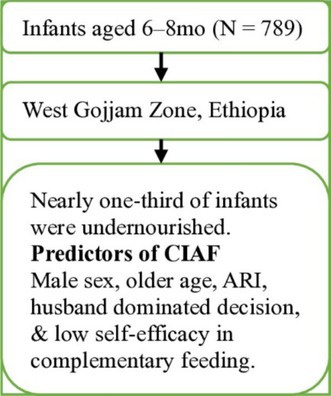 Figure 1
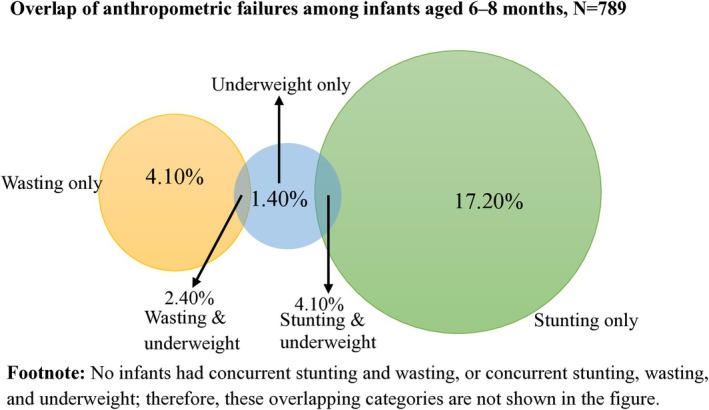 Figure 2
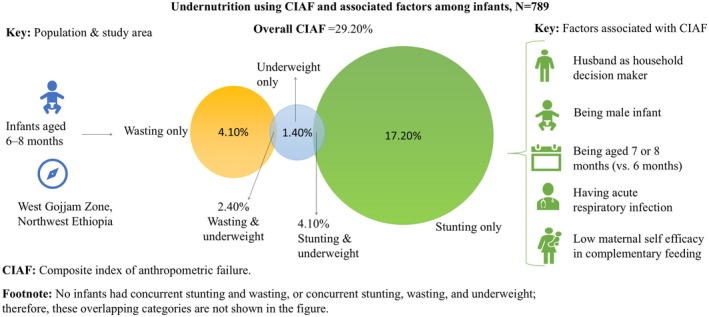 Figure 3
Peer Reviews
No public reviews on file for this paper yet. If you reviewed it on a platform where reviews are public (OpenReview, ICLR, NeurIPS, ICML), you can paste yours below so the community can read it here.
Videos
No videos yet. Explain this paper in a talk, walkthrough, or lecture? Add one.
Taxonomy
TopicsChild Nutrition and Water Access · Breastfeeding Practices and Influences · Global Maternal and Child Health