A biometric survey of known and prospective murine models of posterior microphthalmia-nanophthalmia
Navdeep Gogna, Jai Pinkney, Lisa Stone, MHD Mustafa Khorzom, Fuxin Zhao, Gayle B. Collin, Juergen K. Naggert, Mark P. Krebs, Patsy M. Nishina

TL;DR
This study compares mouse models of eye growth disorders to understand how genetic mutations affect eye size and shape.
Contribution
The paper introduces new insights into the biometric effects of specific genetic mutations in mouse models of posterior microphthalmia and nanophthalmia.
Findings
Mfrp, Prss56, and Adipor1 mutations cause similar eye size and shape changes in mice.
C1qtnf5 mutations affect anterior eye growth, with changes in chamber depth and lens thickness.
Prss56 mutants develop retinal folds not seen in other models or controls.
Abstract
Posterior microphthalmia and nanophthalmia are related genetic conditions that disrupt ocular growth. Here, we conducted a biometric analysis of mouse models to assess shared features of these diseases. Three known microphthalmia alleles (Mfrprd6, Prss56glcr4, and Adipor1tm1Dgen) and two prospective alleles (C1qtnf5tm1.1(KOMP) Vlcg and Prss56em2(IMPC)J) were introgressed onto the C57BL/6J (B6) genetic background and compared to B6 mice at 1 through 12 months of age. Biometric parameters obtained using optical coherence tomography were analyzed statistically to identify strain differences. Fundus imaging and histological analyses were performed to assess ocular morphology. Mfrprd6, Prss56glcr4, and Prss56em2(IMPC)J mice had significantly shorter axial and posterior lengths, and longer anterior chamber depth compared to controls at all ages studied. Adipor1tm1Dgen mice exhibited similar,…
Genes, proteins, chemicals, diseases, species, mutations and cell lines named across the full text — each resolved to its canonical identifier and authoritative record.
Click any figure to enlarge with its caption.
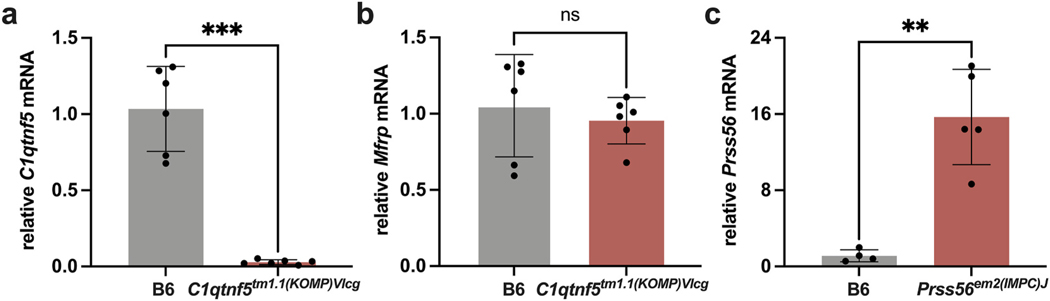 Figure 1
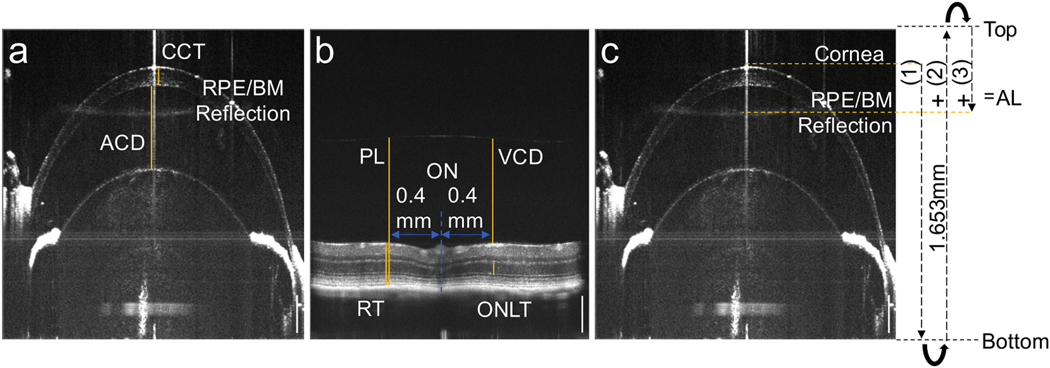 Figure 2
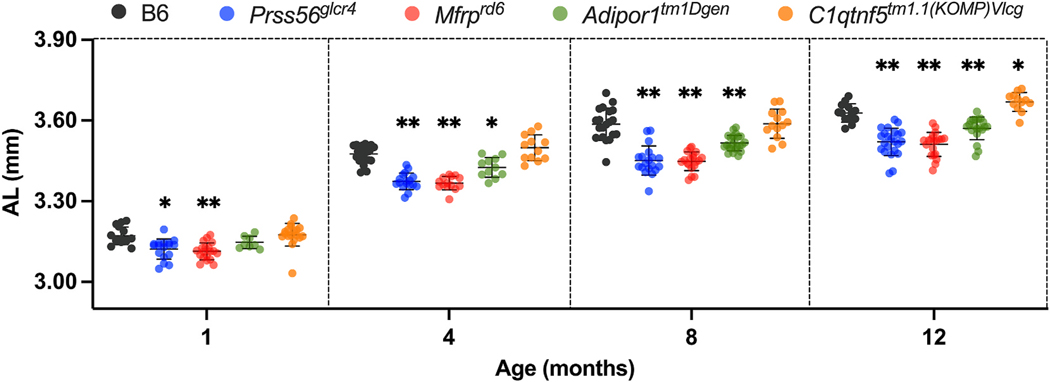 Figure 3
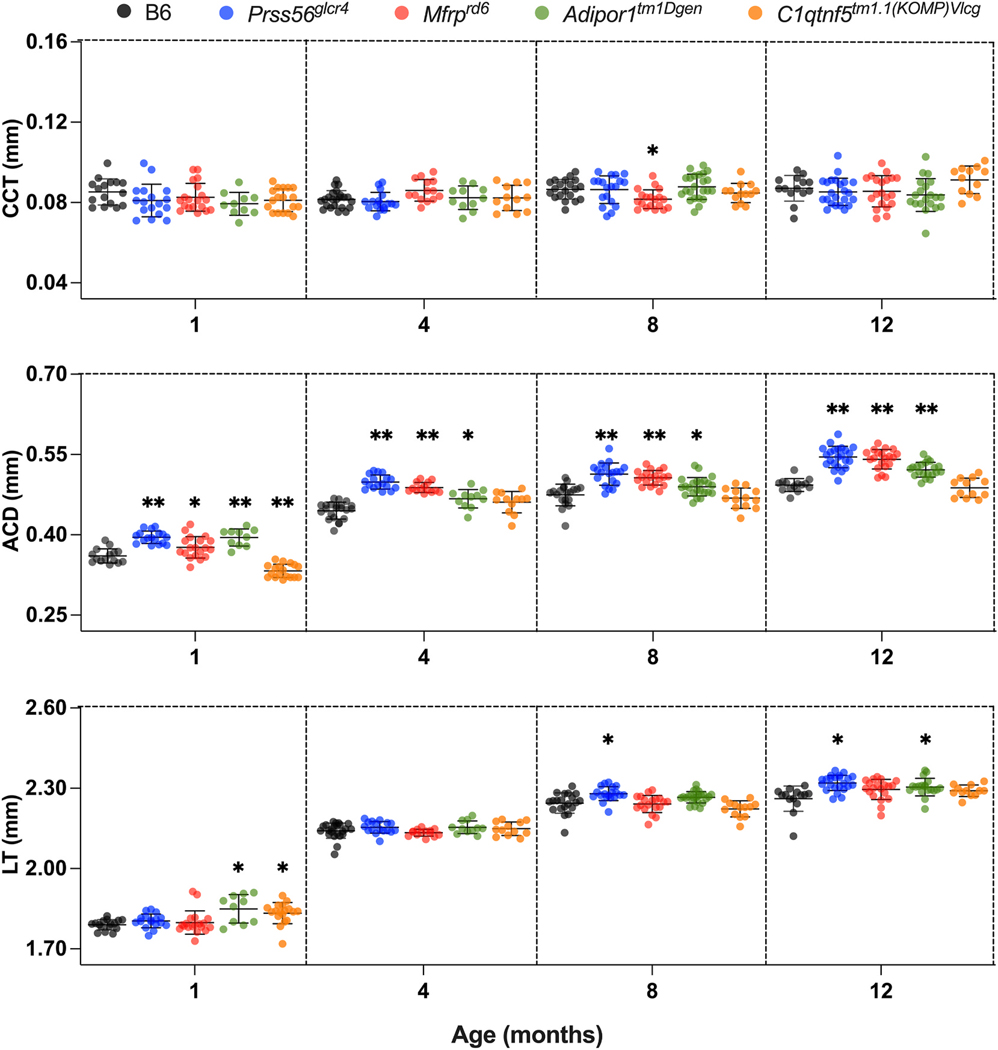 Figure 4
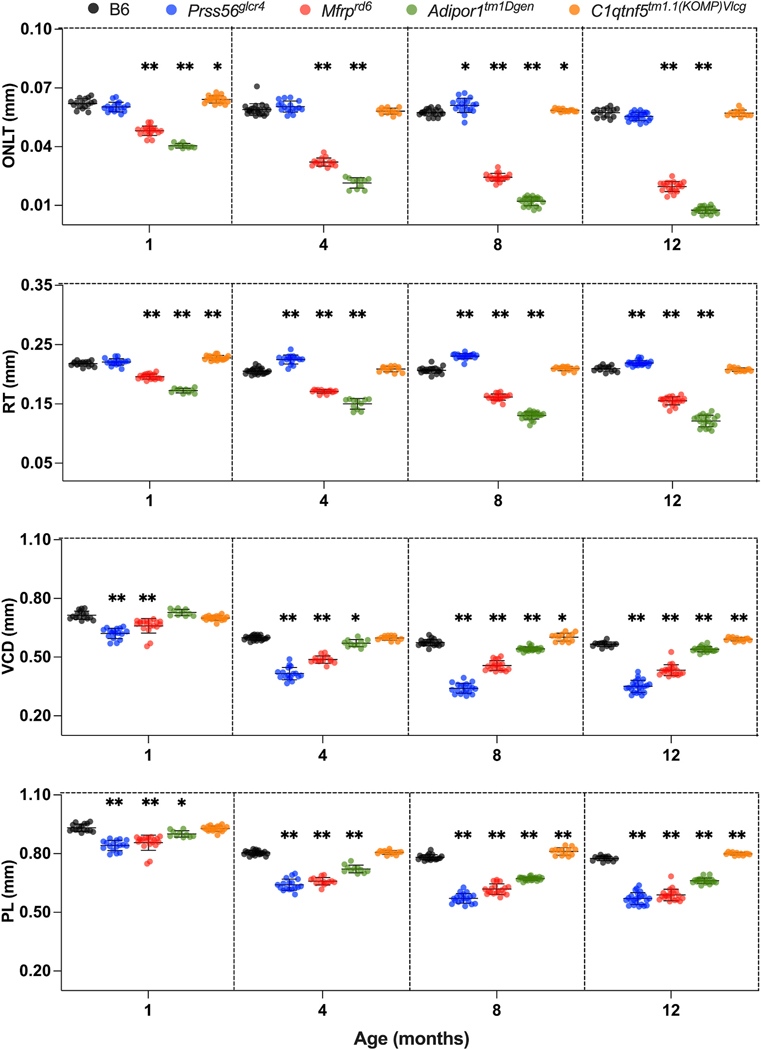 Figure 5
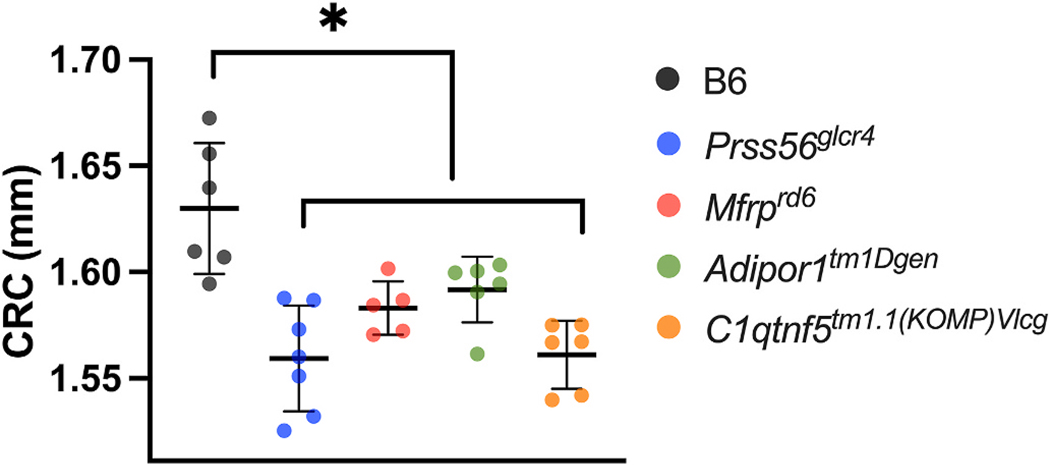 Figure 6
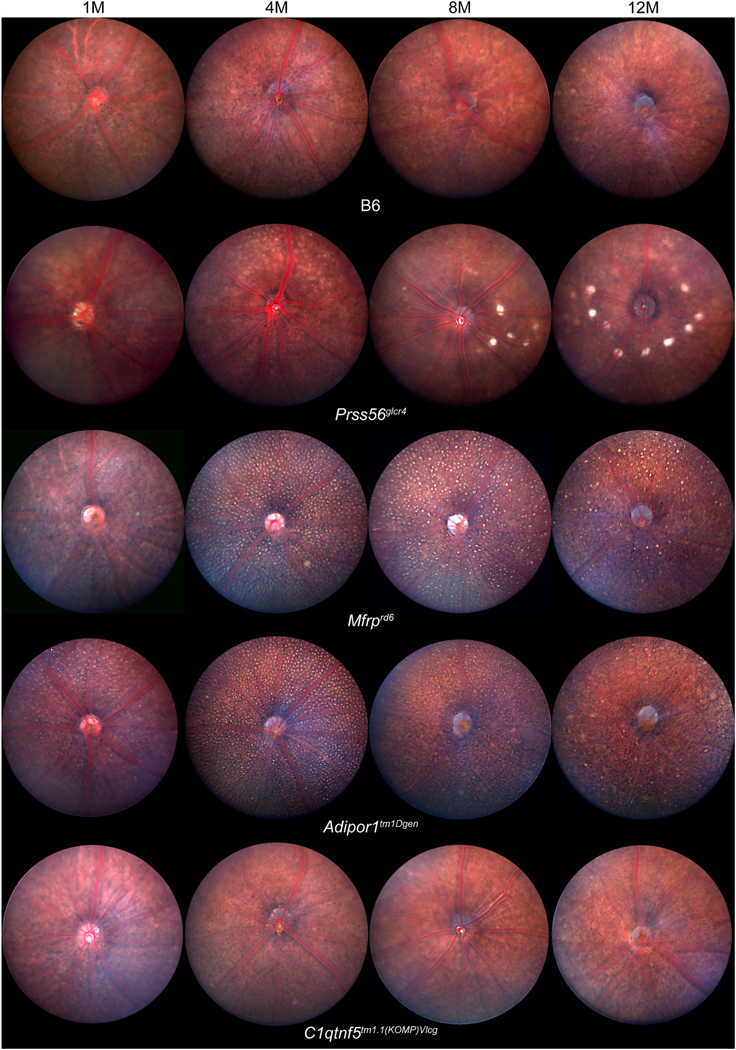 Figure 7
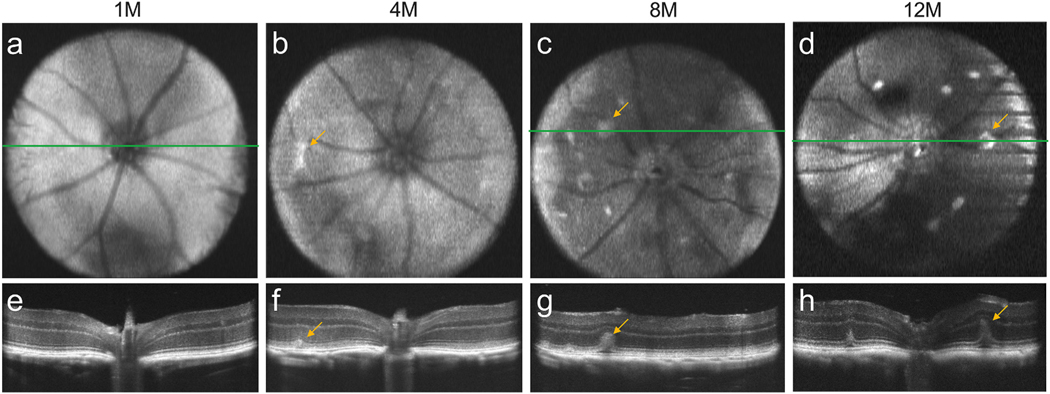 Figure 8
Peer Reviews
No public reviews on file for this paper yet. If you reviewed it on a platform where reviews are public (OpenReview, ICLR, NeurIPS, ICML), you can paste yours below so the community can read it here.
Videos
No videos yet. Explain this paper in a talk, walkthrough, or lecture? Add one.
Taxonomy
TopicsOcular Disorders and Treatments · Advanced biosensing and bioanalysis techniques · Reconstructive Facial Surgery Techniques