Hemidesmosome Mutations Contribute to the Onset and Severity of Acquired Autoimmune Bullous Diseases
Shan Cao, Tianyu Wang, Chen Lv, Shanshan Ma, Gongqi Yu, Qianqian Xia, Tingting Liu, Yueqian Yu, Lele Sun, Xiaoyan Pei, Qing Zhao, Zhenzhen Wang, Chuan Wang, Yongxia Liu, Shengli Chen, Jianwen Wang, Guizhi Zhou, Hong Liu, Yonghu Sun, Furen Zhang

TL;DR
This study shows that mutations in hemidesmosome-related genes contribute to the development and severity of acquired autoimmune bullous diseases like pemphigoid.
Contribution
The study identifies novel hemidesmosome gene variants and demonstrates their functional impact in autoimmune bullous diseases using genetic, proteomic, and model organism approaches.
Findings
ITGA6, LAMC2, and EPPK1 mutations significantly affect hemidesmosome-related protein expression.
ITGA6 mutations disrupt hemidesmosome assembly in C. elegans models, altering structural components.
ITGA6 mutations activate NOD-like receptor–NF-κB–TNF–pyroptosis signaling pathways, affecting disease progression.
Abstract
Hemidesmosomes are structures that anchor junctions between basal epithelial cells and the basement membrane, essential for skin integrity. Genetic mutation of hemidesmosomes was well documented for the inherited bullous disorder, but is rarely investigated for acquired bullous disorders. We designed a 16‐gene targeted capture panel and sequenced 202 patients with hemidesmosomes‐related acquired disorders and 123 healthy controls, identifying 114 pathogenic variants in 15 genes, including 20.2% novel variants. Clinical relevance (disease severity and outcome) and immunohistochemistry results demonstrated that ITGA6, LAMC2, and EPPK1 mutations significantly affected the expression of hemidesmosome‐related proteins, compared with controls with non‐carriers. Functional studies in Caenorhabditis elegans models with transmission electron microscopy and confocal microscopy demonstrated that…
Genes, proteins, chemicals, diseases, species, mutations and cell lines named across the full text — each resolved to its canonical identifier and authoritative record.
Click any figure to enlarge with its caption.
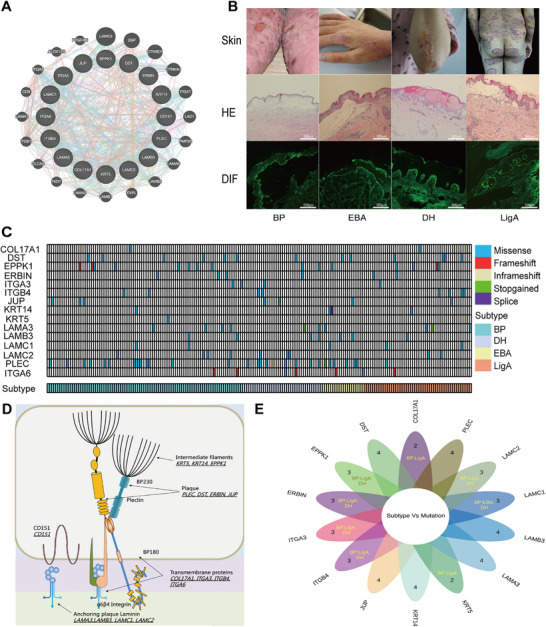 Figure 1
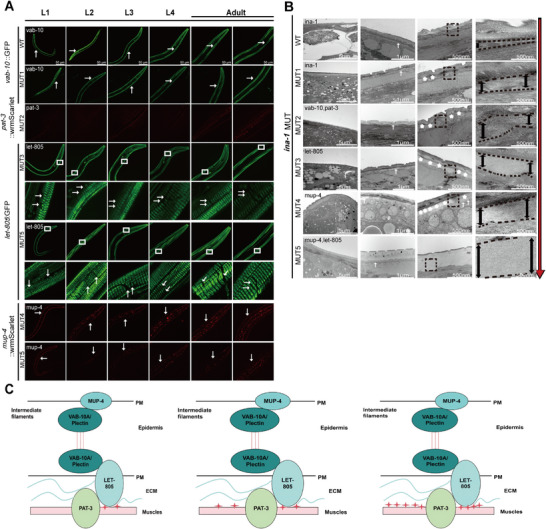 Figure 2
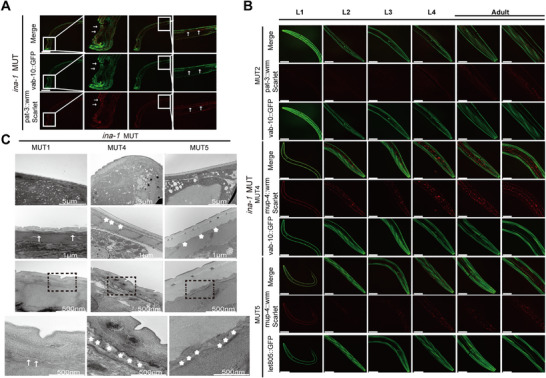 Figure 3
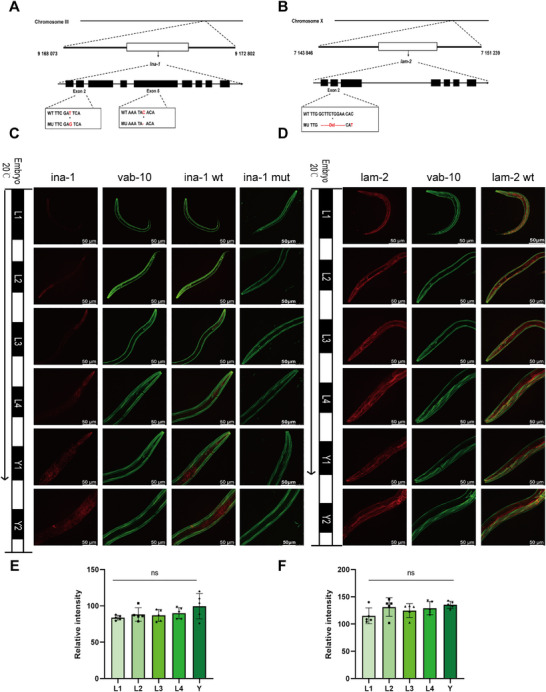 Figure 4
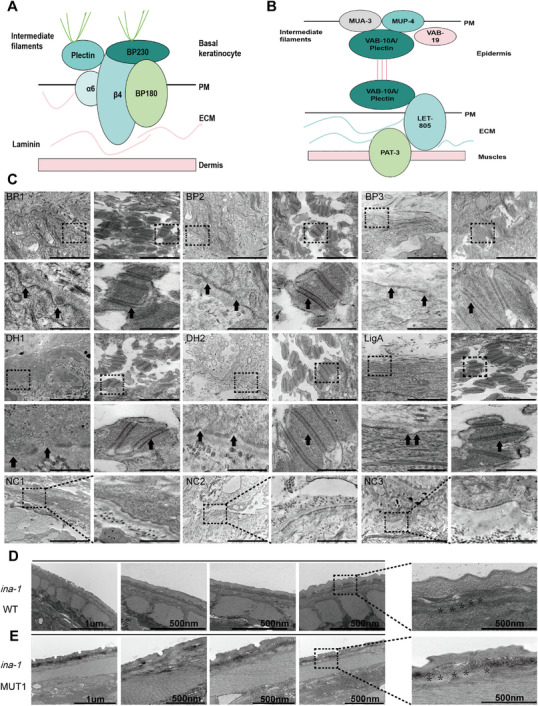 Figure 5
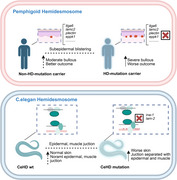 Figure 6
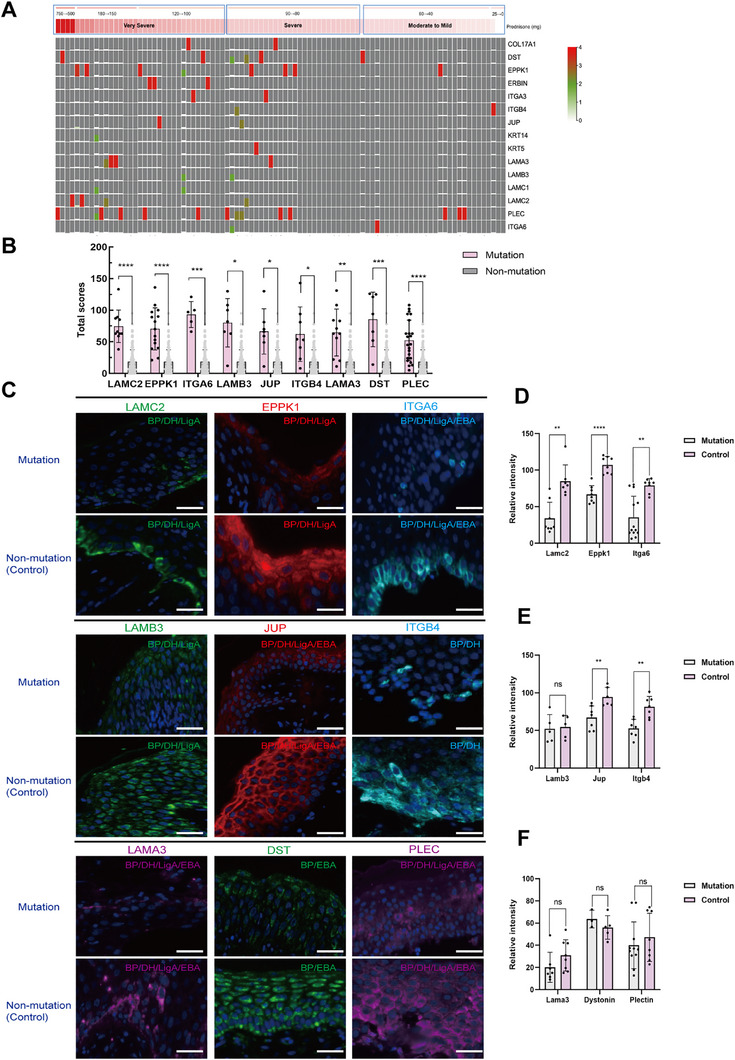 Figure 7
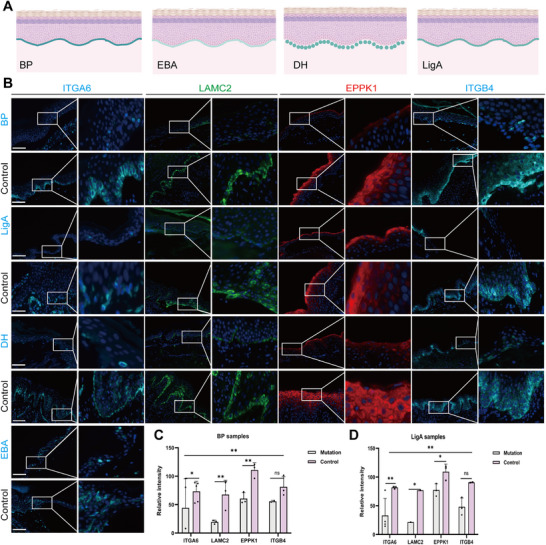 Figure 8
Peer Reviews
No public reviews on file for this paper yet. If you reviewed it on a platform where reviews are public (OpenReview, ICLR, NeurIPS, ICML), you can paste yours below so the community can read it here.
Videos
No videos yet. Explain this paper in a talk, walkthrough, or lecture? Add one.
Taxonomy
TopicsAutoimmune Bullous Skin Diseases · Skin and Cellular Biology Research · Genetic and rare skin diseases.