Pituitary neuroendocrine tumor: evaluation with super resolution deep learning reconstruction: Research
Koichiro Yasaka, Akira Katayama, Naoya Sakamoto, Yuko Sato, Yusuke Asari, Jun Kanzawa, Yuki Sonoda, Yuichi Suzuki, Shiori Amemiya, Shigeru Kiryu, Osamu Abe

TL;DR
This study shows that using a deep learning algorithm improves MRI image quality and consistency in evaluating pituitary tumors compared to traditional methods.
Contribution
The novel use of super-resolution deep learning reconstruction improves inter-reader agreement and image quality for pituitary tumor MRI evaluations.
Findings
SR-DLR improved inter-reader agreement for pituitary stalk deviation compared to ZIP.
SR-DLR significantly enhanced SNR, CNR, and spatial resolution metrics compared to ZIP.
Qualitative image scores for SR-DLR were significantly better across all evaluation items.
Abstract
To evaluate the impact of super-resolution deep learning reconstruction (SR-DLR) algorithm on the evaluations of pituitary neuroendocrine tumor (PitNET) and on the image quality of pituitary MRI compared to conventional images with zero-filling interpolation (ZIP) technique. This retrospective study included 29 patients with PitNET who underwent pituitary MRI imaging. T2-weighted coronal images were reconstructed with SR-DLR and ZIP. Three readers assessed the images in terms of pituitary stalk deviation, noise, sharpness, depiction of PitNET, and diagnostic acceptability. A radiologist placed circular or ovoid regions of interest (ROIs) on the lateral ventricle and the tumor, and signal-to-noise ratio (SNR) and contrast-to-noise ratio were calculated. The radiologist also placed a linear ROI crossing the septum pellucidum perpendicularly. From the signal intensity profile along this…
Genes, proteins, chemicals, diseases, species, mutations and cell lines named across the full text — each resolved to its canonical identifier and authoritative record.
Click any figure to enlarge with its caption.
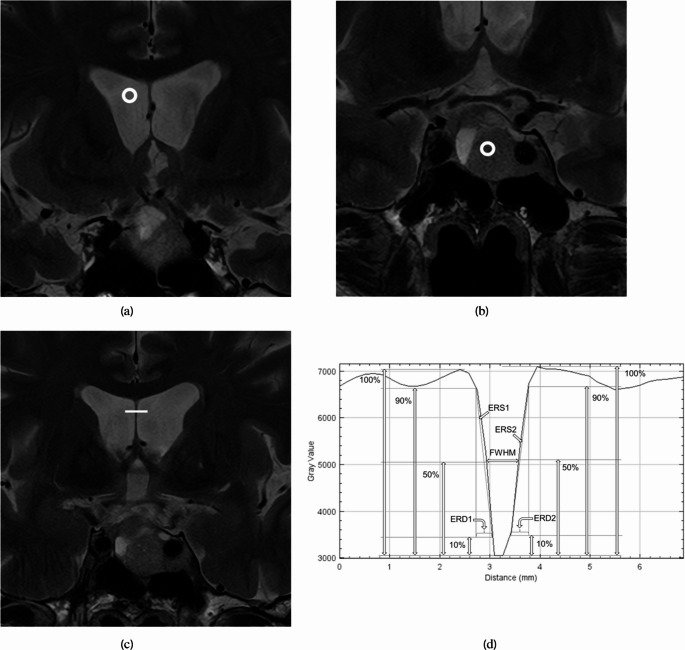 Figure 1
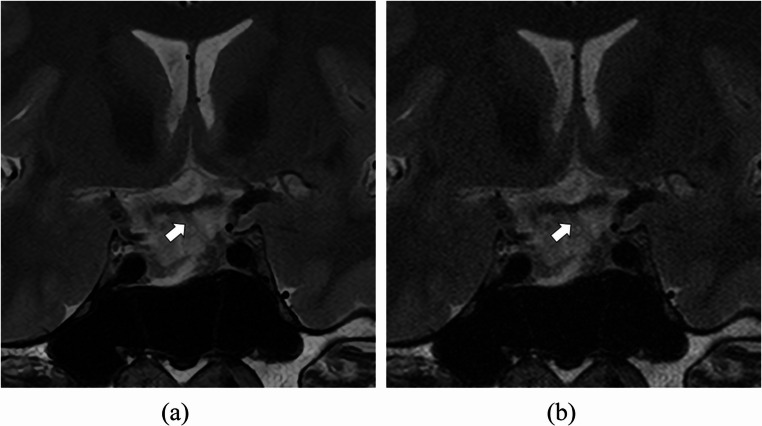 Figure 2
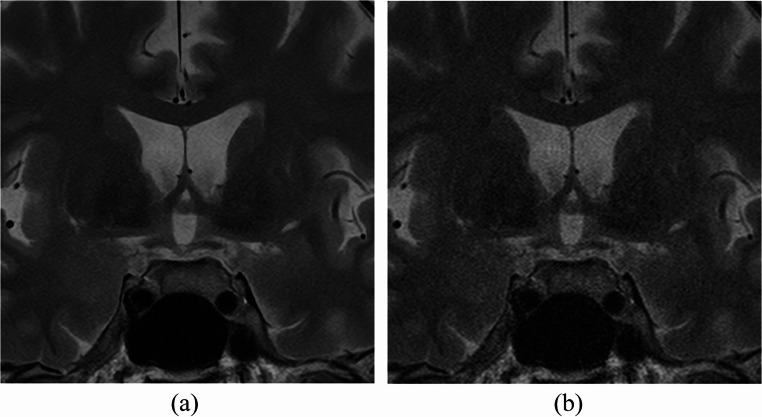 Figure 3
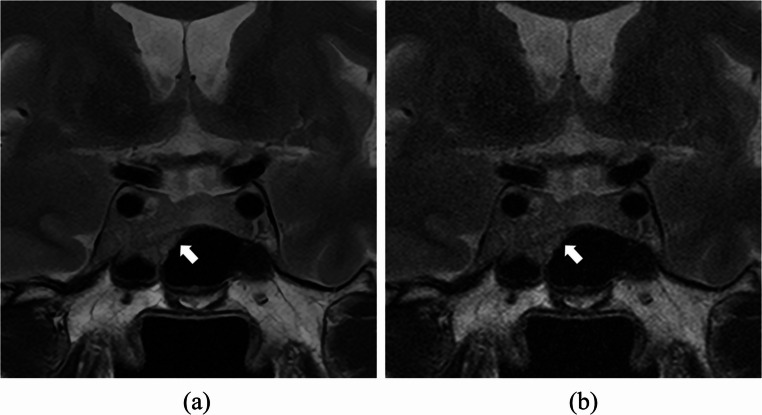 Figure 4
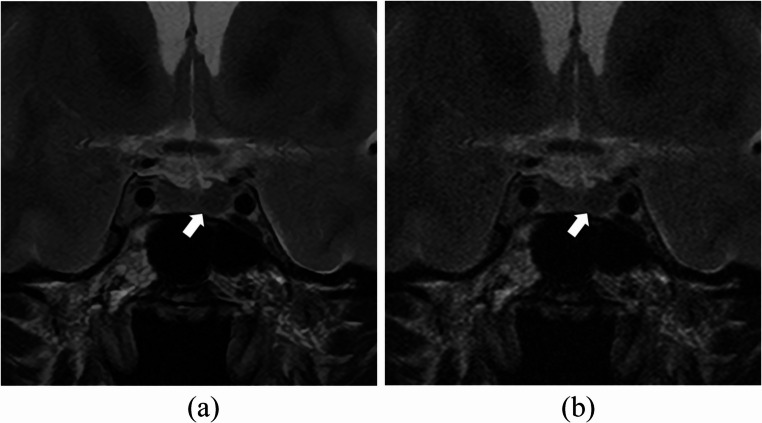 Figure 5
Peer Reviews
No public reviews on file for this paper yet. If you reviewed it on a platform where reviews are public (OpenReview, ICLR, NeurIPS, ICML), you can paste yours below so the community can read it here.
Videos
No videos yet. Explain this paper in a talk, walkthrough, or lecture? Add one.
Taxonomy
TopicsPituitary Gland Disorders and Treatments · Adrenal and Paraganglionic Tumors · Glioma Diagnosis and Treatment