Elucidating carbohydrate preference and engineering glucose transport in Caldimonas thermodepolymerans for enhanced polyhydroxyalkanoate production
Xenie Hajkova, Anastasia Grybchuk-Ieremenko, Pavel Dvorak, Iva Buchtikova, Vojtech Cerny, Viktorie Chvatalova, Stanislav Obruca

TL;DR
Researchers improved a thermophilic bacterium's ability to produce bioplastics by engineering it to better use glucose, a key step in using plant-based sugars for sustainable production.
Contribution
Engineering glucose transport in Caldimonas thermodepolymerans using a gene from Zymomonas mobilis to enhance PHA production from lignocellulosic sugars.
Findings
Caldimonas thermodepolymerans prefers xylose and cellobiose over glucose for PHA production.
Glucose transport limitation was overcome by introducing the glf gene from Zymomonas mobilis.
The engineered strain achieved high PHA yields even when cellobiose was the sole carbon source.
Abstract
Caldimonas thermodepolymerans DSM 15344, a moderately thermophilic bacterium, has emerged as a promising candidate for next-generation industrial biotechnology (NGIB) due to its ability to utilize lignocellulose-derived sugars for polyhydroxyalkanoate (PHA) production. This study assesses its metabolic potential by evaluating the utilization of various plant-derived sugars and their mixtures, with a focus on xylose, glucose, and cellobiose. The results indicate that C. thermodepolymerans exhibits a strong preference for xylose (3.97 g/L PHB) over glucose (2.28 g/L PHB) but demonstrates even greater efficiency in metabolizing cellobiose (4.96 g/L PHB). However, extracellular hydrolysis of cellobiose leads to glucose accumulation, which constrains overall productivity. Our findings suggest that the primary limitation in glucose metabolism is inefficient glucose transport rather than…
Genes, proteins, chemicals, diseases, species, mutations and cell lines named across the full text — each resolved to its canonical identifier and authoritative record.
Click any figure to enlarge with its caption.
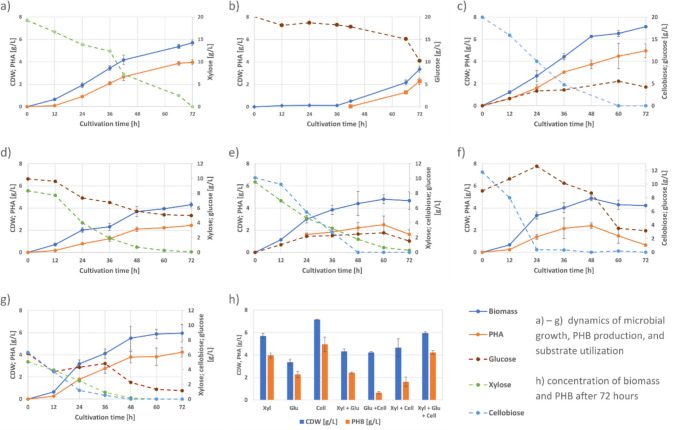 Figure 1
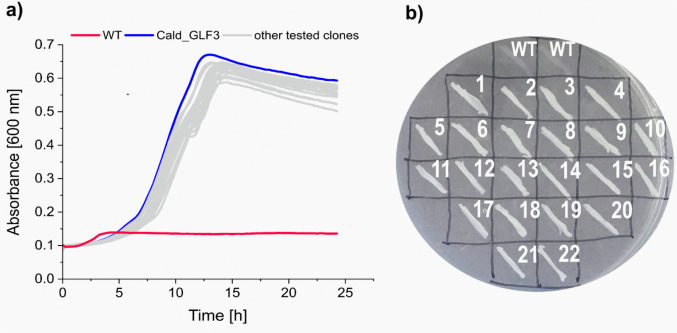 Figure 2
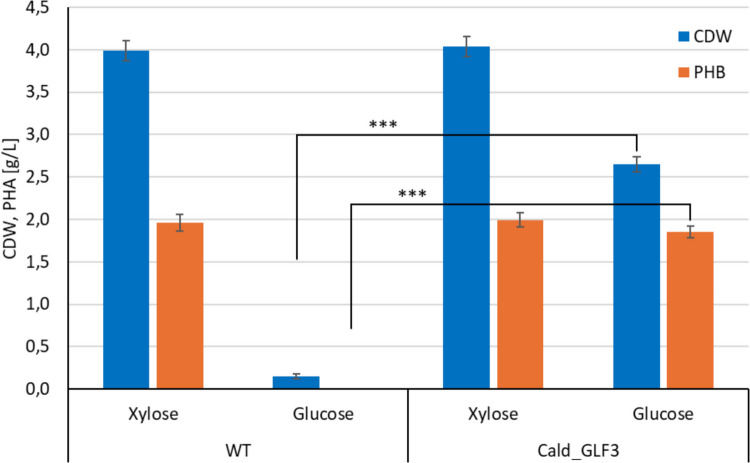 Figure 3
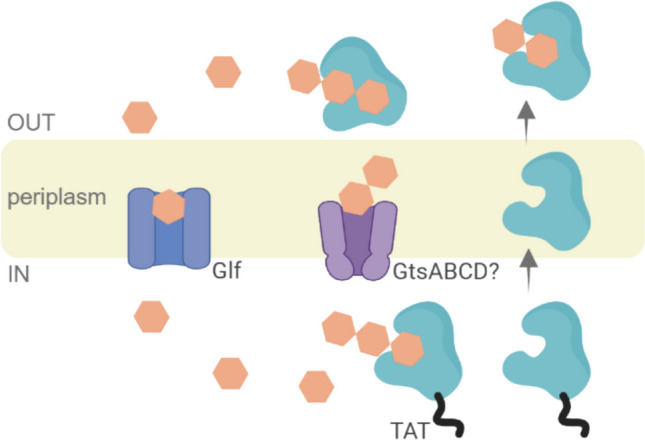 Figure 4
Peer Reviews
No public reviews on file for this paper yet. If you reviewed it on a platform where reviews are public (OpenReview, ICLR, NeurIPS, ICML), you can paste yours below so the community can read it here.
Videos
No videos yet. Explain this paper in a talk, walkthrough, or lecture? Add one.
Taxonomy
Topicsbiodegradable polymer synthesis and properties · Polysaccharides Composition and Applications · Biofuel production and bioconversion