A practical guide to targeted single-cell RNA sequencing technologies
Giulia Moro, Erich Brunner, Konrad Basler

TL;DR
This review explains how targeted single-cell RNA sequencing can improve transcript detection and guide researchers in choosing the best method for their experiments.
Contribution
The paper provides a decision tree and categorizes targeted scRNA-seq methods to help researchers overcome detection biases.
Findings
Current scRNA-seq methods detect only 10–40% of total RNAs, limiting transcript identification.
Most high-throughput scRNA-seq methods lose detail in internal transcript regions.
Targeted sequencing solutions can address these biases by focusing on specific protocol steps.
Abstract
Current single-cell RNA sequencing (scRNA-seq) methods suffer from biases that restrict the detection of cellular transcripts to 10–40% of total RNAs. This hinders the identification of transcripts of interest. Additionally, information retrieved from most high-throughput scRNA-seq methods is confined to untranslated regions toward transcript ends, resulting in loss of detail in internal regions. In this review, we outline biases in scRNA-seq protocol steps that limit transcript and region detection. We then discuss the advantages and disadvantages of targeted sequencing solutions, grouped into five categories according to the protocol step they target. Finally, we present a decision tree that guides researchers in selecting the most suitable targeted method for their experiment. A review of targeted single-cell RNA sequencing methods provides a practical guide to help researchers…
Genes, proteins, chemicals, diseases, species, mutations and cell lines named across the full text — each resolved to its canonical identifier and authoritative record.
Click any figure to enlarge with its caption.
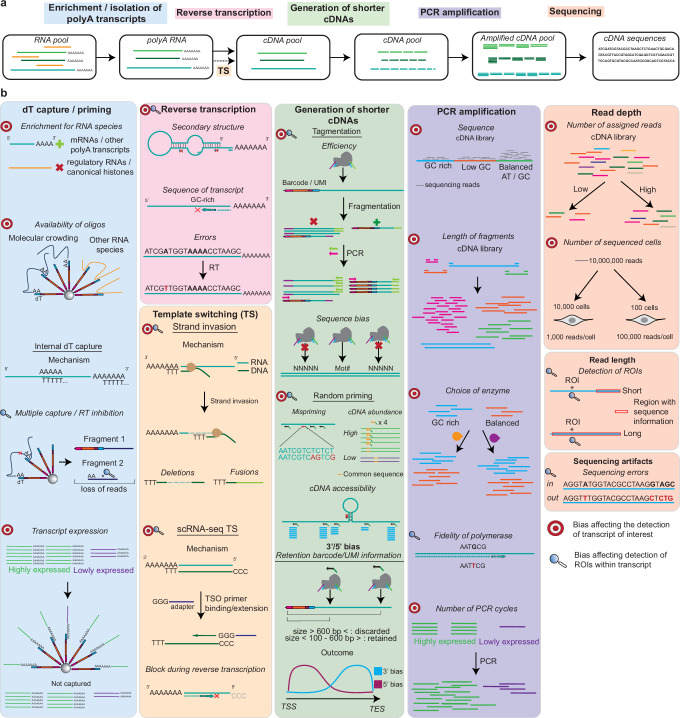 Figure 1
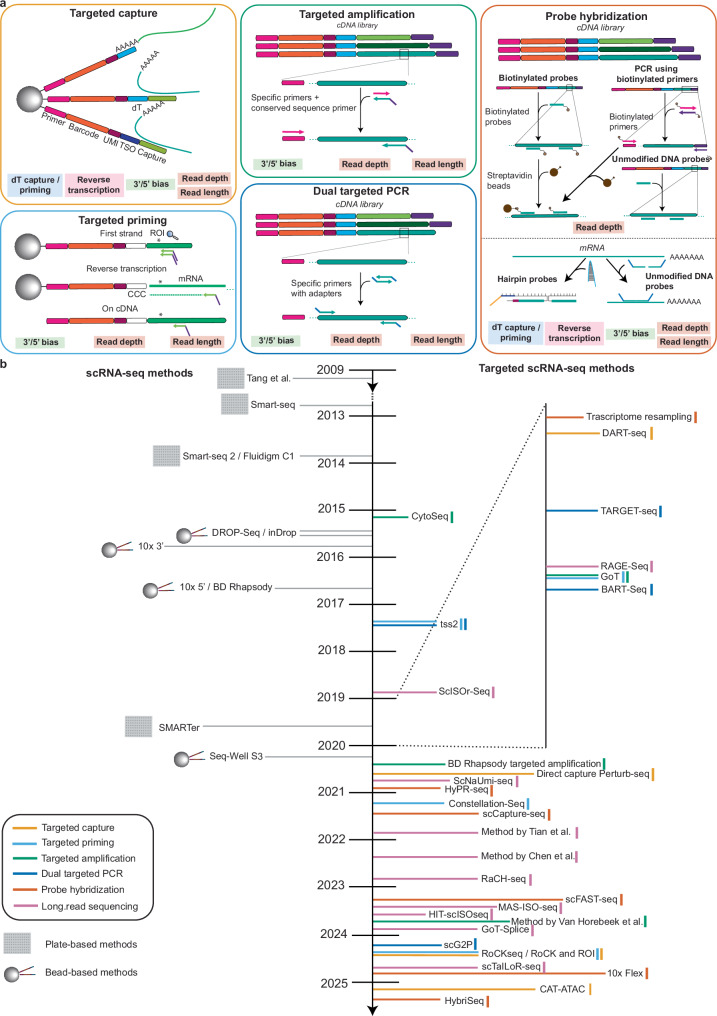 Figure 2
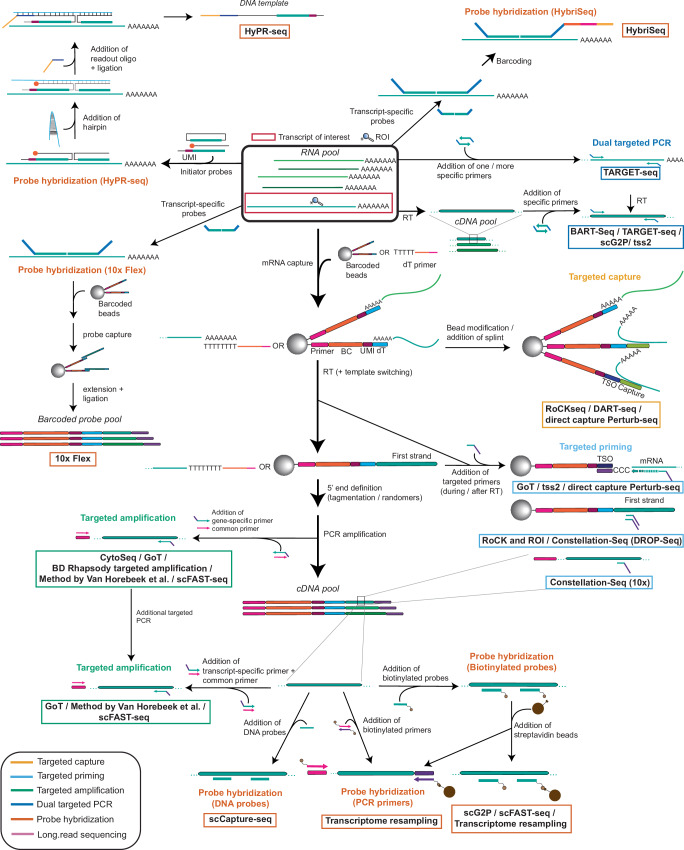 Figure 3
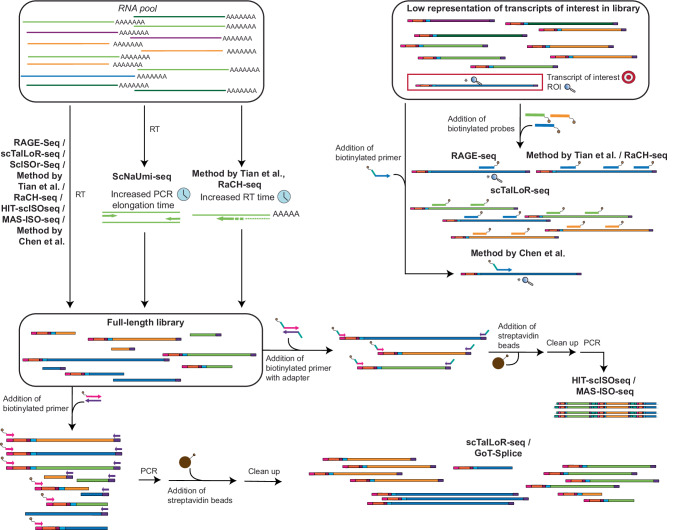 Figure 4
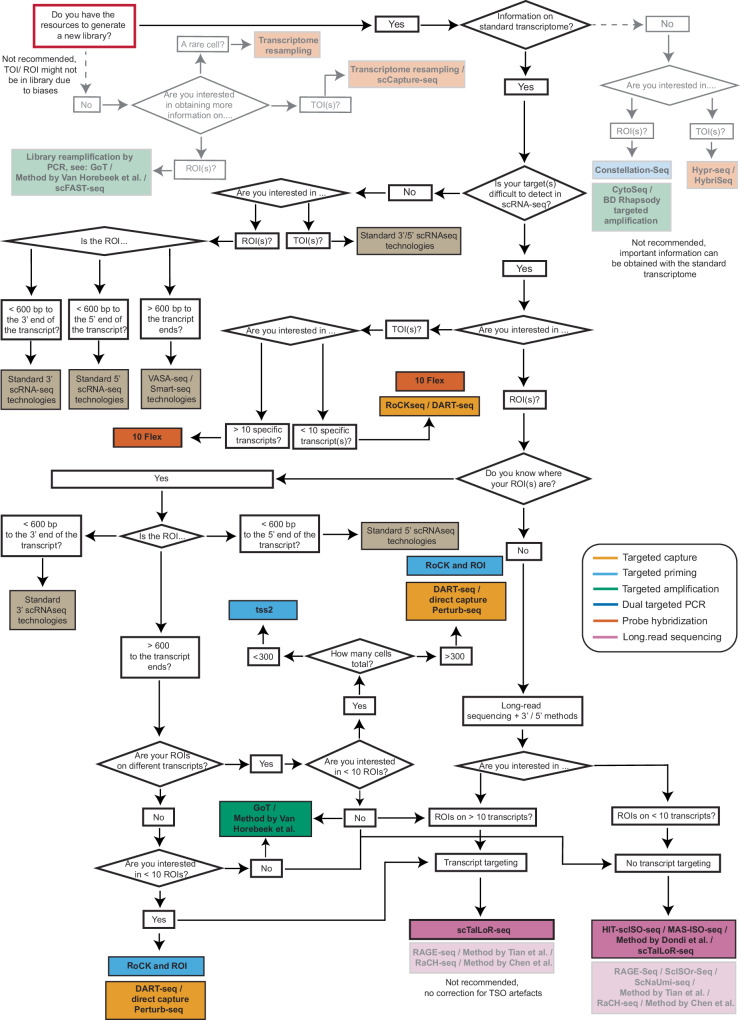 Figure 5
Peer Reviews
No public reviews on file for this paper yet. If you reviewed it on a platform where reviews are public (OpenReview, ICLR, NeurIPS, ICML), you can paste yours below so the community can read it here.
Videos
No videos yet. Explain this paper in a talk, walkthrough, or lecture? Add one.
Taxonomy
TopicsSingle-cell and spatial transcriptomics · Extracellular vesicles in disease · CRISPR and Genetic Engineering