Recent Updates and Advancements in the Diagnosis and Management of Plasma Cell Dyscrasias
Anand Sunil, Ahnaf Uddin Ahmed, Ahmed Elkhider Ali Musa, Arzoo Dar, Nafrin Kormath, Sai Lahari Sangaraju, Nejma Azeez, Bashir Imam, Vinay Dontul, Sweta Singh, Hussein Attia Hussein Mahmoud, Manju Rai

TL;DR
This review summarizes recent advances in diagnosing and treating plasma cell dyscrasias, including new tools and therapies that improve patient outcomes.
Contribution
The paper provides an updated synthesis of advancements in PCD management from 2015 to 2025, integrating new diagnostic and therapeutic strategies.
Findings
Next-generation flow cytometry and high-sensitivity assays improve detection and monitoring of plasma cell dyscrasias.
Immunotherapies like CAR-T cell therapy are now used in frontline treatment, offering better patient responses.
Artificial intelligence and multi-omics integration are emerging as key tools for personalized care and predictive analytics.
Abstract
Plasma cell dyscrasias (PCDs) encompass a heterogeneous group of disorders ranging from asymptomatic precursor states such as monoclonal gammopathy of undetermined significance (MGUS) and smoldering multiple myeloma (SMM) to overt multiple myeloma (MM), primary plasma cell leukemia, and systemic amyloidosis. This review is based on a structured search of PubMed, Scopus, Cochrane Library, and Web of Science for literature published between 2015 and 2025, supplemented by reference screening and major international myeloma guidelines to ensure comprehensive coverage of recent advancements. Recent years have witnessed remarkable progress in understanding disease biology, refining diagnostic tools, and expanding therapeutic strategies. Advances in genomics and cytogenetics have deepened insight into clonal evolution and prognostic markers, while next-generation flow cytometry, mass…
Genes, proteins, chemicals, diseases, species, mutations and cell lines named across the full text — each resolved to its canonical identifier and authoritative record.
Click any figure to enlarge with its caption.
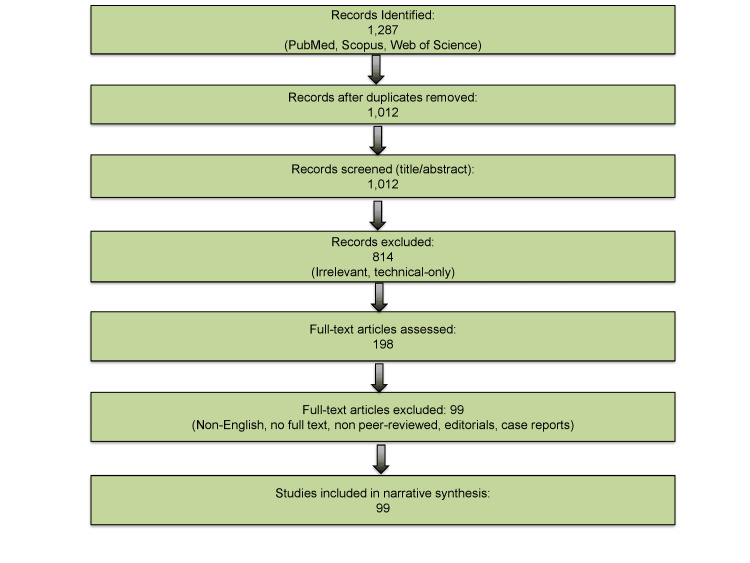 Figure 1
 Figure 2
 Figure 3
Peer Reviews
No public reviews on file for this paper yet. If you reviewed it on a platform where reviews are public (OpenReview, ICLR, NeurIPS, ICML), you can paste yours below so the community can read it here.
Videos
No videos yet. Explain this paper in a talk, walkthrough, or lecture? Add one.
Taxonomy
TopicsMultiple Myeloma Research and Treatments · Acute Myeloid Leukemia Research · Amyloidosis: Diagnosis, Treatment, Outcomes