Harmonizing neuropsychological test data across prospective studies
Rosita Shishegar, James D. Doecke, Yen Ying Lim, Pierrick Bourgeat, Vincent Dore, Bhargav Tallapragada, Simon M. Laws, Tenielle Porter, Samantha Burnham, Azadeh Feizpour, Ashley Gillman, Michael Weiner, Jason Hassenstab, Christopher C. Rowe, Victor L. Villemagne

TL;DR
This study combines data from three Alzheimer's research studies to improve understanding of the disease by harmonizing cognitive test scores.
Contribution
A validated method using MissForest imputation to harmonize cognitive test data across Alzheimer's disease studies.
Findings
MissForest imputation showed high accuracy with mean absolute errors ≤ test–retest variability in most cases.
Composite cognitive scores reflected known disease patterns and showed significant stratification across clinical–pathological groups.
Digit Symbol Coding and Trail-Making Test Part B had slightly higher MAEs but still within individual variation.
Abstract
Alzheimer's disease (AD) research relies on large datasets and advanced statistical models. However, individual population studies often lack sufficient sample size for conclusive results. Harmonizing cognitive test data across studies can address this gap, despite differences in testing protocols. This study harmonizes cognitive data from three major AD cohorts to support robust clinical–pathological modelling. Information from the Alzheimer's Disease Neuroimaging Initiative (N = 1446); Australian Imaging, Biomarkers and Lifestyle (N = 1764); and Open Access Series of Imaging Studies‐3 (N = 440) were integrated, including cognitive scores, demographics, genetics, and clinical and neuroimaging data. Neuropsychological tests relevant to AD were harmonized using MissForest, a machine learning–based imputation method. Validation involved assessing imputation accuracy and analyzing…
Genes, proteins, chemicals, diseases, species, mutations and cell lines named across the full text — each resolved to its canonical identifier and authoritative record.
Click any figure to enlarge with its caption.
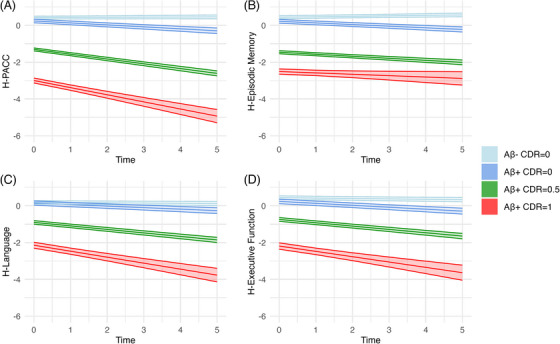 Figure 1
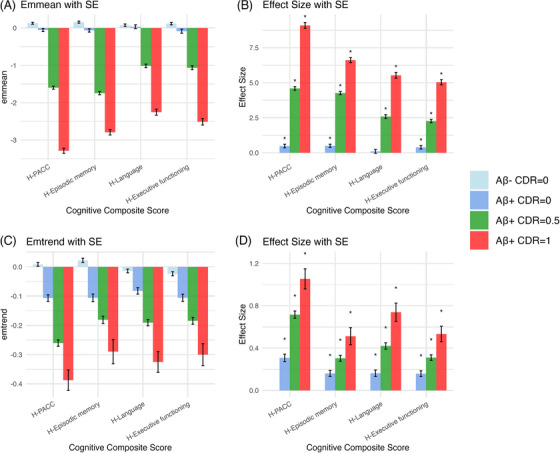 Figure 2
Peer Reviews
No public reviews on file for this paper yet. If you reviewed it on a platform where reviews are public (OpenReview, ICLR, NeurIPS, ICML), you can paste yours below so the community can read it here.
Videos
No videos yet. Explain this paper in a talk, walkthrough, or lecture? Add one.
Taxonomy
TopicsDementia and Cognitive Impairment Research · Functional Brain Connectivity Studies · Alzheimer's disease research and treatments