Prophylactic Mechanical Closure for Preventing Delayed Bleeding after Gastric Endoscopic Submucosal Dissection: A Systematic Review and Meta‐Analysis
Hariruk Yodying, Vichit Viriyaroj, Thammanij Rookkachart, Thana Boonsinsukh, Suun Sathornviriyapong, Anuwat Chartkitcharoen, Wannakorn Prapasajchavet, Natchanok Mekrugsakit, Patcharaon Petchkaewkul, Ratchanon Laojanun

TL;DR
This study reviews whether closing the stomach wound after a specific endoscopic procedure reduces delayed bleeding, finding some benefit but with uncertain evidence.
Contribution
The study provides a systematic review and meta-analysis on the effectiveness of prophylactic mechanical closure in reducing delayed bleeding after gastric ESD.
Findings
Prophylactic closure reduced delayed bleeding (RR 0.36, 95% CI 0.16–0.82) but with low-certainty evidence.
Advanced closure techniques showed greater benefit (RR 0.14) compared to standard approaches (RR 0.62).
Immediate complete closure rate was 93.6% (95% CI 45.0%–99.6%).
Abstract
Delayed bleeding remains the most common adverse event after gastric endoscopic submucosal dissection (ESD). We assessed whether prophylactic mechanical closure is associated with reduced clinically significant delayed bleeding. PubMed, Embase, Cochrane CENTRAL, Scopus, and ClinicalTrials.gov were searched through October 2025. Comparative studies reporting delayed bleeding within 30 days were included. Random‐effects meta‐analysis with Hartung‐Knapp‐Sidik‐Jonkman adjustment was applied. Evidence certainty was assessed using GRADE. Nine studies (2646 patients; eight non‐randomized) met inclusion criteria. Prophylactic closure was associated with reduced delayed bleeding (risk ratio [RR] 0.36, 95% confidence interval [CI] 0.16–0.82; p = 0.02; I 2 = 65%; prediction interval 0.05–2.65). However, sensitivity analysis restricted to high‐quality designs (one RCT, two propensity‐matched…
Genes, proteins, chemicals, diseases, species, mutations and cell lines named across the full text — each resolved to its canonical identifier and authoritative record.
Click any figure to enlarge with its caption.
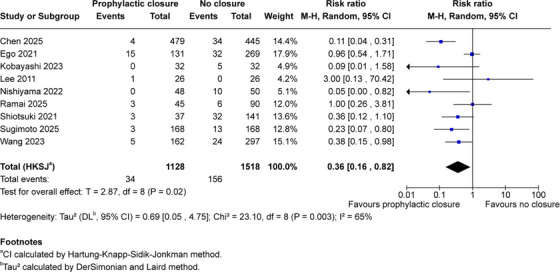 Figure 1
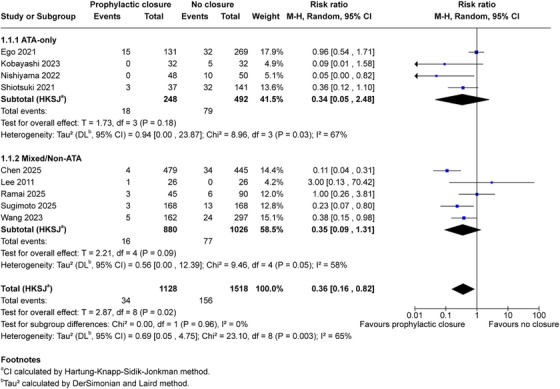 Figure 2
 Figure 3
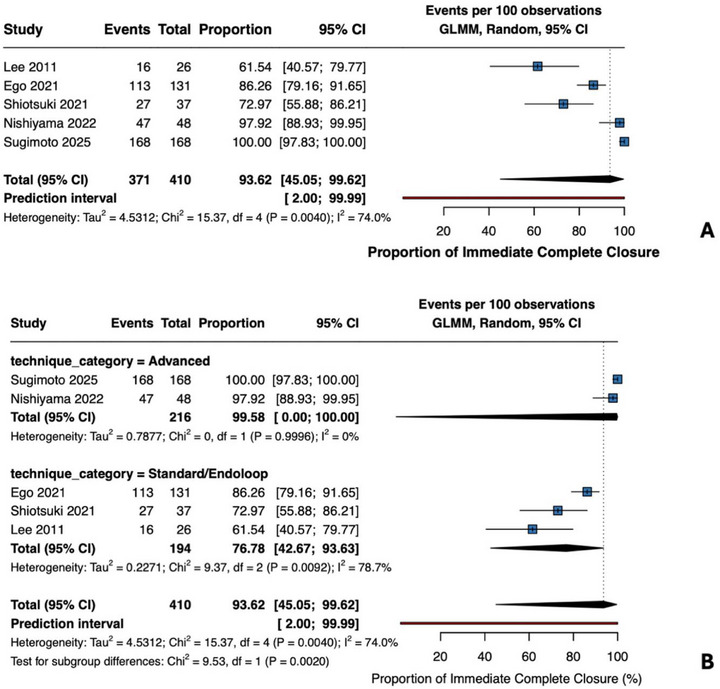 Figure 4
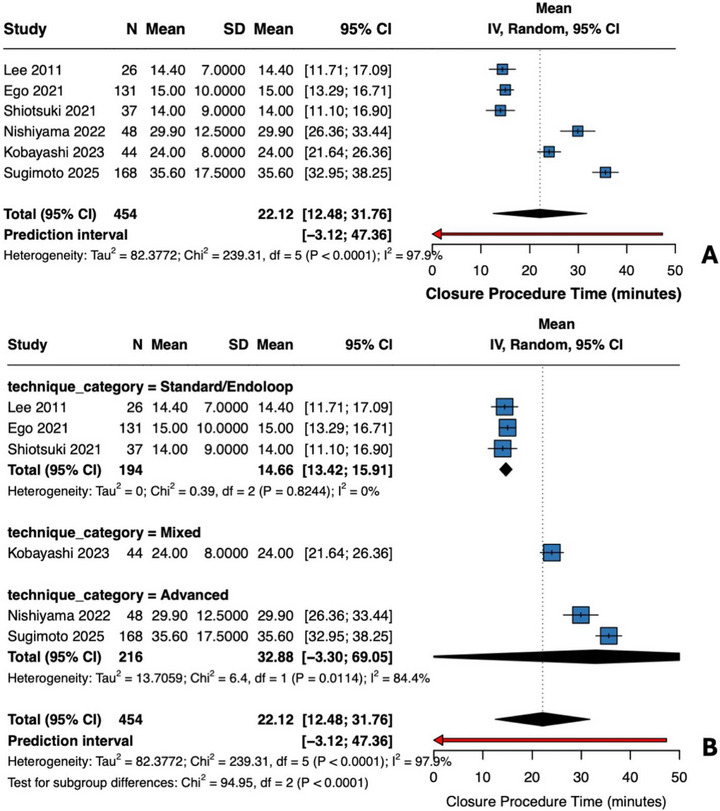 Figure 5
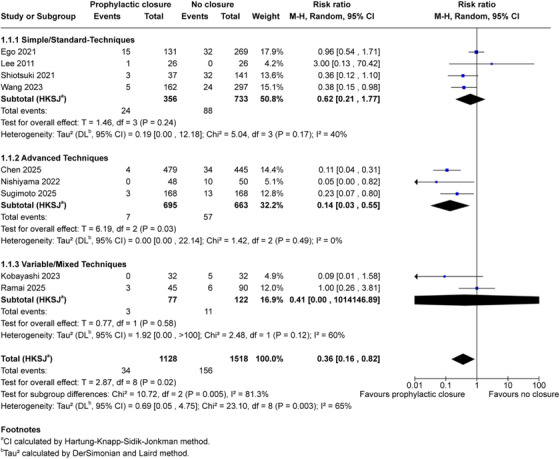 Figure 6
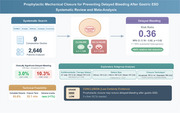 Figure 7
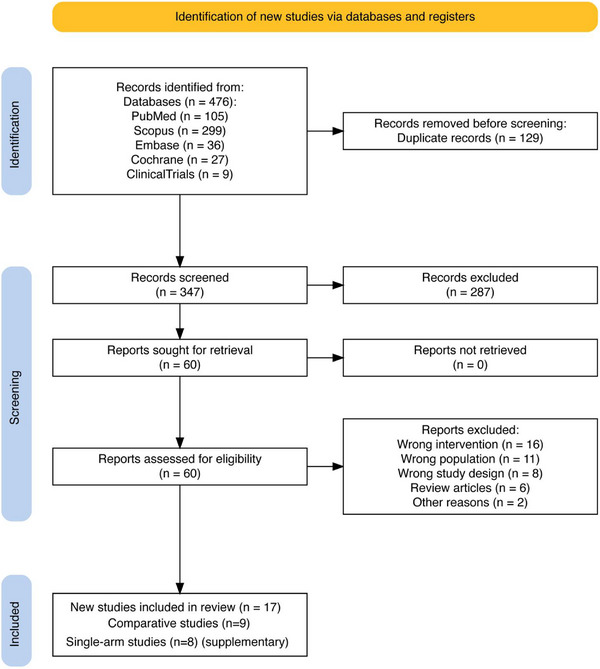 Figure 8
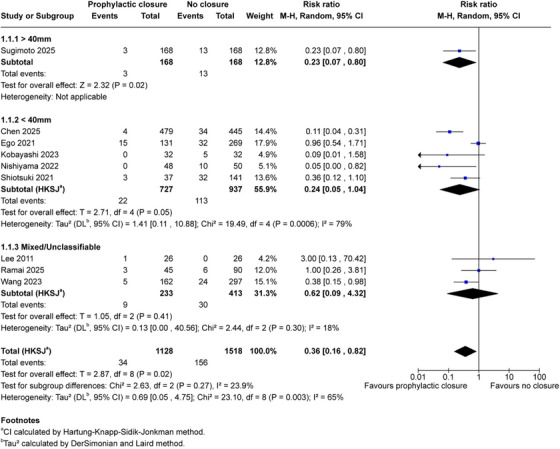 Figure 9
Peer Reviews
No public reviews on file for this paper yet. If you reviewed it on a platform where reviews are public (OpenReview, ICLR, NeurIPS, ICML), you can paste yours below so the community can read it here.
Videos
No videos yet. Explain this paper in a talk, walkthrough, or lecture? Add one.
Taxonomy
TopicsGastric Cancer Management and Outcomes · Esophageal Cancer Research and Treatment · Enhanced Recovery After Surgery