“Pseudo-Spleen Sign” on Gastric Ultrasound in the Supine Position: A Case Report of a Patient With Delayed Gastric Emptying
Satoru Sekiya, Satoshi Jujo, Shosei Ro, Hiroshi Okamoto

TL;DR
A new ultrasound sign called 'pseudo-spleen' helps detect delayed gastric emptying in patients who cannot lie on their side.
Contribution
Introduces the 'pseudo-spleen sign' as a novel supine-position gastric ultrasound technique for assessing gastric distension.
Findings
Supine-position gastric ultrasound identified a distended gastric fundus in a patient unable to lie on their side.
The 'pseudo-spleen sign' appeared as a spleen-like structure filled with enteral nutrition in the left upper quadrant.
Adjusting enteral nutrition and using prokinetic agents may prevent reflux and aspiration based on this finding.
Abstract
Gastric ultrasound (GUS) plays a key role in identifying delayed gastric emptying and preventing pulmonary aspiration. Conventional GUS estimates gastric volume by measuring the cross-sectional area (CSA) of the antrum in the right lateral decubitus (RLD) position, which is often impractical in respiratory-unstable patients. We report an adult patient in whom GUS in the supine position successfully identified a distended gastric fundus filled with enteral nutrition (EN). In this patient, GUS in the RLD position was not feasible due to a respiratory condition. However, a daily supine abdominal ultrasound using the left upper quadrant (LUQ) view revealed a distended gastric fundus with EN. This finding suggested delayed gastric emptying; thus, we reduced the continuous EN infusion rate. This adjustment, in combination with prokinetic agents and continued clinical monitoring, may have…
Genes, proteins, chemicals, diseases, species, mutations and cell lines named across the full text — each resolved to its canonical identifier and authoritative record.
Click any figure to enlarge with its caption.
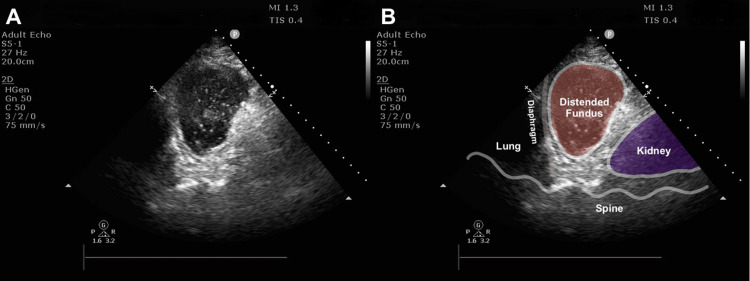 Figure 1
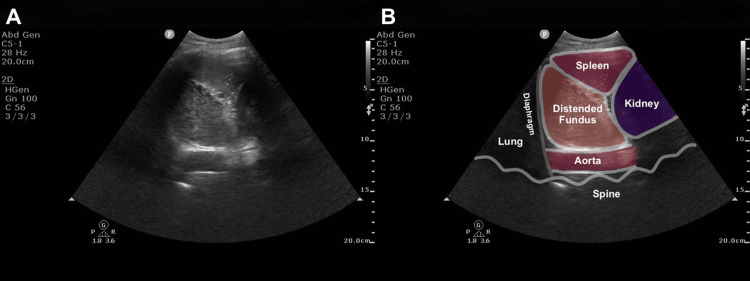 Figure 2
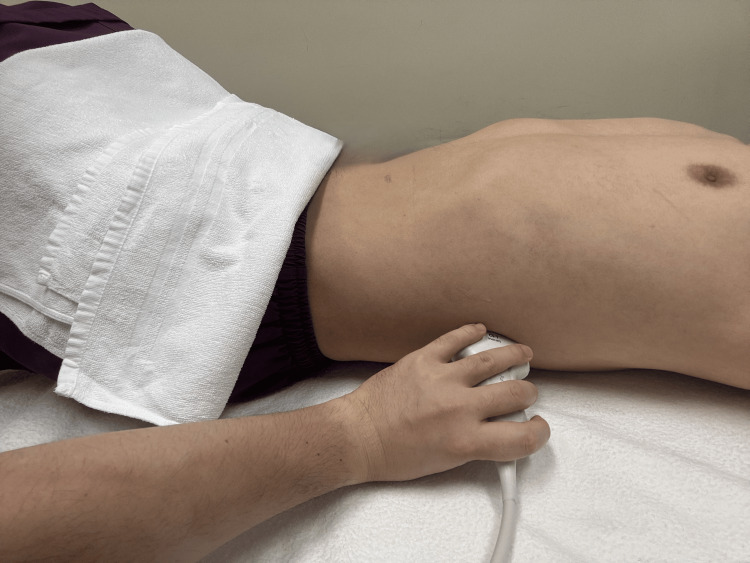 Figure 3
 Figure 4
Peer Reviews
No public reviews on file for this paper yet. If you reviewed it on a platform where reviews are public (OpenReview, ICLR, NeurIPS, ICML), you can paste yours below so the community can read it here.
Videos
No videos yet. Explain this paper in a talk, walkthrough, or lecture? Add one.
Taxonomy
TopicsEnhanced Recovery After Surgery · Esophageal and GI Pathology · Clinical Nutrition and Gastroenterology