In-ovo supplementation with bovine milk osteopontin improves hatchability, chick quality, growth performance, and enhances intraepithelial lymphocyte populations in specific-pathogen-free layer chicks
Bikas R. Shah, Shuja Majeed, Nimra Khalid, Pankaj Arora, Khaled Abdelaziz, Ali Nazmi

TL;DR
Adding bovine milk osteopontin to chicken eggs before hatching improves hatching success, chick quality, growth, and immune cell development.
Contribution
This study is the first to demonstrate that in-ovo supplementation with bovine milk osteopontin enhances hatchability and immune development in layer chicks.
Findings
In-ovo supplementation with 1 mg and 25 mg of bmOPN increased hatchability by approximately 8% compared to the control.
bmOPN increased intestinal T-cell and non-T intraepithelial lymphocyte populations in chicks.
Chicks supplemented with 1 mg and 10 mg of bmOPN showed higher body weights and growth performance by day 14.
Abstract
To evaluate the effect of in-ovo supplementation of bovine milk-derived Osteopontin (bmOPN) in chicks, fertilized specific-pathogen-free eggs were randomly allocated into six treatment groups (n = 26 eggs/group) on embryonic day 18. The hatchability was collected from six independent experiments. Eggs in each treatment received a 200 μL in-ovo injection of PBS containing 0 mg, 0.1 mg, 1 mg, 10 mg, 25 mg, or 50 mg of bmOPN. On day of hatch (DOH), hatchability and chick quality parameters were assessed. Body weights were recorded on DOH, 7, and 14 days of age. On day 7 of age, intestinal histomorphometric parameters, including villus height (VH), crypt depth (CD), and VH:CD ratio, were measured in the 0, 1, and 25 mg groups. Peripheral blood mononuclear cells (PBMCs) and intraepithelial lymphocytes (IELs) were isolated from 0 and 1 mg groups for flow cytometry analysis. Data were analyzed…
Genes, proteins, chemicals, diseases, species, mutations and cell lines named across the full text — each resolved to its canonical identifier and authoritative record.
Click any figure to enlarge with its caption.
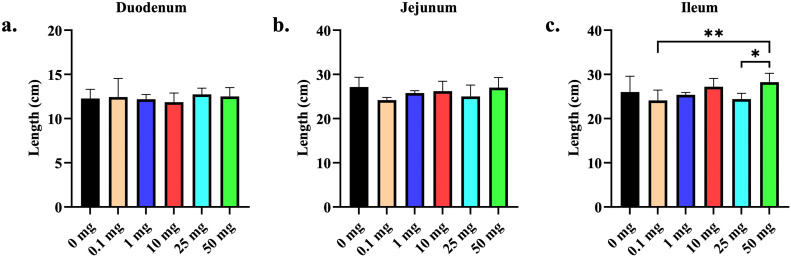 Figure 1
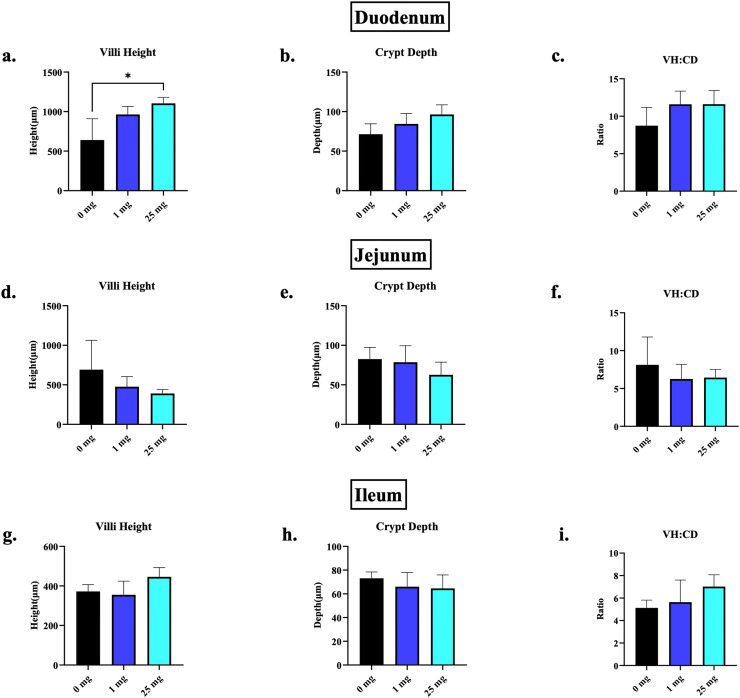 Figure 2
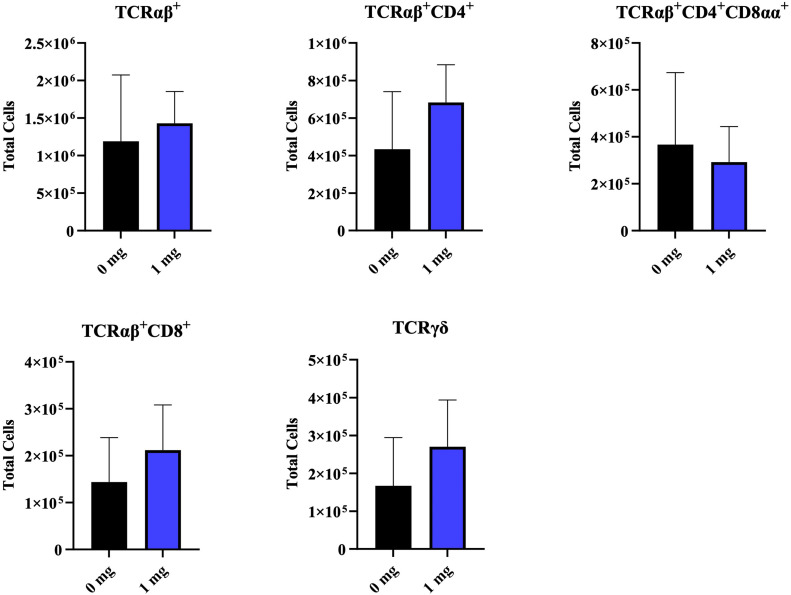 Figure 3
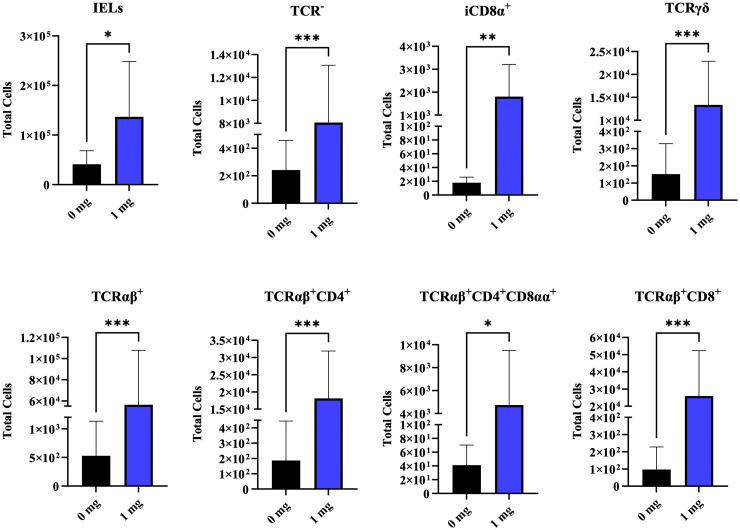 Figure 4
Peer Reviews
No public reviews on file for this paper yet. If you reviewed it on a platform where reviews are public (OpenReview, ICLR, NeurIPS, ICML), you can paste yours below so the community can read it here.
Videos
No videos yet. Explain this paper in a talk, walkthrough, or lecture? Add one.
Taxonomy
TopicsBone and Dental Protein Studies · Animal Nutrition and Physiology · Meat and Animal Product Quality