Piezo1 regulates remodeling of skin-derived extracellular matrix by embedded umbilical cord mesenchymal stem cells in a stiffness-dependent fashion
Fenghua Zhao, Xue Zhang, Theo Borghuis, Linda A. Brouwer, Janette K. Burgess, Prashant K. Sharma, Martin C. Harmsen

TL;DR
This study shows how human umbilical cord stem cells respond to different stiffness levels in skin-like materials, with a key role for the Piezo1 protein in adapting to their environment.
Contribution
The study identifies Piezo1 as a key regulator of how stem cells adapt to the stiffness of their 3D environment.
Findings
UC-MSCs remodel ECM hydrogels in a stiffness-dependent manner, with distinct behaviors on soft, medium, and stiff matrices.
Piezo1 inhibition disrupts stiffness-specific contraction and ECM degradation, indicating its role in mechanosensing.
MMP2 and MMP14 are regulated by stiffness but not significantly affected by Piezo1 inhibition, suggesting alternative mechanisms.
Abstract
Cells continuously sense and adapt to the mechanical properties of their surrounding extracellular matrix (ECM), yet how human umbilical cord–derived mesenchymal stromal cells (UC-MSCs) mechanotransduce stiffness cues in 3D ECM remains incompletely understood. This knowledge gap limits the rational design of MSC-based regenerative therapies and mechanically instructive biomaterials. Here, using ruthenium-catalyzed photocrosslinked skin-derived ECM hydrogels spanning a physiological to fibrotic stiffness range, we demonstrate that UC-MSCs exhibit distinct, stiffness-dependent remodeling strategies. Soft matrices (1.2 kPa) induced cell-mediated hydrogel contraction, medium stiffness (3.4 kPa, comparable to native skin) supported elongated cell morphology with minimal remodeling, whereas stiff matrices (17.7 kPa) kept seeded UC-MSCs rounded and induced pericellular void formation…
Genes, proteins, chemicals, diseases, species, mutations and cell lines named across the full text — each resolved to its canonical identifier and authoritative record.
Click any figure to enlarge with its caption.
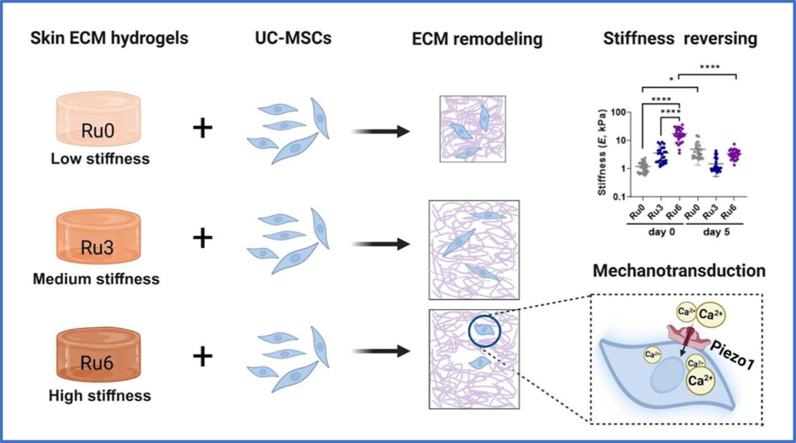 Figure 1
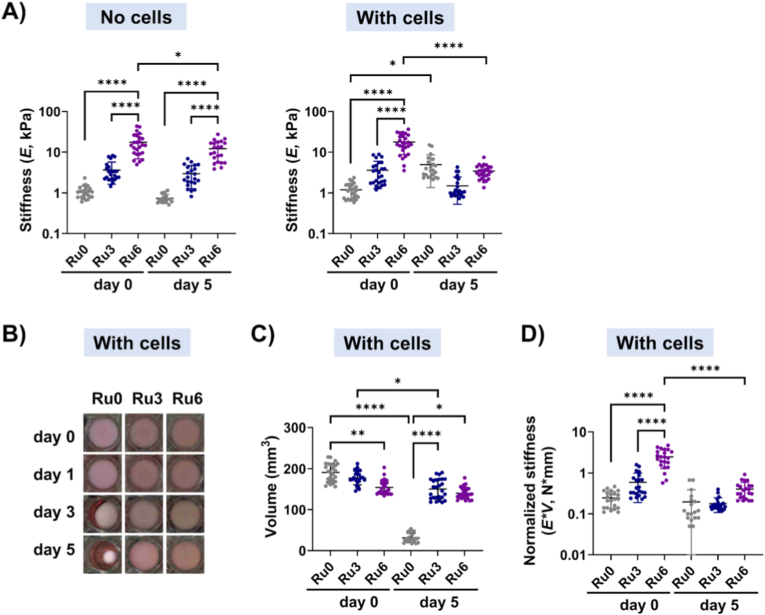 Figure 2
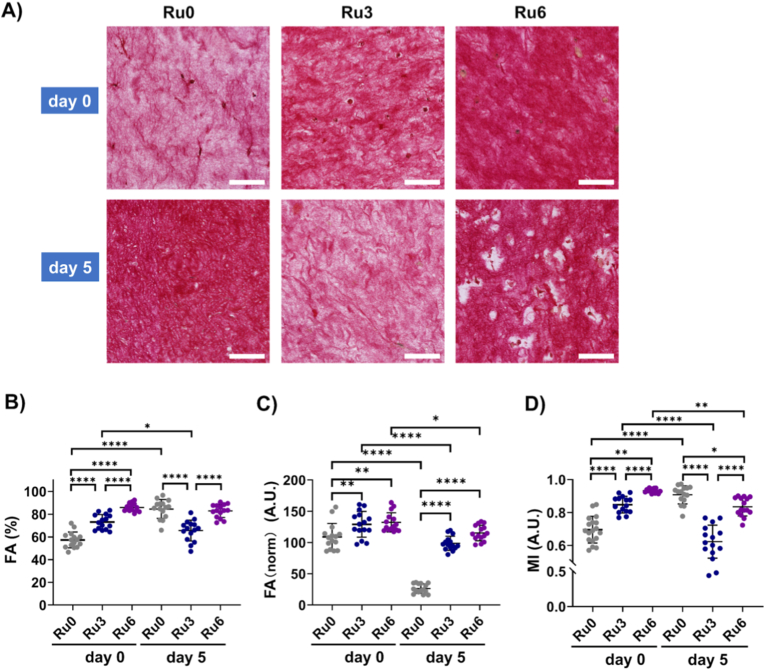 Figure 3
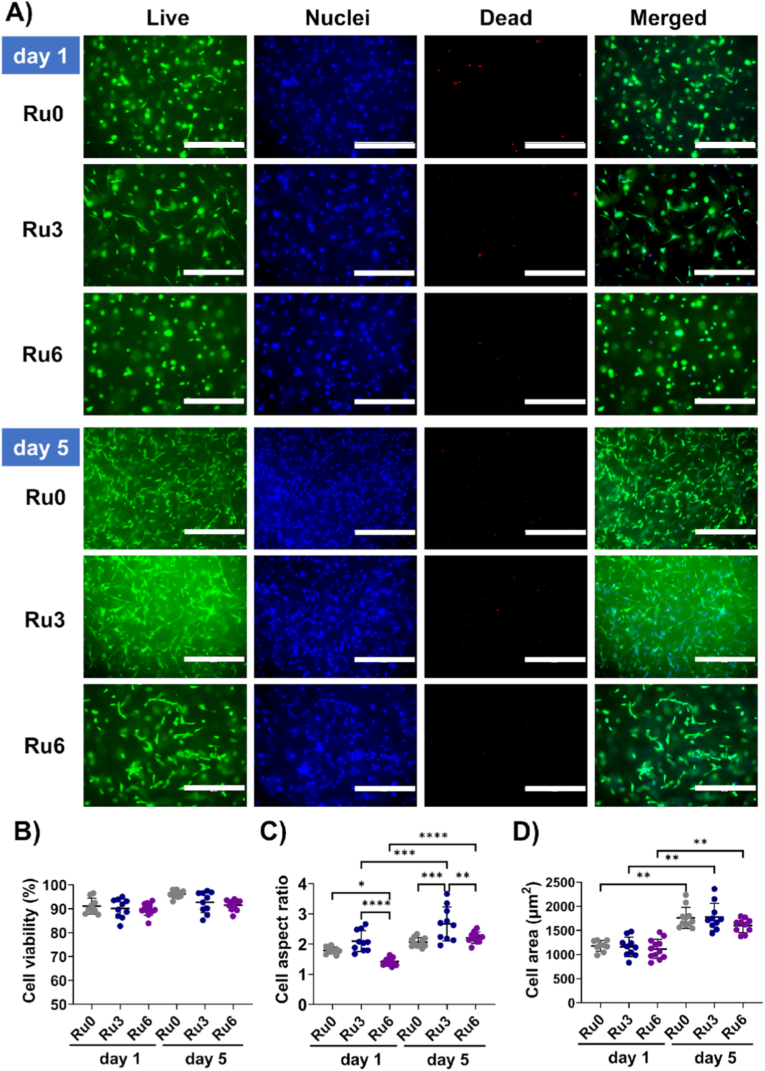 Figure 4
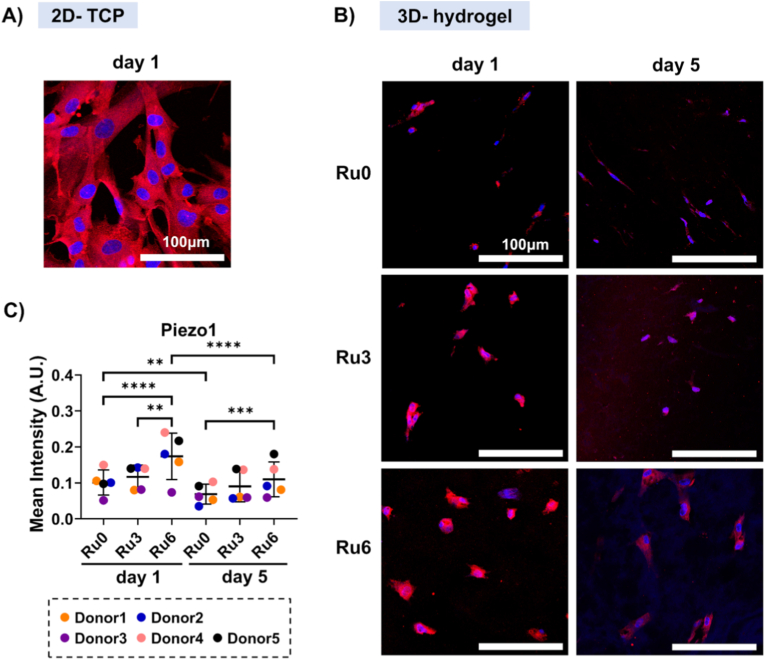 Figure 5
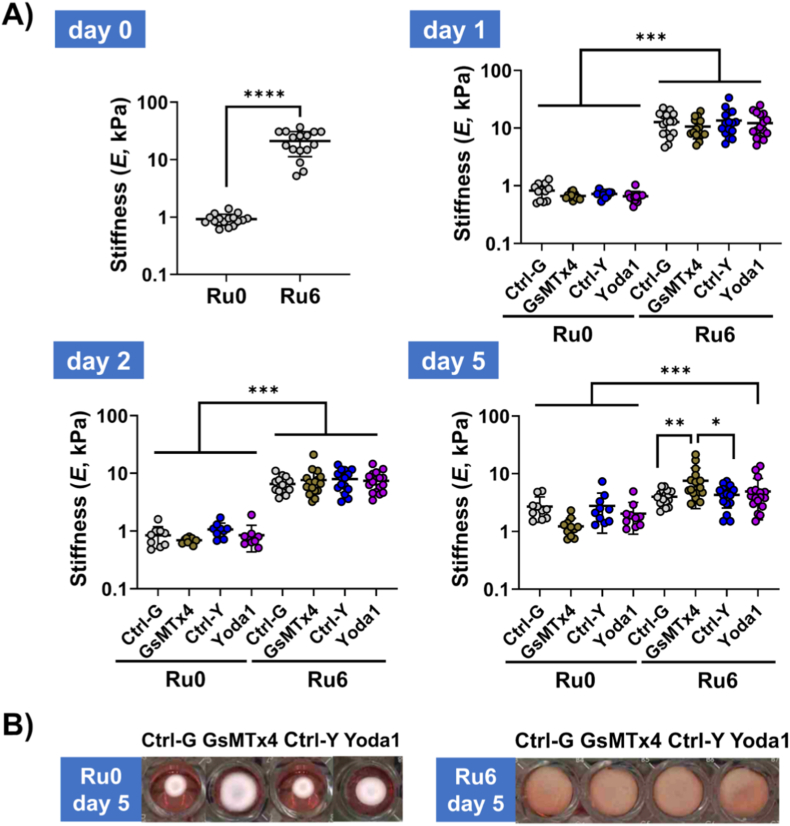 Figure 6
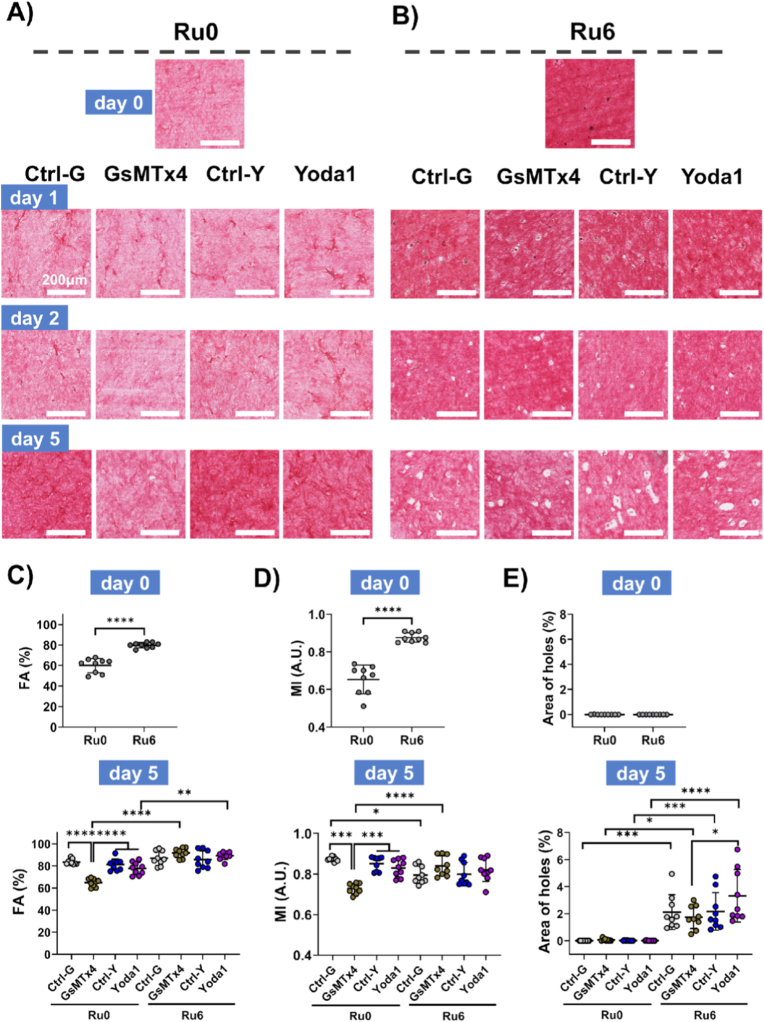 Figure 7
Peer Reviews
No public reviews on file for this paper yet. If you reviewed it on a platform where reviews are public (OpenReview, ICLR, NeurIPS, ICML), you can paste yours below so the community can read it here.
Videos
No videos yet. Explain this paper in a talk, walkthrough, or lecture? Add one.
Taxonomy
TopicsErythrocyte Function and Pathophysiology · Cellular Mechanics and Interactions · Cancer Cells and Metastasis