An unusual granulomatous tinea due to Nannizzia incurvata in Germany without evidence of an acquisition from outside Europe and reduced itraconazole susceptibility
Elisabeth Anke Schuldt, Karen Voss, Thomas Schwarz, Stephan Weidinger, Dora Violetta Stölzl, Jochen Brasch

TL;DR
A rare fungal infection caused by Nannizzia incurvata in Germany showed resistance to itraconazole and was successfully treated with terbinafine.
Contribution
This is the first reported case of reduced itraconazole susceptibility in Nannizzia incurvata in Europe.
Findings
A granulomatous tinea caused by Nannizzia incurvata was confirmed in Germany using culture, PCR, and histopathology.
The infection showed reduced susceptibility to itraconazole, which was previously unreported for this species.
Systemic treatment with terbinafine led to complete healing of the infection.
Abstract
Nannizzia (N.) incurvata is a rare geo- and zoophilic dermatophyte with human infections only sporadically reported from Europe. We describe an atypical skin infection with granulomas from Germany confirmed by culture, PCR, and histopathology. A reduced susceptibility to itraconazole (unreported for N. incurvata so far) prompted systemic treatment with terbinafine that resulted in complete healing. This case highlights the need for precise species identification, susceptibility testing, and awareness of emerging dermatophytes in Europe. All rights reserved.
Genes, proteins, chemicals, diseases, species, mutations and cell lines named across the full text — each resolved to its canonical identifier and authoritative record.
Click any figure to enlarge with its caption.
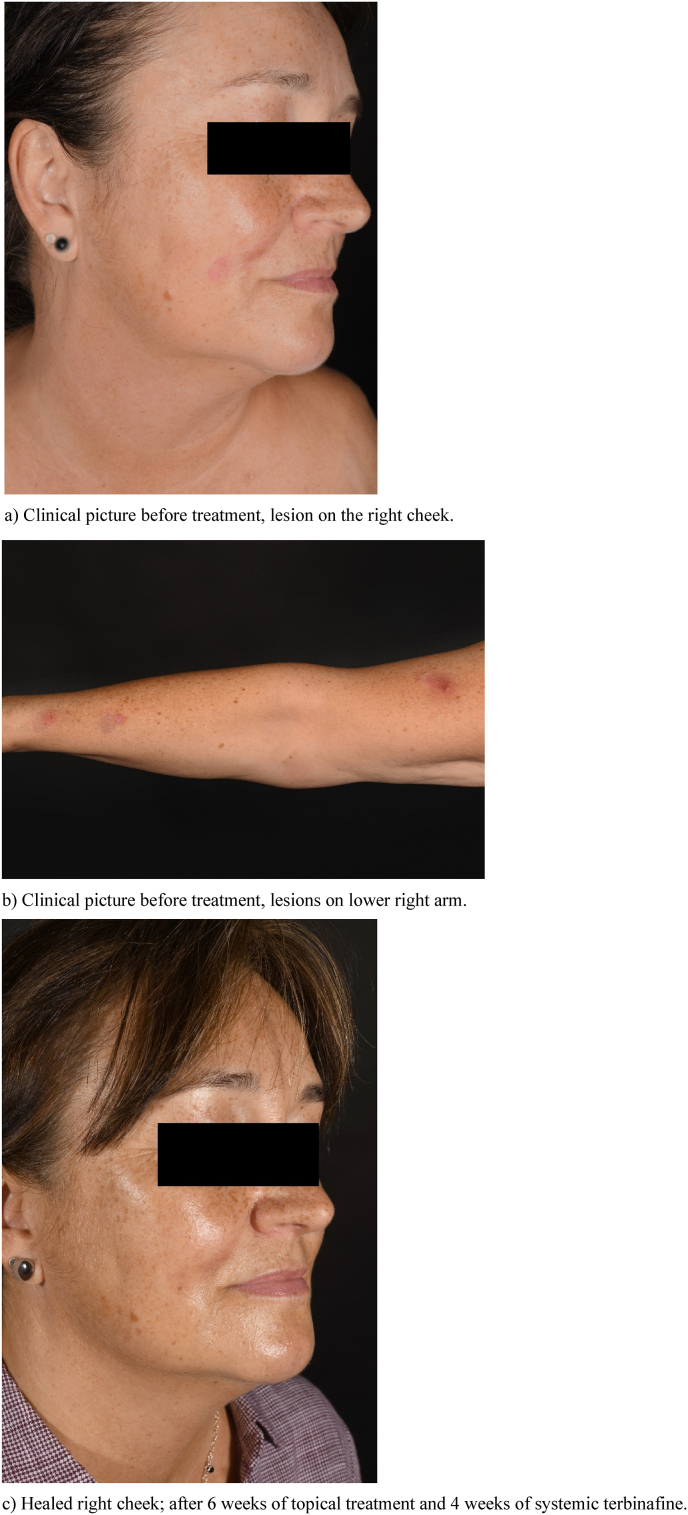 Figure 1
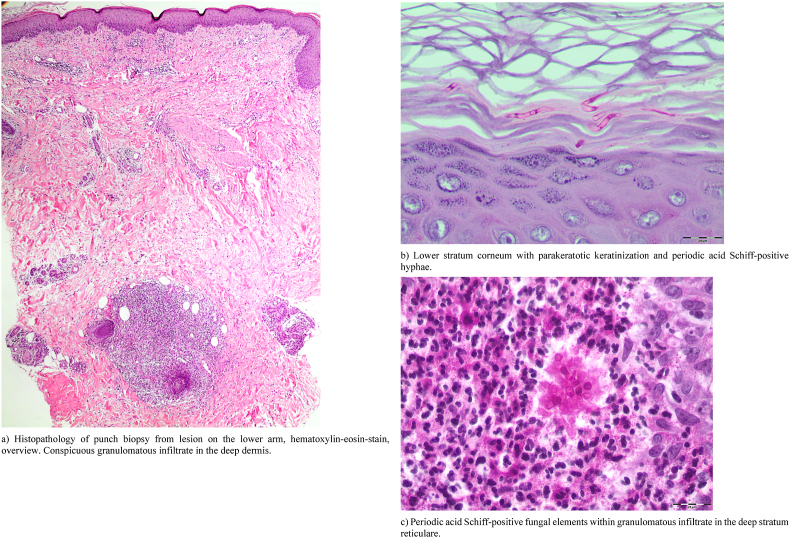 Figure 2
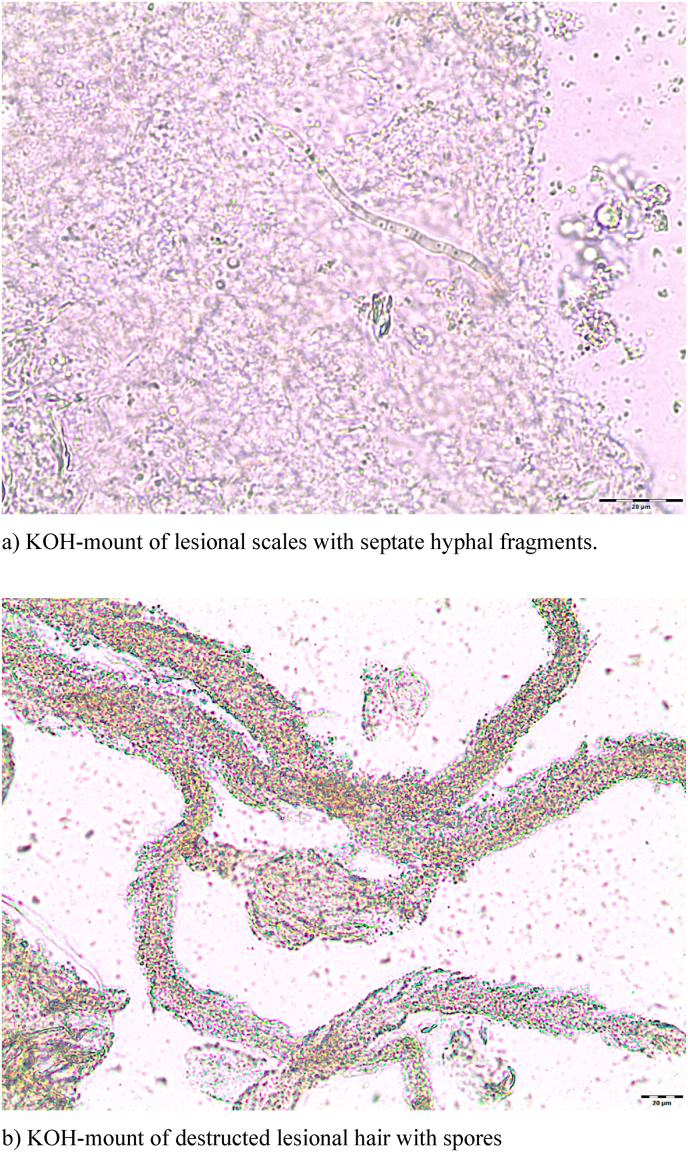 Figure 3
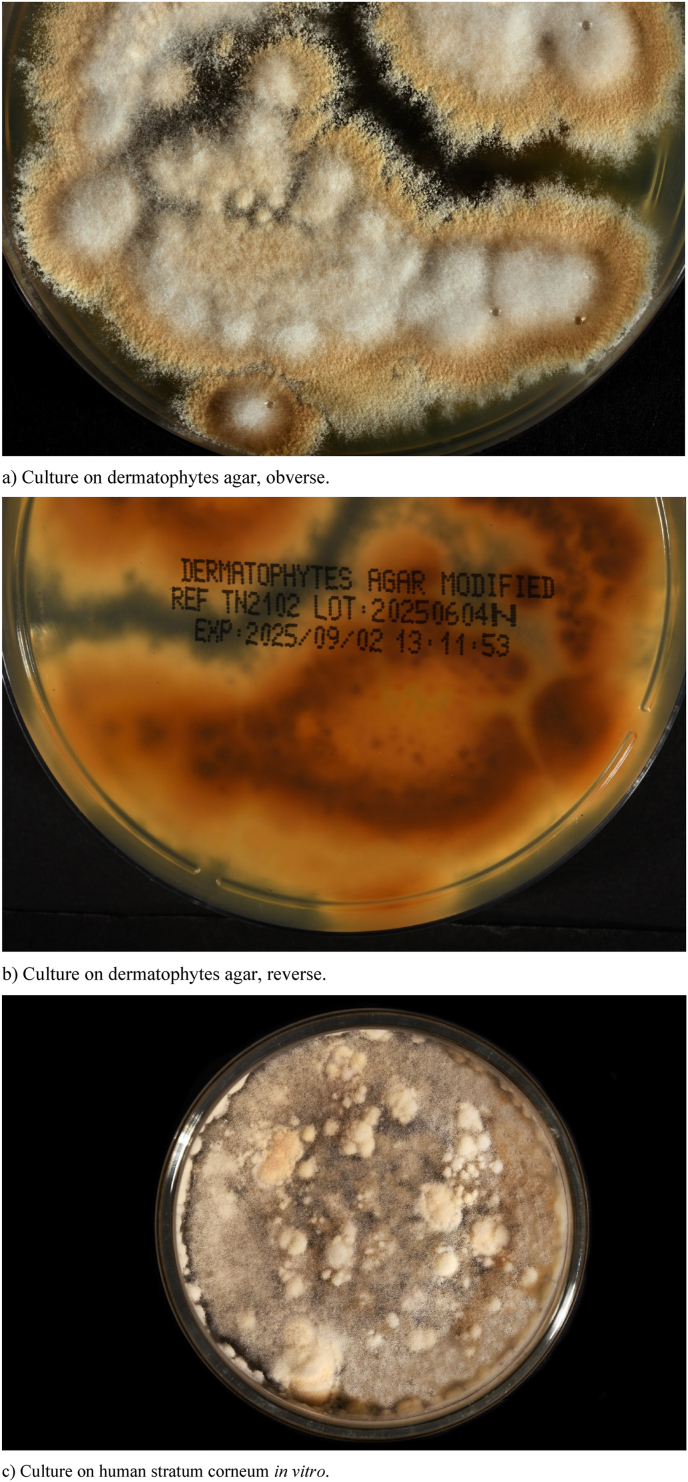 Figure 4
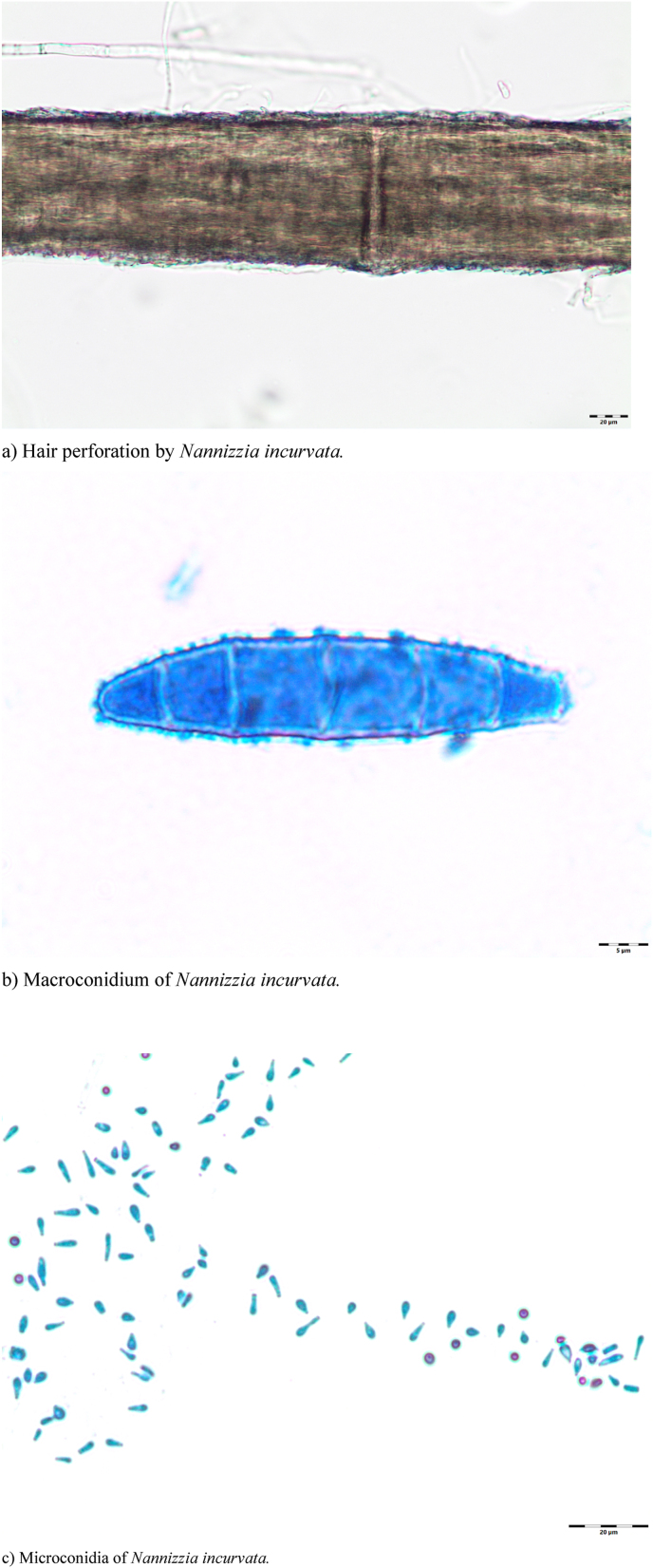 Figure 5
Peer Reviews
No public reviews on file for this paper yet. If you reviewed it on a platform where reviews are public (OpenReview, ICLR, NeurIPS, ICML), you can paste yours below so the community can read it here.
Videos
No videos yet. Explain this paper in a talk, walkthrough, or lecture? Add one.
Taxonomy
TopicsNail Diseases and Treatments · Fungal Infections and Studies · Insects and Parasite Interactions