Classical conditioning of Purkinje cell responses in vitro produces in vivo-like simple spike suppressions during the conditional stimulus
Artem Gornov, Thiago C. Moulin, Fredrik Johansson

TL;DR
Researchers developed an in vitro model to study classical conditioning in Purkinje cells, mimicking in vivo responses with controlled conditions.
Contribution
A novel in vitro classical conditioning protocol for Purkinje cells using in vivo-compatible parameters is introduced.
Findings
Purkinje cell simple spike suppression during the conditional stimulus resembles in vivo conditioned responses.
Precise control of pharmacological agents in vitro circumvents limitations of traditional in vitro studies.
Blocking GIRK channels prevents learning in vitro, mirroring effects observed in vivo.
Abstract
An in vitro model of classical conditioning could improve our understanding of underlying mechanisms thanks to controlled pharmacological manipulation and negligeable perturbations from external networks. Here, using mice cerebellar slices and patch clamp recordings, we present a protocol for classical conditioning of Purkinje cells in vitro at room temperature. Repeated pairing of a parallel fiber conditional stimulus and a climbing fiber unconditional stimulus with parameters compatible with in vivo learning gives rise to a Purkinje cell simple spike suppression during the conditional stimulus that shares similarities with conditioned responses observed in live animals. •New approach to classical conditioning in vitro with parameters used in vivo.•Circumvents in vitro limitation, with precise control on concentration and delivery of pharmacological agent.•Blocking GIRK channels in…
Genes, proteins, chemicals, diseases, species, mutations and cell lines named across the full text — each resolved to its canonical identifier and authoritative record.
Click any figure to enlarge with its caption.
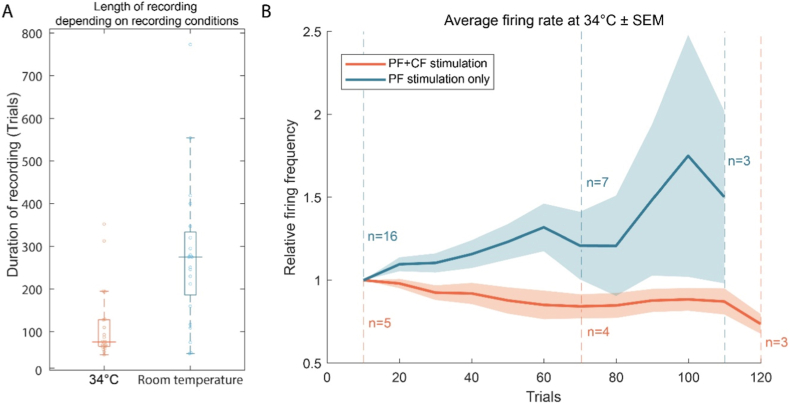 Figure 1
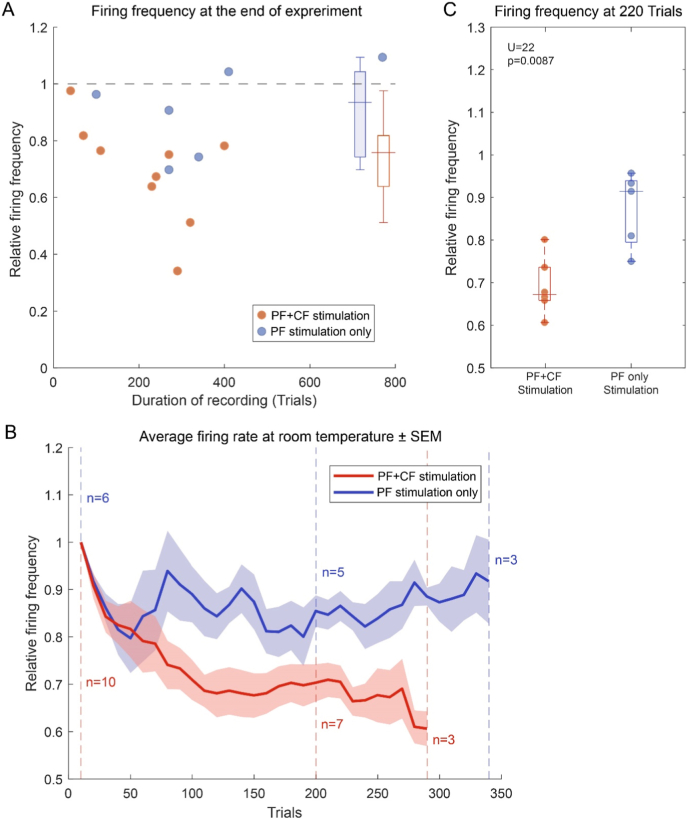 Figure 2
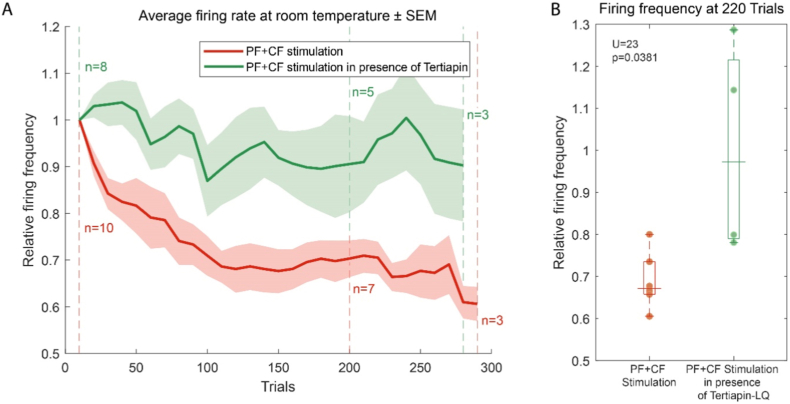 Figure 3
Peer Reviews
No public reviews on file for this paper yet. If you reviewed it on a platform where reviews are public (OpenReview, ICLR, NeurIPS, ICML), you can paste yours below so the community can read it here.
Videos
No videos yet. Explain this paper in a talk, walkthrough, or lecture? Add one.
Taxonomy
TopicsNeural dynamics and brain function · Vestibular and auditory disorders · stochastic dynamics and bifurcation