Identification of patients at risk for adverse events and poor symptom improvement after transcatheter aortic valve implantation
Kees van Bergeijk, Constantijn (Stijn) Venema, Bob Ophuis, Luca Plekkenpol, Mara Tomei, Hayman Al-Barwary, Jasper Tromp, Yoran Hummel, Wouter Ouwerkerk, Ad van den Heuvel, Hindrik van der Werf, Yvonne Douglas, Dajiro Tomii, Thomas Pilgrim, Stephan Windecker, Adriaan Voors

TL;DR
This study uses machine learning to identify patients at high risk of both poor symptom improvement and adverse events after a heart valve procedure called TAVI.
Contribution
The study introduces a new, externally validated machine learning model combining adverse events and symptom improvement after TAVI.
Findings
101 out of 827 patients experienced both adverse events and poor symptom improvement after TAVI.
Predictors included COPD history, vitamin-K antagonist use, heart failure, and specific biomarker levels.
The model showed reasonable accuracy with an AUC of 0.74 in internal validation and 0.66 in external validation.
Abstract
Transcatheter aortic valve implantation (TAVI) aims to improve symptoms and prognosis, while minimising adverse outcomes. Available prediction models focus on individual outcomes, but those combining adverse events and symptom improvement in a single prediction model are scarce, and include only few variables and lack external validation. Using machine learning, we developed a clinically relevant model to identify patients at high risk of both adverse events and poor symptom improvement after TAVI. In total, 72 candidate variables including clinical, medication use, biomarkers and (AI-derived) echocardiographic parameters were collected in patients with severe symptomatic AS undergoing TAVI. The primary outcome was a combination of poor symptom improvement (NYHA compared with baseline) and a composite of cardiovascular mortality, stroke or heart failure hospitalisation) at one year…
Genes, proteins, chemicals, diseases, species, mutations and cell lines named across the full text — each resolved to its canonical identifier and authoritative record.
Click any figure to enlarge with its caption.
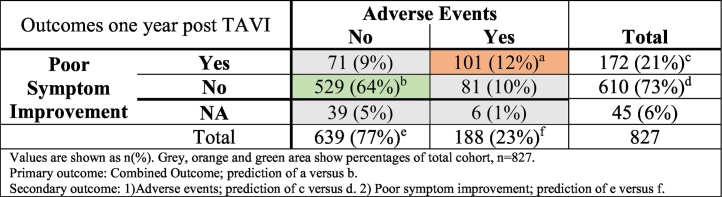 Figure 1
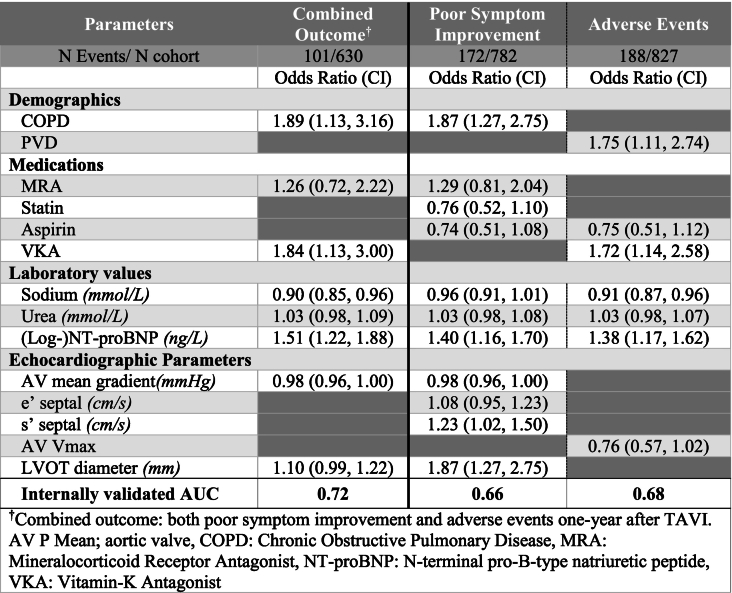 Figure 2
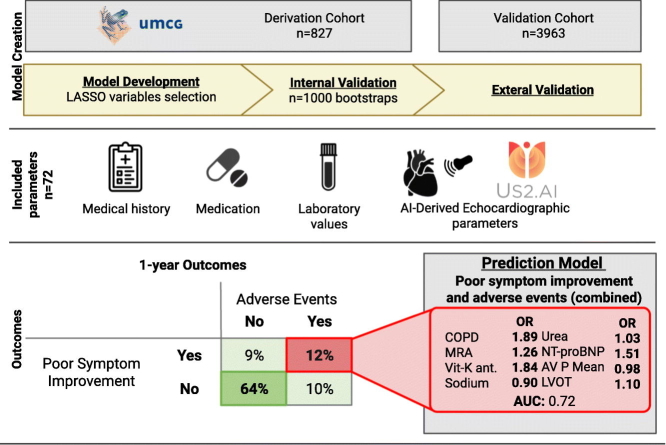 Figure 3
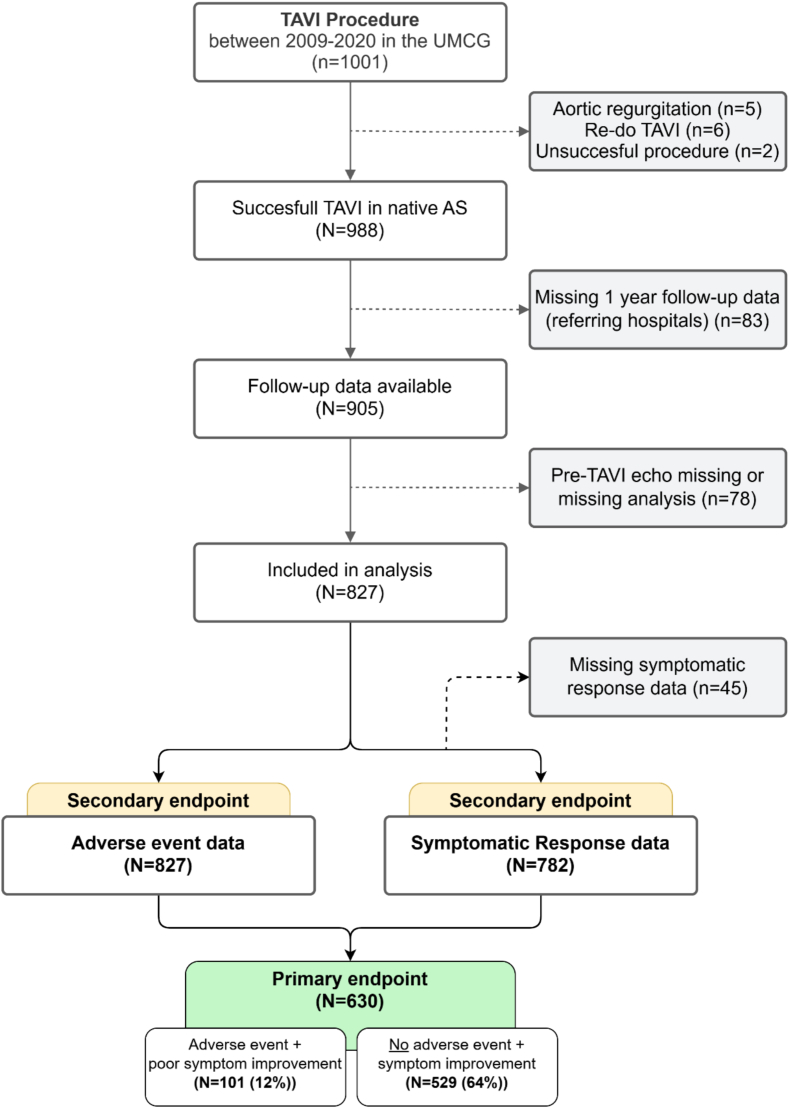 Figure 4
Peer Reviews
No public reviews on file for this paper yet. If you reviewed it on a platform where reviews are public (OpenReview, ICLR, NeurIPS, ICML), you can paste yours below so the community can read it here.
Videos
No videos yet. Explain this paper in a talk, walkthrough, or lecture? Add one.
Taxonomy
TopicsCardiac Valve Diseases and Treatments · Cardiac Health and Mental Health · Aortic Disease and Treatment Approaches