Molecular prevalence of Ehrlichia canis in dogs examined at the Hospital de Clínicas Veterinárias of Universidade Federal de Pelotas, Southern Rio Grande do Sul, Brazil
Daniel Felipe Buitrago Linares, Kauê Rodriguez Martins, Paola Renata Joanol Dallmann, Sthéphani Alves Branco Camargo, Oluwagbemiga Ademola Dada, Éverton Fagonde da Silva, Fabio Pereira Leivas Leite, Marlete Brum Cleff, Rodrigo Casquero Cunha

TL;DR
This study found a 16.84% molecular prevalence of Ehrlichia canis in dogs in southern Brazil, highlighting the need for ongoing monitoring.
Contribution
The study provides one of the few molecular prevalence assessments of E. canis in Rio Grande do Sul and offers phylogenetic insights.
Findings
Ehrlichia canis was detected in 16.84% of 95 tested dogs using nested PCR.
Phylogenetic analysis was conducted on two sequenced PCR products.
The study emphasizes the importance of monitoring E. canis in southern Brazil.
Abstract
Ehrlichia canis is a pathogen that causes a multisystemic disease in dogs of all ages and sexes and belongs to a genus with zoonotic potential. This study aimed to determine the molecular prevalence of E. canis in a population of dogs with no clinical suspicion of ehrlichiosis, examined at the Hospital de Clínicas Veterinária, Universidade Federal de Pelotas (HCV, UFPel). Blood samples from 95 dogs were analyzed at the Veterinary Molecular Biology Laboratory (LabMol-Vet) using nested PCR (nPCR) targeting a 16S rDNA fragment. Amplified products were analyzed by electrophoresis on 1.5% agarose gel and visualized under UV light, revealing a molecular prevalence of 16.84% (16/95). Two PCR products were sequenced for phylogenetic analysis, providing complementary confirmation. This study represents one of the few molecular prevalence investigations conducted in Rio Grande do Sul, Brazil, and…
Genes, proteins, chemicals, diseases, species, mutations and cell lines named across the full text — each resolved to its canonical identifier and authoritative record.
Click any figure to enlarge with its caption.
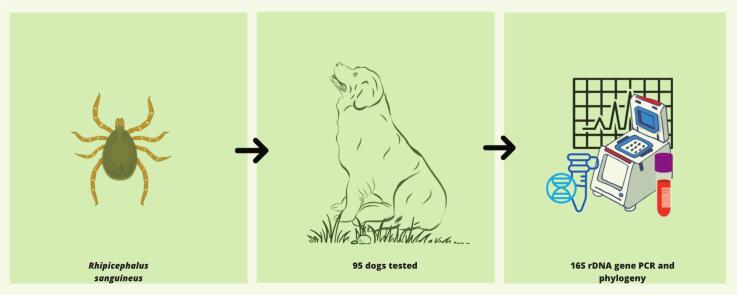 Figure 1
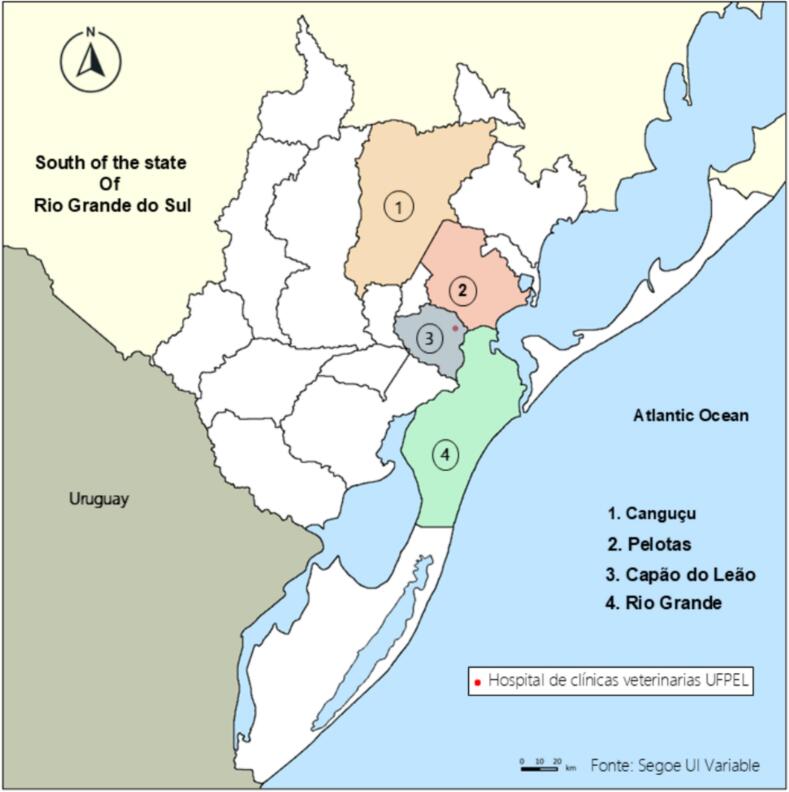 Figure 2
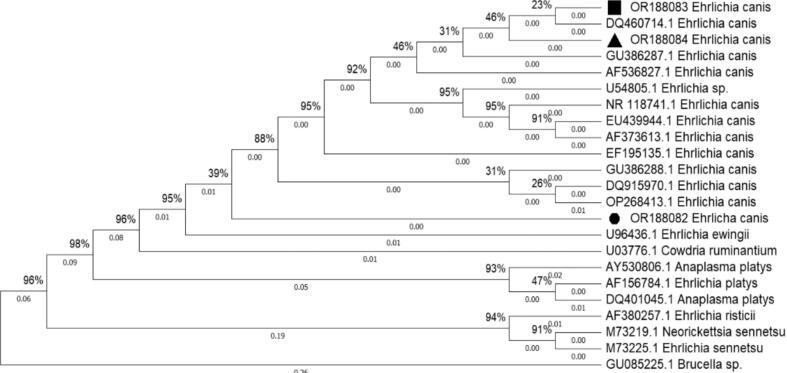 Figure 3
Peer Reviews
No public reviews on file for this paper yet. If you reviewed it on a platform where reviews are public (OpenReview, ICLR, NeurIPS, ICML), you can paste yours below so the community can read it here.
Videos
No videos yet. Explain this paper in a talk, walkthrough, or lecture? Add one.
Taxonomy
TopicsRabies epidemiology and control · Vector-borne infectious diseases · Parasitic Infections and Diagnostics