A universal spikey silica nanoparticle-mediated siRNA delivery for red seaweeds and land plants reveals PyKNOX ‘s role during haploid-diploid transition in Pyropia yezoensis
Qiran Sun, Jinhao Dai, Youwei Fan, Longmei Zhai, Qingjia Wang, Zehao Zhang, Weiqiang Zheng, Fugeng Tang, Xiaowei Guan, Kang Zeng, Zhongsheng Wang, Hailin Wang, Xiaoxuan Guo, Meng Qiu, Dongmei Wang

TL;DR
A new method for delivering gene-silencing molecules into red seaweed and land plants helps reveal the role of a gene in their reproductive cycle.
Contribution
A universal siRNA delivery method using spikey silica nanoparticles for red seaweed and land plants is developed and applied to study PyKNOX's role in reproduction.
Findings
Amino-modified spikey silica nanoparticles efficiently deliver siRNA into red seaweed and land plant cells.
Transient silencing of PyKNOX delays meiosis initiation in conchospores of Pyropia yezoensis.
PyKNOX is transcriptionally active in conchosporangia and newly released conchospores.
Abstract
Delivering siRNA into cells for targeted gene silencing provides an efficient way to analyze genes’ biological function. In some plants and seaweeds, especially those with important economic values, such as land plants apple and hydrangea, red seaweed Pyropia yezoensis, low transformation efficiency or low regeneration rates strongly limited our study in elucidating molecular mechanisms in the growth and development of these species. Here, we prepared a spikey silica nanoparticle (SSN) modified with an amino-group, nanoparticle SSN-NH₂, which efficiently delivered siRNA into conchospores and archeospores of P. yezoensis and successfully induced gene silencing. Furthermore, our findings indicate that this method is similarly effective in the protoplasts of various land plants, such as tobacco, apple, and hydrangea. Using this approach, we investigated the function of a KNOTTED-like…
Genes, proteins, chemicals, diseases, species, mutations and cell lines named across the full text — each resolved to its canonical identifier and authoritative record.
Click any figure to enlarge with its caption.
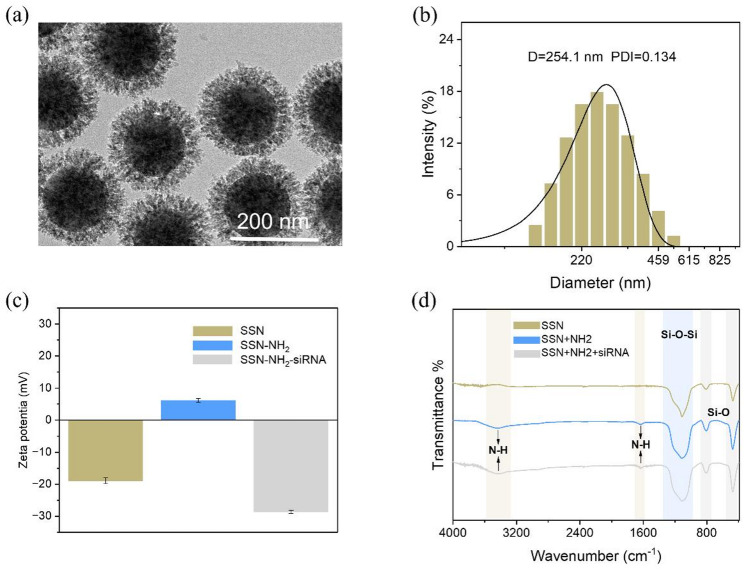 Figure 1
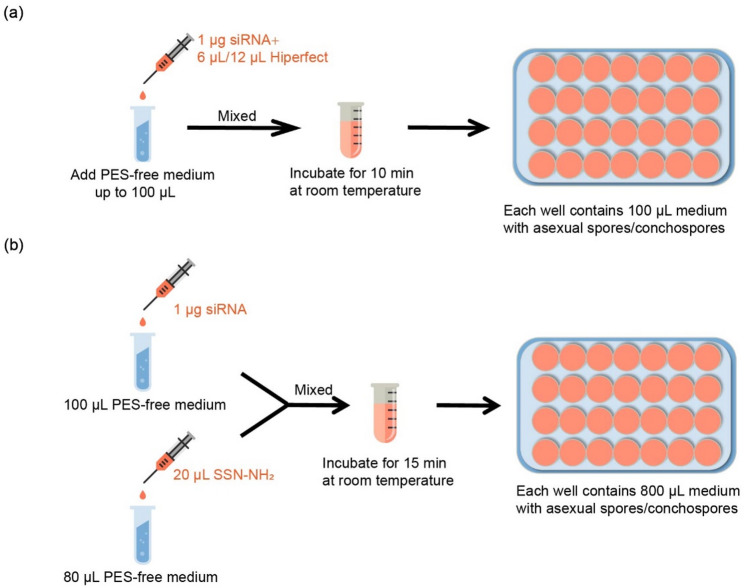 Figure 2
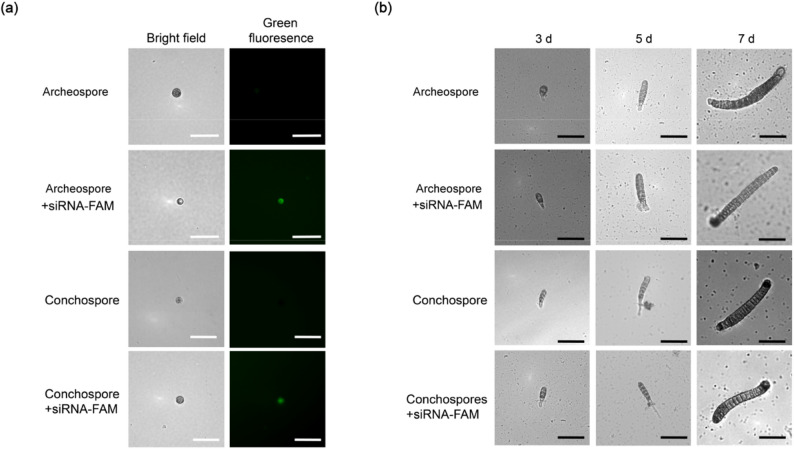 Figure 3
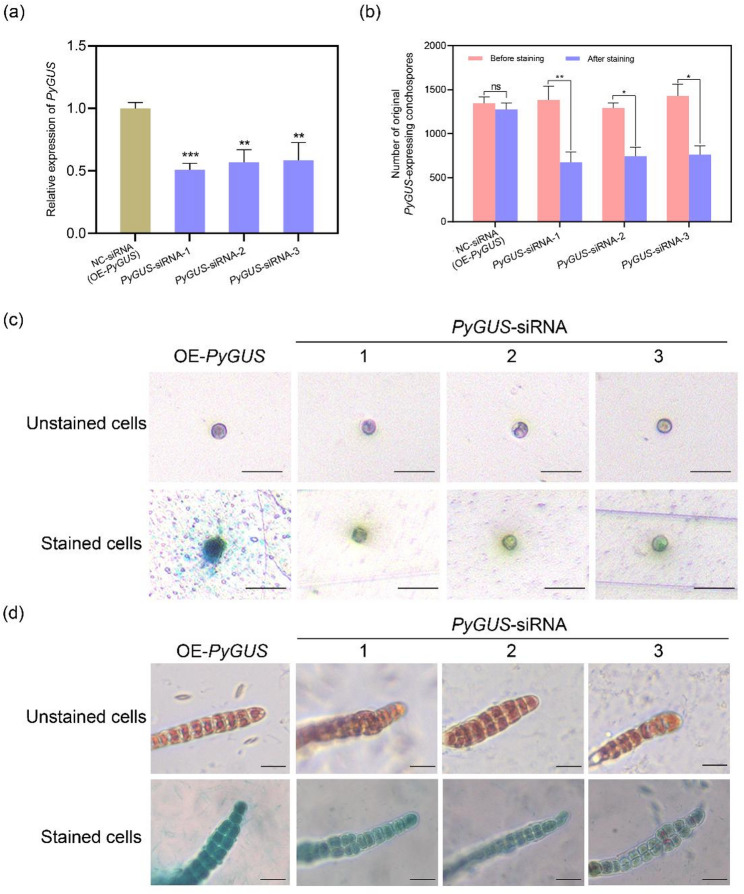 Figure 4
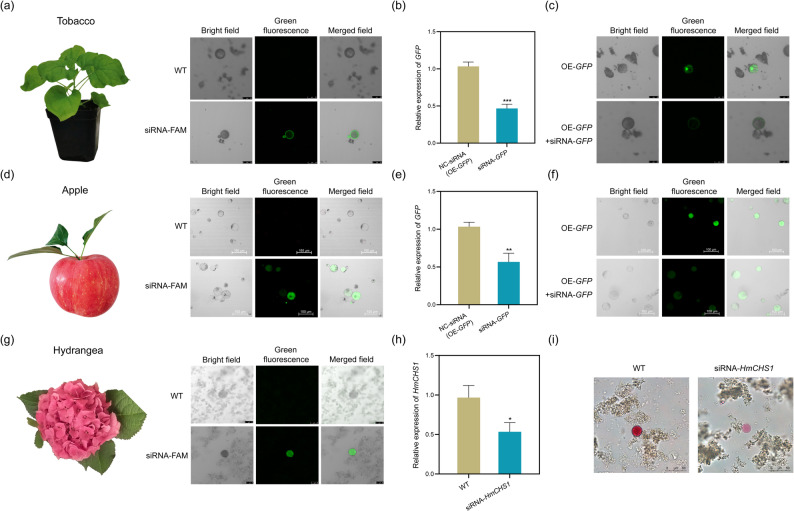 Figure 5
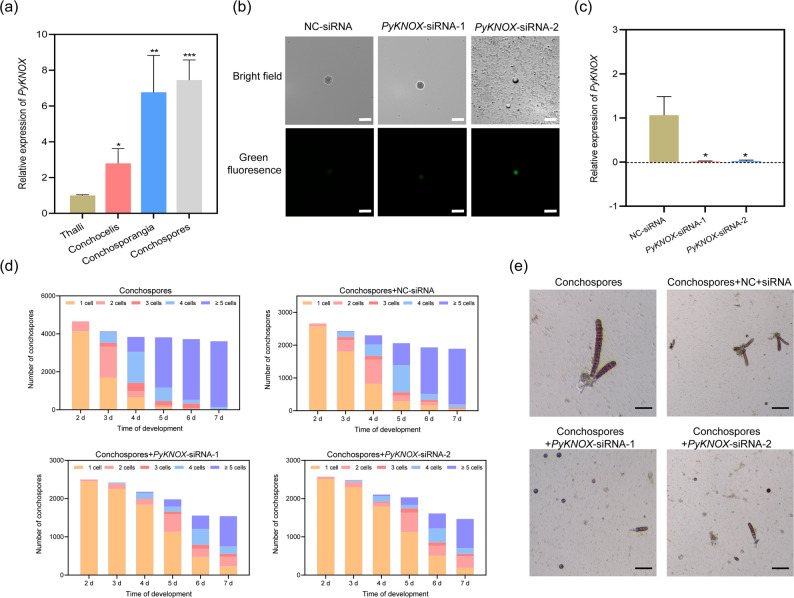 Figure 6
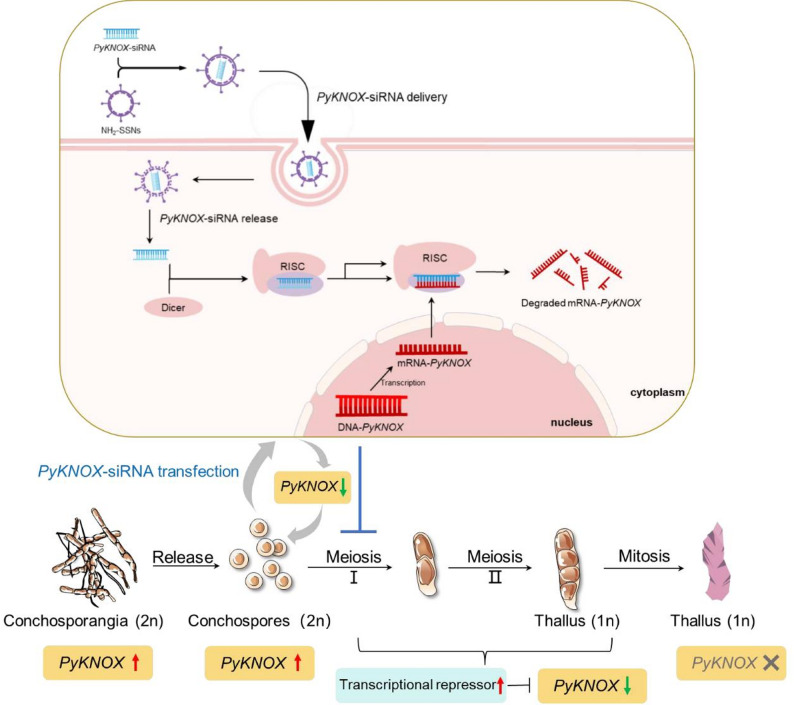 Figure 7
Peer Reviews
No public reviews on file for this paper yet. If you reviewed it on a platform where reviews are public (OpenReview, ICLR, NeurIPS, ICML), you can paste yours below so the community can read it here.
Videos
No videos yet. Explain this paper in a talk, walkthrough, or lecture? Add one.
Taxonomy
TopicsPlant Molecular Biology Research · Plant Reproductive Biology · Photosynthetic Processes and Mechanisms