Circulating cellular communication network factor 1 (CCN1) as a liquid biopsy marker indicating progression in advanced melanoma
Isabel Heidrich, Kim-Lea Reese, Helen Ullemeyer, Julian Kött, Hanna Freiberg, Glenn Geidel, Alessandra Rünger, Inga Hansen-Abeck, Finn Abeck, Stefan W. Schneider, Christoffer Gebhardt, Klaus Pantel, Daniel J. Smit

TL;DR
This study shows that high levels of CCN1 in the blood predict worse survival in advanced melanoma patients, especially when combined with another biomarker, S100B.
Contribution
This is the first study to demonstrate CCN1 as an independent blood-based biomarker for prognosis in advanced melanoma.
Findings
High serum CCN1 levels were significantly associated with reduced overall survival in advanced melanoma patients.
Combining CCN1 with S100B improved risk stratification, with the highest risk group showing a median survival of 5 months.
CCN1 remained an independent prognostic factor for overall survival in multivariate analysis.
Abstract
Cellular communication network factor 1 (CCN1, also referred to as CYR61), a secreted matricellular protein, has been implicated in tumor progression and stromal remodeling within the metastatic tumor microenvironment of melanoma. Here, we investigated, for the first time, whether CCN1 circulating in the blood can serve as a biomarker in melanoma patients. In this retrospective study, serum CCN1 levels before treatment initiation were measured by enzyme-linked immunosorbent assay (ELISA) in 95 patients with advanced melanoma (unresectable AJCC stage III and AJCC IV) treated with immune checkpoint inhibitors. The association between CCN1 serum levels and clinico-pathological parameters, as well as clinical outcomes, was analyzed using Kaplan-Meier survival curves and Cox proportional hazards models. Moreover, CCN1 levels were also evaluated in relation to established biomarkers,…
Genes, proteins, chemicals, diseases, species, mutations and cell lines named across the full text — each resolved to its canonical identifier and authoritative record.
Click any figure to enlarge with its caption.
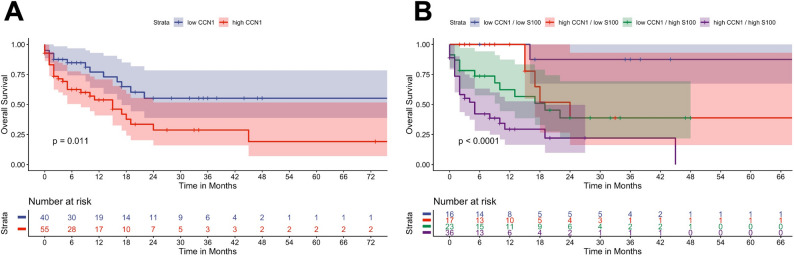 Figure 1
Peer Reviews
No public reviews on file for this paper yet. If you reviewed it on a platform where reviews are public (OpenReview, ICLR, NeurIPS, ICML), you can paste yours below so the community can read it here.
Videos
No videos yet. Explain this paper in a talk, walkthrough, or lecture? Add one.
Taxonomy
TopicsConnective Tissue Growth Factor Research · S100 Proteins and Annexins · Planarian Biology and Electrostimulation