Age modifies the relationship between ultra-processed food intake and hyperuricemia: findings from NHANES 1999–2018
Yue Yang, Lianchi Li, Hongxia Pan, Jianmei Zhang

TL;DR
Eating more ultra-processed foods is linked to higher chances of high uric acid levels, especially in younger and middle-aged adults.
Contribution
This study reveals that the link between ultra-processed food intake and hyperuricemia is strongest in younger and middle-aged adults.
Findings
Each unit increase in ultra-processed food ratio was associated with 31% higher odds of hyperuricemia in the total population.
Middle-aged adults (45–59 years) had the strongest association (49% higher odds) compared to other age groups.
No significant association was found in adults aged 60 years and older.
Abstract
Hyperuricemia is a growing public health concern linked to gout, cardiovascular diseases, and metabolic syndrome. Ultra-processed foods (UPFs), characterized by industrial formulation with additives and minimal whole food content, have been hypothesized to be linked to uric acid overproduction through high levels of sugars, unhealthy fats, and purine precursors. This study aimed to investigate the association between UPF consumption and hyperuricemia across different age groups, hypothesizing that higher UPF intake is associated with higher odds of hyperuricemia, particularly in individuals under 60 years. Data from 43,713 adults aged ≥ 20 years from the National Health and Nutrition Examination Survey (NHANES) 1999–2018 were analyzed. Logistic regression models adjusted for sociodemographic, clinical, and lifestyle factors were used to assess the association between UPF ratio and…
Genes, proteins, chemicals, diseases, species, mutations and cell lines named across the full text — each resolved to its canonical identifier and authoritative record.
Click any figure to enlarge with its caption.
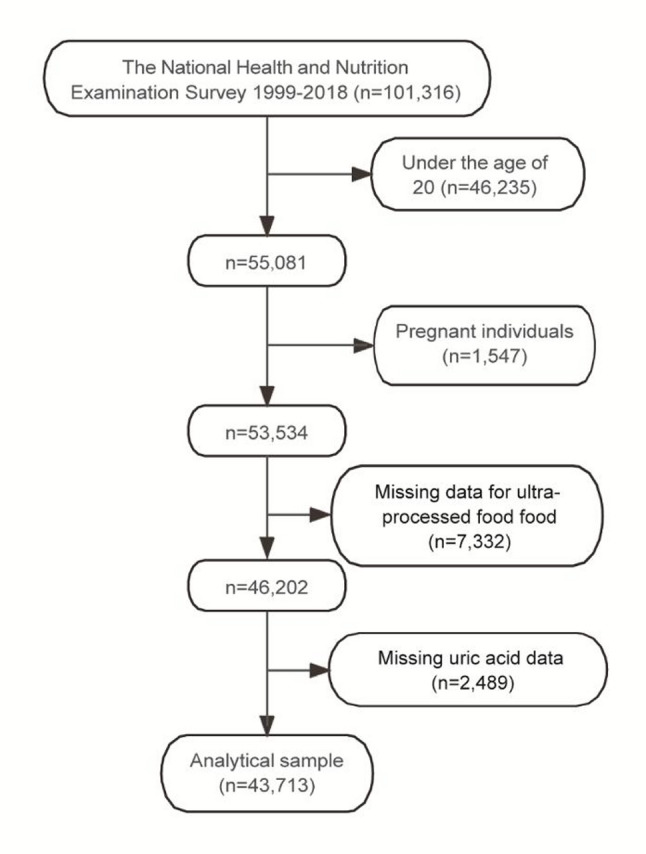 Figure 1
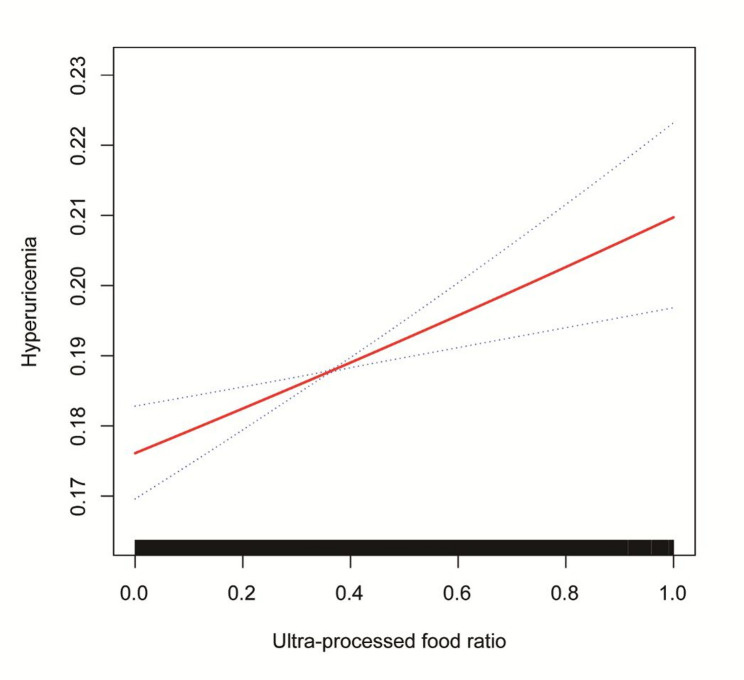 Figure 2
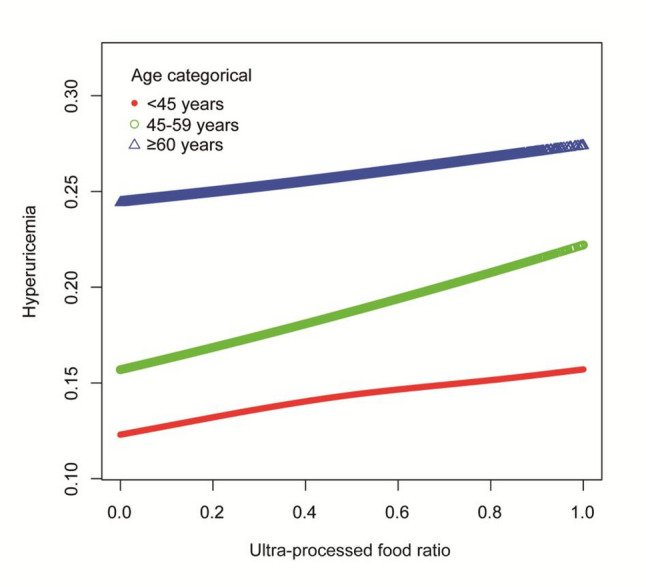 Figure 3
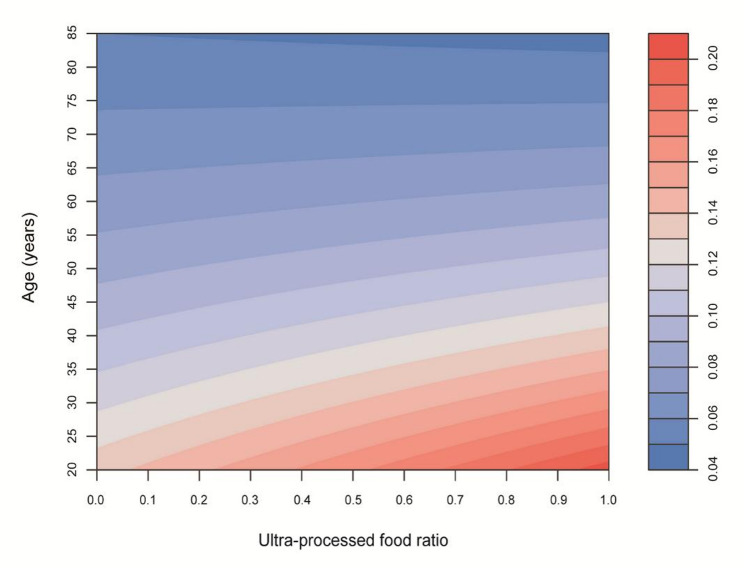 Figure 4
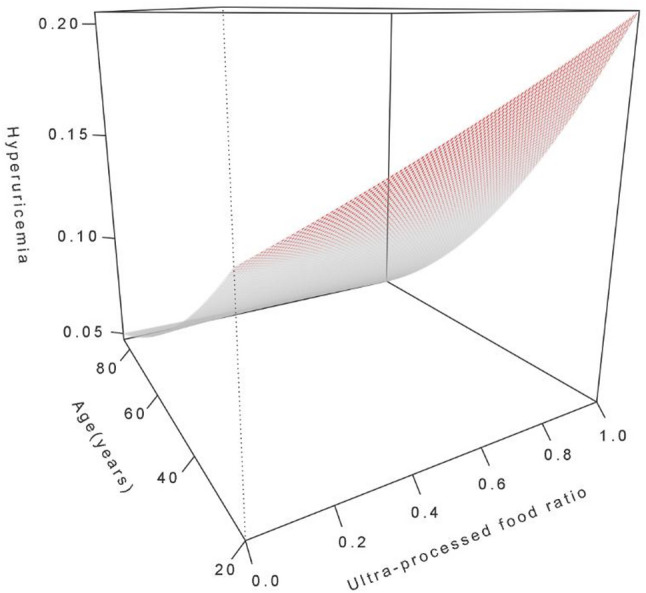 Figure 5
Peer Reviews
No public reviews on file for this paper yet. If you reviewed it on a platform where reviews are public (OpenReview, ICLR, NeurIPS, ICML), you can paste yours below so the community can read it here.
Videos
No videos yet. Explain this paper in a talk, walkthrough, or lecture? Add one.
Taxonomy
TopicsDiet, Metabolism, and Disease · Consumer Attitudes and Food Labeling · Sodium Intake and Health